St Joseph’s Hospital in Kitgum has increased the number of surgical procedures it performs and reduced delays in emergency operations following the construction of a modern operating theatre funded by the Government of Japan.
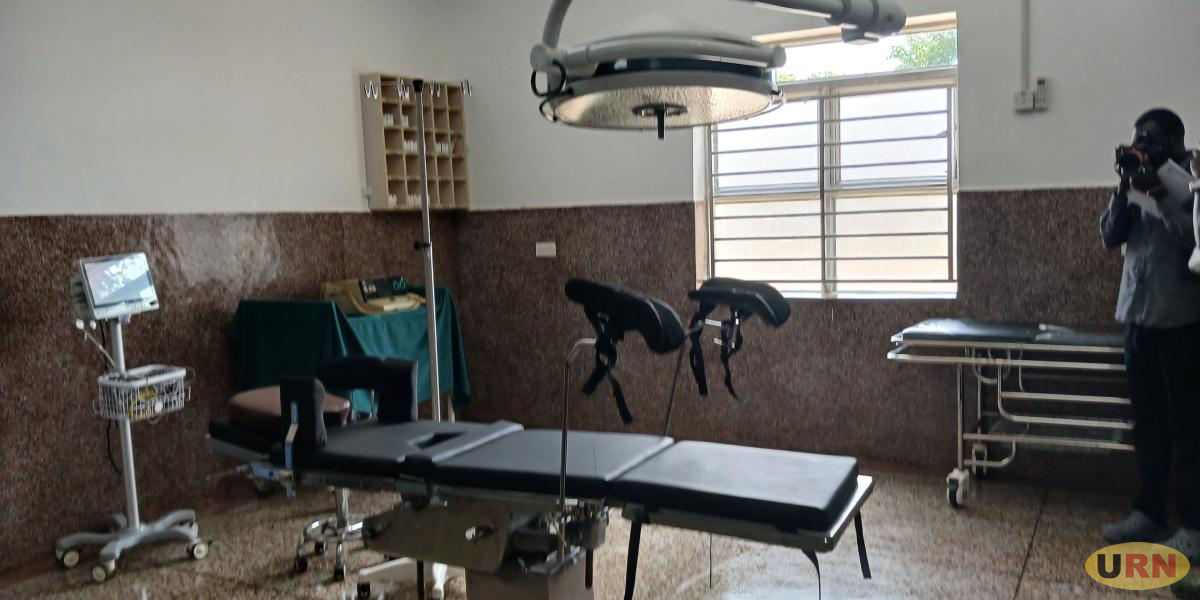
The theatre, funded in 2022 for 90,000 US dollars through Japan’s Grant Assistance for Grassroots Human Security Projects (GGP), has three operating rooms, a recovery room, an anaesthesia reception area and separate spaces for sterilising and storing surgical equipment.
Dr Pamela Atim, the hospital’s medical director and an obstetrician-gynaecologist, said the improved facilities have enabled different surgical teams to operate simultaneously, reduced waiting times and limited the need to refer patients to other hospitals.

Atim said the previous operating theatre had limited space, inadequate patient reception arrangements and insufficient separation between surgical procedures and sterilisation activities, creating challenges for infection prevention and scheduling.
Patients sometimes had to wait on the veranda for an operating bed, while different departments shared designated operating days.
The new arrangement provides dedicated operating spaces for orthopaedic, general surgery and obstetrics teams.
“This current theatre provides for a space which we can do the sterilisation in,” Atim said, adding that patients can now be scheduled for operations throughout the week instead of waiting several days for access to the theatre.
Atim said the hospital performed about 1,800 surgeries in the financial year ending June 30, 2026, compared with approximately 1,000 to 1,300 procedures annually before the improvement.
Dr Simon Komakeh, an obstetrician-gynaecologist at the hospital, said the previous theatre had only one operating bed, limiting the hospital’s ability to respond promptly to obstetric emergencies.
“With this new theatre, we are in a position to carry out three surgeries at the same time,” Komakeh said.
He estimated that operations in his department had increased by more than 30 per cent, alongside improvements in the timeliness of treatment.
Komakeh said delays in emergency obstetric care can contribute to maternal deaths and poor birth outcomes, making prompt access to surgery essential. The hospital receives referrals from health facilities across the East Acholi area and works with government health centres to manage complicated cases. Medical teams also communicate with referring facilities before patients arrive so they can prepare for treatment.
“If a mother comes, within 30 minutes, if there is need for surgery, she will be attended to,” Komakeh said, describing the hospital’s readiness to handle emergencies.
However, he said the hospital still needs a properly equipped high-dependency unit (HDU) and intensive care unit (ICU) to manage critically ill patients who require close monitoring and advanced support.
Dr John Obwoch, an orthopaedical surgeon, said the new theatre had doubled the number of orthopaedic operations performed at the hospital, with about four to five procedures conducted weekly, depending on patient numbers.
He said the larger operating room accommodates specialised surgical instruments and equipment, but the absence of an intraoperative X-ray machine limits the precision of some procedures involving fractures and implants.
Without imaging equipment in the theatre, patients sometimes have to undergo X-rays after surgery. If an implant is found to be incorrectly positioned, another operation may be required.
Obwoch also identified the cost of orthopaedic implants as a barrier to treatment for many patients.
“I see about three to five patients every day who need surgeries, but they cannot afford it because of the implants,” he said, estimating that more than half of patients requiring such procedures may be unable to pay.
He said implants used for fracture fixation can cost up to two million shillings, while those used for joint replacement can reach 10 million shillings.
Jackline Ayoo, a registered nurse, said the improved layout had also enhanced patient monitoring and the preparation of surgical instruments. She said patients are now allowed to recover adequately before being transferred to the wards, unlike previously when some were moved before they had fully recovered from anaesthesia.
Peter Okello, an anaesthetic officer, identified blood shortages as another major challenge, particularly when patients arrive after losing substantial amounts of blood.
He said some patients reach the hospital in critical condition and cannot safely withstand delays associated with referral to larger facilities.
“Blood is our biggest challenge here,” Okello said, explaining that the hospital obtains supplies from the regional blood bank in Gulu and sometimes coordinates with Kitgum Government Hospital to secure blood for emergencies.
Okello said the new theatre had improved anaesthesia services through dedicated machines in all three operating rooms and a recovery room where patients are monitored before returning to the maternity or surgical wards.
He said the recovery space allows staff to confirm that patients are breathing adequately and are stable after anaesthesia before transferring them to the wards.
Masanobu Yonemitsu, head of cooperation at the Embassy of Japan in Uganda, said the theatre was among approximately 300 projects implemented nationwide through Japan’s GGP programme over the past 30 years, including 10 projects in Kitgum District.
He said the embassy was pleased that the hospital was maintaining the facility and treating more patients locally.
“We very much appreciate how the operating theatre at Kitgum Hospital is well-maintained, and we are very happy to hear that the operating theatre is now fully operational, and you are able to accept more patients without referring them to other hospitals as you used to do. That was exactly what we aimed for when we decided to help construct the operating theatre,” Yonemitsu said.
He added that the improvement in the hospital’s capacity and increase in surgical procedures reflected Japan’s commitment to addressing community needs beyond large infrastructure investments. St Joseph’s Hospital serves between 25,000 and 27,000 outpatients and 5,000 to 6,000 inpatients annually. According to Atim, its bed occupancy rate ranges from 60 to 67 per cent-URN. Give us feedback on this story through our email: kamwokyatimes@gmail.com