Isaac Ssemakadde, the exiled Uganda Law Society President, has written to the Inspectorate of Government (IGG). He urges the agency not to parade suspects before the media while investigations remain incomplete. In a letter dated 8th June 2026, Ssemakadde strongly criticized the recent action. He called it a regrettable spectacle that, in his view, directly contradicts the IGG’s constitutional and statutory mandate.
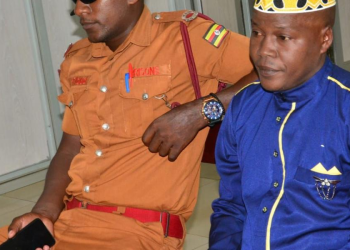
The Inspectorate of Government (IGG) last week presented six officials from the Department of Refugees under the Office of the Prime Minister, including Commissioner Patrick Okello and Assistant Commissioner Douglas Asiimwe. The action sparked renewed debate about the legality and propriety of publicly identifying suspects before investigations are concluded and before a court has determined their guilt.
The issue is not whether allegations of corruption should be investigated. The concern, rather, is whether anti-corruption agencies can pursue accountability while simultaneously respecting the constitutional rights of those under investigation.

Ssemakadde said Article 225(1)(a) of the Constitution and Section 7(1)(a) of the Inspectorate of Government Act (Cap 32) require the IGG to promote “strict adherence to the rule of law and principles of natural justice in administration. ” Staging media exposés achieves the opposite: it weaponizes publicity as extrajudicial punishment,” he said.
It has been a practice by the Police investigative bodies to parade suspects before journalists. Critics argue that publicly parading suspects makes them become public enemies and guilty before they are tried by competent courts of law. Some critics have stated that investigative agencies risk undermining the very legal safeguards they are tasked to protect.
Central to this concern is the constitutional presumption of innocence. Article 28(3)(a) of the Constitution guarantees that every person charged with a criminal offence shall be presumed innocent until proven guilty. For Ssemakadde, this principle is not merely procedural; it is a cornerstone of democratic justice systems.
“By labelling suspects in press statements and inviting public condemnation, the IGG prejudices potential trials, contaminates evidence, and inflicts immediate and irreversible reputational harm arising from public judgment prior to trial.” said Ssemakadde.
He said such actions breach natural justice principles and the right to a fair hearing. “.. turning the Inspectorate into prosecutor, judge, and executioner,” he stated. Many have stated that the paraded suspects are immediately denied the presumption of innocence.
The presumption of innocence is also embedded in international and regional human rights instruments, including the Universal Declaration of Human Rights, the International Covenant on Civil and Political Rights, and the African Charter on Human and Peoples’ Rights. These instruments recognize that individuals accused of wrongdoing must not be treated as guilty until a competent court has determined otherwise.
Scholars have long warned about the dangers of media parades. In the study Human Rights Implications of Media Parade of Crime Suspects in Nigeria: Lessons from Some Other Jurisdictions, the author, Samuel Akanibo, argues that public presentation of suspects amounts to a form of pre-trial conviction in the court of public opinion.
The study notes that once law enforcement agencies publicly identify suspects and expose them to media scrutiny, the public often assumes guilt long before evidence is tested in court.
Akanibo warned that the consequences can be severe. Careers can be destroyed, families stigmatized, and reputations irreparably damaged.
“Extrajudicial media images and headlines destroy careers, stigmatise families, and trigger mental health crises long before any conviction. Even an acquittal rarely restores reputations in the digital age. These stunts create a chilling effect on public servants, deter competent officials from sensitive roles like refugee administration, and risk scapegoating individuals for systemic failures,” said Ssemakadde.
The IGG’s office has previously paraded officials from the Prime Minister’s Office, presented them to the court, and later withdrew charges from some. The study by Akanibo further argues that media parades are capable of encouraging public presumption of guilt, fostering mob justice, and undermining confidence in the judicial process.
These concerns are particularly relevant where public anger over alleged corruption creates pressure for swift punishment before the completion of legal proceedings. Privacy rights present another dimension of the debate. Article 27 of Uganda’s Constitution protects individuals from unlawful interference with their privacy. While this right is not absolute and may be limited in legitimate law enforcement activities, legal scholars increasingly question whether public identification of suspects before formal charges are adjudicated can be justified.
Another study, Rights Against Media Parade and Public Identification of Criminal Suspects: The Privacy Rage, contends that criminal suspects retain a legitimate expectation of privacy despite being under investigation.
The study argues that public identification prior to the filing and determination of charges infringes privacy rights and may compromise the integrity of criminal investigations. According to the author, confidentiality is often essential to ensuring fair and effective investigations, while media parades serve little investigative purpose beyond demonstrating apparent institutional action.
Courts in other jurisdictions have expressed similar reservations. In Ndukwem Chiziri Nice v Attorney General of the Federation & Others, the Nigerian Court of Appeal condemned the public parade of a suspect before the press, describing the conduct as a disregard for the individual’s dignity. The judgment reflected growing judicial concern that law enforcement agencies should not assume functions reserved for the courts.
Ugandan jurisprudence also offers guidance. In Patricia Ojangole v Attorney General (HCMC No. 303 of 2013), the High Court emphasized that the fight against corruption must itself be conducted lawfully. The court cautioned that corruption cannot be defeated through methods that undermine the legal process, highlighting the importance of maintaining procedural fairness even when pursuing legitimate anti-corruption objectives.
Beyond the legal implications, there are practical concerns. Public exposure of suspects can influence potential witnesses, affect the fairness of future proceedings, and place pressure on judicial officers. It may also discourage qualified public servants from accepting positions in sensitive sectors where allegations alone can result in widespread public condemnation.
None of these concerns suggests that public officials should be shielded from scrutiny or accountability. Transparency remains essential in combating corruption and maintaining public confidence in state institutions. However, transparency must be balanced against constitutional protections designed to ensure fairness and prevent abuse.
The challenge for the IGG and other investigative agencies is therefore not whether to communicate with the public, but how to do so responsibly. Public statements should be carefully framed to avoid implying guilt before conviction. Investigations should be conducted professionally and, where appropriate, confidentially. Most importantly, suspects should not be subjected to public punishment before the courts have had an opportunity to determine the facts.
As Uganda continues its fight against corruption, the country must guard against sacrificing constitutional rights in pursuit of popular approval. The rule of law requires more than successful prosecutions; it requires that justice be pursued through lawful means. Institutions entrusted with protecting the Constitution must lead by example, demonstrating that accountability and due process are not competing values but complementary pillars of a democratic society-URN. Give us feedback on this story through our email: kamwokyatimes@gmail.com