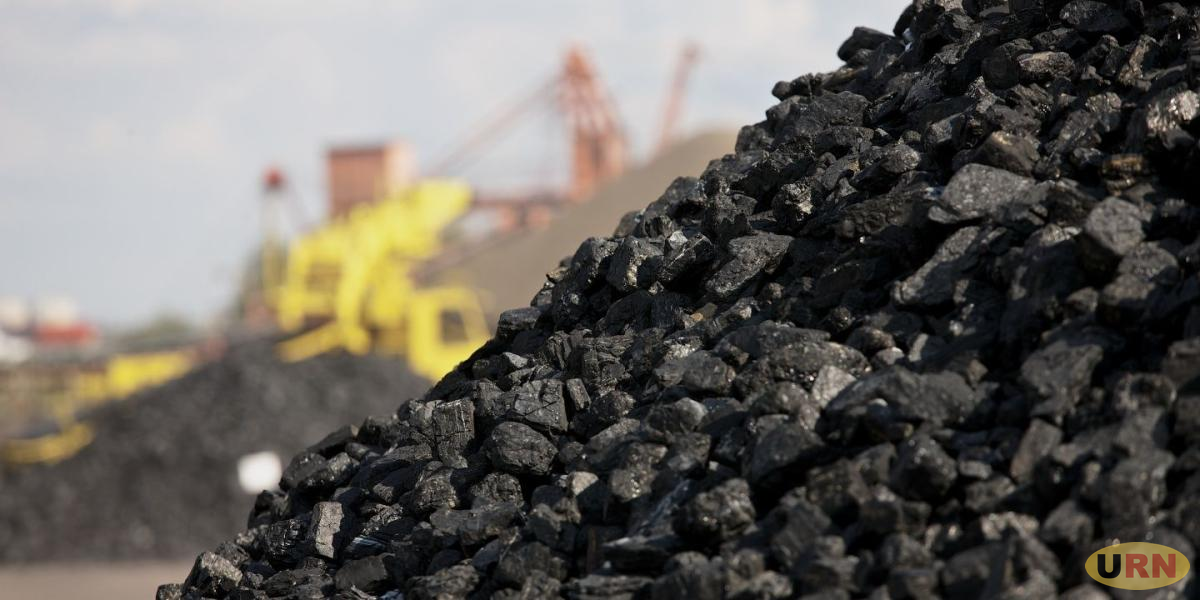
Uganda’s plans to develop its oil and gas resources come at a time when global energy disruptions are showing how difficult it remains for countries to move away from fossil fuels. The country’s oil development has itself been affected by the turmoil in the Middle East, while the same geopolitical crisis is now contributing to a renewed increase in global coal consumption, highlighting the vulnerability of energy markets to international conflicts.
Ali Ssekatawa, Director of Legal and Corporate Affairs at the Petroleum Authority of Uganda, has repeatedly cited disruptions linked to the Middle East crisis among factors that contributed to delays in developments in Uganda’s oil fields.
The country is preparing to begin commercial oil production, but Ssekatawa has previously explained that developments in the country’s oil fields were affected by disruptions arising from the Middle East crisis.

The IEA findings meanwhile show another consequence of the same global energy instability: countries that had been expected to reduce their reliance on coal are increasing its use because natural gas has become more expensive or less readily available. The International Energy Agency (IEA) says global coal demand is now expected to increase by 1.2 percent in 2026, reaching a record 8.94 billion tonnes, reversing an earlier forecast of a slight decline.
In its Coal Mid-Year Update 2026 released on September 10, the IEA attributes the unexpected increase partly to disruptions in the Middle East, which have pushed up natural gas prices and encouraged some countries to turn to coal for electricity generation.
The development offers a fresh illustration of the vulnerability of energy transitions to geopolitical shocks, with countries reverting to more carbon-intensive fuels when cleaner alternatives become more expensive or unavailable. This comes as Uganda prepares to begin commercial oil production and sales, while simultaneously pursuing commitments to reduce greenhouse gas emissions and expand cleaner sources of energy.
The IEA says the Middle East conflict has disrupted liquefied natural gas shipments through the Strait of Hormuz, causing natural gas prices to rise sharply. Although virtually no coal shipments pass through the Strait, the disruption has affected coal markets because of the resulting increase in gas prices.
Countries with gas-fired power plants and spare coal-generation capacity have consequently increased their reliance on coal. The IEA says higher-than-expected coal use has been recorded in Europe, Japan, South Korea, China and other markets. China has also increased coal consumption for producing chemical products as high oil prices affect the economics of industrial production.
The agency says weather conditions could add further pressure. Expectations of a particularly strong El Niño pattern this year are likely to increase cooling demand and reduce hydropower generation in some major Asian coal-consuming countries, including India and Vietnam. The combined effects have pushed the global coal outlook higher.
“Global coal demand – which had been set to decline slightly year-over-year – is now forecast to rise by 1.2% in 2026, bringing the world’s consumption to a record 8.94 billion tonnes,” the IEA says.
For Uganda, the development highlights the competing pressures facing a country seeking to exploit its newly discovered petroleum resources while also pursuing climate and energy-transition objectives. Uganda expects to begin commercial oil production in early 2027, with the petroleum sector projected to become an increasingly important source of government revenue and economic activity.
The IEA report, however, suggests that the global shift away from fossil fuels may not be linear, particularly when energy security is threatened. The agency says the outlook for 2027 will depend heavily on what happens to shipping through the Strait of Hormuz.
If LNG flows through the Strait recover and natural gas prices return towards pre-war levels, global coal demand could decline next year. But if the disruption continues and LNG shipments remain constrained, coal demand could rise further.
The IEA also expects global coal production to decline in 2026 after reaching a record level in 2025, although output is expected to remain above nine billion tonnes for the third consecutive year.
The decline is largely linked to lower production in China, the world’s biggest coal producer, following safety inspections triggered by a major mine accident in May.
The narrowing gap between production and consumption is expected to reduce the large build-up of global coal inventories accumulated in recent years. Coal production is projected to increase slightly in 2027 as Chinese output recovers.
Meanwhile, international coal demand is expected to remain stronger than previously forecast, particularly in import-dependent countries such as Japan and South Korea.
The IEA says lower domestic coal production in China, higher demand from importing countries and tighter supply is contributing to higher coal prices globally. The latest outlook therefore presents a difficult picture for governments seeking to balance energy security, economic growth and climate commitments.
For Uganda, it reinforces the challenge of ensuring that the development of oil and gas contributes to energy security and economic transformation without locking the country into a high-carbon development pathway at a time when global energy markets remain vulnerable to geopolitical shocks-URN. Give us feedback on this story through our email: kamwokyatimes@gmail.com