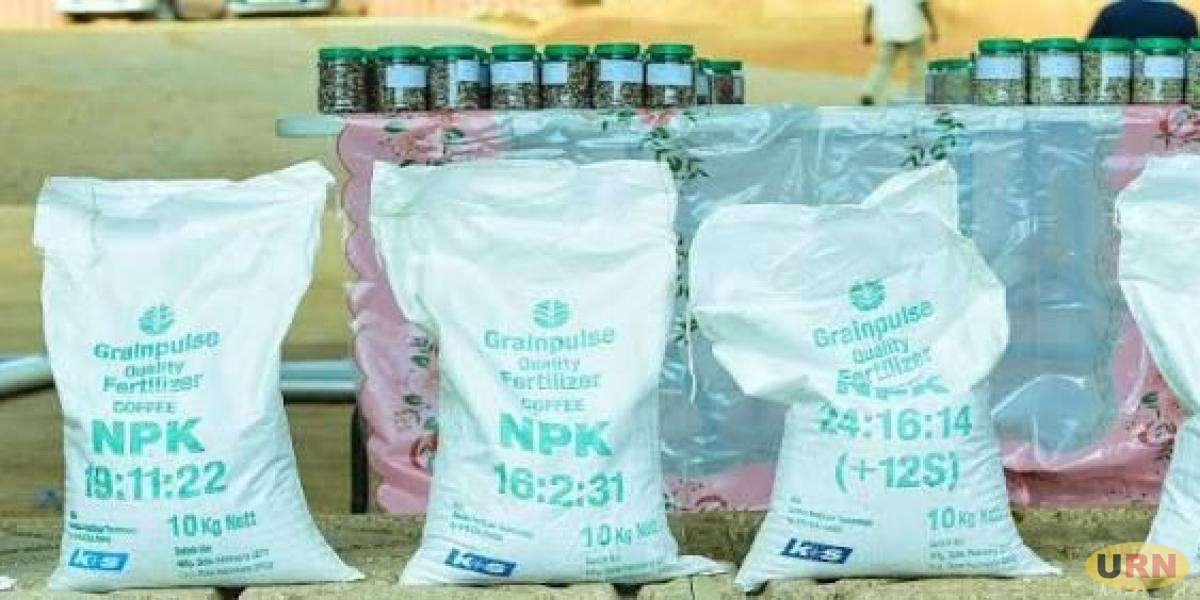
The disruption of fertilizer supplies linked to the conflict in the Middle East is raising questions about the sustainability of East Africa’s dependence on imported agricultural inputs, as rising costs threaten farmers’ ability to maintain crop production.
In Uganda, nearly 40 percent of fertilizer imports in 2024 originated from the Middle East and Gulf region, exposing the country to disruptions affecting suppliers and shipping routes, according to an analysis published by the Economic Policy Research Centre (EPRC) in June 2026.
Uganda imported fertilizers worth approximately 54.75 million US dollars in 2024, according to the analysis drawn from World Integrated Trade Solution data.

The exposure means that international supply disruptions can affect the cost and availability of inputs used by farmers to grow food and cash crops.
The crisis has renewed attention to the structure of agricultural production across the region, where many farmers depend on purchased inputs but have limited financial capacity to absorb sudden price increases.
A new report by the Global Alliance for the Future of Food argues that the problem extends beyond temporary supply disruptions. It warns that dependence on synthetic fertilizers and pesticides derived from fossil fuels leaves food systems vulnerable to geopolitical conflicts, environmental damage and rising production costs.
The report, Toxic Dependency: How Agrochemicals Lock In Food System Vulnerability, released on October 13, calls for governments to reconsider agricultural policies and subsidies that favour chemical-intensive farming, and redirect more resources towards agroecology and other approaches that reduce reliance on synthetic inputs.
The findings come as East African farmers face the risk of higher fertilizer prices and delayed deliveries during important planting and crop-growth periods.
A March 2026 analysis by the Famine Early Warning Systems Network (FEWS NET) identified Uganda, Kenya and Tanzania among African countries exposed to fertilizer supply disruptions linked to the Gulf region.
The analysis warned that the effects could be particularly severe for farmers who already apply limited quantities of fertilizer because of its cost. Although fertilizer use is relatively low across much of sub-Saharan Africa, FEWS NET cautioned that further reductions in application could worsen crop yields.
Farmers who cannot afford recommended quantities may apply less fertilizer, cultivate less land or abandon some input-intensive crops, potentially reducing harvests and household food supplies.
FEWS NET identified March and April as important planting and fertilizer application months in East African areas with two rainy seasons, while May to August is a key period in areas with one main growing season. Delays during these periods can affect crop establishment and productivity.
Kenya faces similar risks because of its exposure to international fertilizer markets.
FEWS NET has identified Gulf suppliers as an important part of the region’s fertilizer supply chains, meaning disruptions can affect availability and prices even where local distributors continue operating.
The Global Alliance report places these immediate concerns within a wider examination of how modern food production has become tied to fossil fuels through the manufacture of synthetic fertilizers and pesticides. It reports that global pesticide use has more than doubled since 1990, while nitrogen fertilizer use has increased eightfold since the 1960s.
The authors argue that subsidies, fossil fuel infrastructure and policies favouring industrial agriculture have helped sustain dependence on these inputs.
The report also links intensive agrochemical use to soil and water pollution, biodiversity loss and human health risks.
It argues that food systems built around heavy dependence on purchased chemical inputs can leave farmers vulnerable to both environmental degradation and global market shocks.
Anna Lappé, executive director of the Global Alliance for the Future of Food, said the combined effects of synthetic fertilizers and pesticides lock food systems into a cycle of fossil fuel dependence.
The report recommends redirecting public support away from fossil fuels and industrial agricultural production towards agroecology and regenerative farming.
These approaches include crop diversification, intercropping, composting and biological pest management, which can reduce dependence on purchased inputs while supporting soil health.
However, reducing fertilizer dependence presents a practical challenge for East African countries.
Synthetic fertilizers remain an important source of nutrients for many crops, and farmers cannot simply abandon them without suitable alternatives, technical support, and investment to maintain production.
For Uganda, the question is how to reduce exposure to imported inputs while ensuring that farmers can still obtain the nutrients needed to sustain yields.
EPRC has identified investment in domestic fertilizer production, including strengthening facilities in Tororo, as one way to reduce reliance on external supply chains.
The Global Alliance report also calls for stronger regulation of hazardous pesticides, reforms to agricultural and fossil fuel subsidies, and greater investment in farming systems that are more resilient to climate and market shocks.
The current crisis therefore presents two related challenges for East Africa: addressing the immediate affordability and availability of fertilizer, while building agricultural systems that are less vulnerable to disruptions in international energy and chemical markets.
The report does not provide separate estimates of the current fertilizer crisis for Uganda or Kenya.
Its findings, considered alongside EPRC’s import analysis and FEWS NET’s regional assessment, highlight the importance of balancing immediate production needs with longer-term efforts to strengthen food system resilience-URN. Give us feedback on this story through our email: kamwokyatimes@gmail.com