By KT Reporter
Communities living along the Agago River in Oywelo Mon Village, Alim Parish, Lapul Sub-county in Pader District are raising alarm over unusual and frightening changes in the river that sustains their lives and livelihoods. Residents report injured fish, unexplained fish deaths, and abnormal behaviour among aquatic animals, triggering fears of possible water contamination or poisoning.
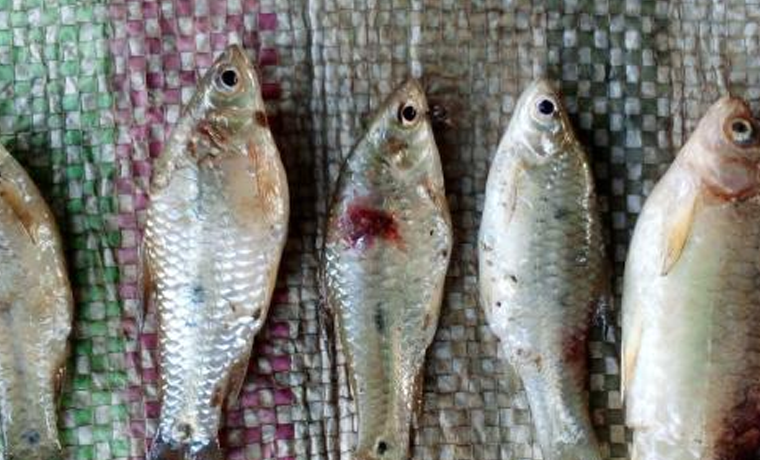
Villagers say that regardless of the fishing method used—hooks, nets, or traditional traps—fish are being pulled from the river already injured. Some are found dead, while others emit a strong, unpleasant smell. According to residents, such occurrences have never been witnessed before, raising serious concerns about the safety of the water for human consumption and livestock use.

Fishing is a major source of food and income in Oywelo Mon Village and surrounding communities along the Agago River, which supports a population of over one thousand people. Many households depend on daily fish catches both for subsistence and small-scale trade. The sudden deterioration in fish quality has disrupted livelihoods, with fishermen saying the injuries appear to originate from the water rather than fishing gear, deepening suspicions of harmful substances in the river.
Residents report that at least four fish species have been affected, including tilapia, lungfish, sprat, and clarias. Fishermen say most sprat were observed with injuries concentrated on the upper side of the tail. Lungfish were reportedly found with swollen, rotten tails emitting a foul smell, while tilapia and clarias also showed visible injuries, though with varying patterns.
Community members have further observed aquatic animals forcing themselves out of the water—behaviour commonly associated with low oxygen levels or toxic contamination. Residents fear the problem may extend beyond fish and affect the entire river ecosystem, as well as people who rely on the river for survival.
Nighty Akello, a resident of Oywelo Mon Village, said the fish appear abnormal and she fears feeding them to children. Parents worry that consuming potentially contaminated fish could cause health problems that may not be immediately visible. Richard Ocan, a fisherman and LC I committee member, said some fish were found with missing scales and foul-smelling injuries.
Although a few residents reported eating the fish without falling ill immediately, experts warn that exposure to toxins can have delayed or cumulative health effects. Boniface Olara Ojara, an environmental expert, suspects possible water poisoning and has warned residents against eating fish that died naturally or show visible injuries. He cautioned that toxins in water can accumulate in fish and eventually affect humans.
However, John Tyan, a former Fisheries Officer for Pader District, suggested the problem could be due to parasitic infestation rather than poisoning, noting that poisoning typically causes rapid and large-scale fish deaths. District authorities say investigations are underway. Seydou Opoka Adolatona, the Pader District Agricultural and Production Officer, confirmed that fisheries officers have been deployed to collect water and fish samples for laboratory analysis. While the exact cause has not yet been established, the district has not ruled out poisoning based on the observed patterns.
International experts have also weighed in on the matter. John Worswick, Senior Fish Health Inspector at the Centre for Environment, Fisheries and Aquaculture Science, said the involvement of multiple fish species makes an infectious disease less likely. Meanwhile, Dr. Gillian Mylrea of the World Organisation for Animal Health advised engaging Uganda’s veterinary and environmental authorities, noting that environmental contamination appears to be the more probable cause.
-URN. Give us feedback on this story through our email: kamwokyatimes@gmail.com