The Uganda Institution of Professional Engineers (UIPE) has challenged the recent wave of public arrests of district engineers during anti-corruption operations.
The engineers’ professional body argues that while corruption in public works must be confronted, government risks overlooking the deeper structural problems responsible for poor infrastructure across local governments.
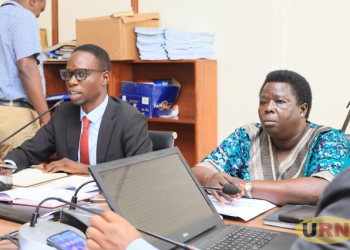
Speaking during a public dialogue organized by the Uganda Law Society, UIPE President Mwesiga Peterson said the institution supports the government’s campaign against corruption but warned that investigations into engineering projects should be guided by technical expertise and due process rather than public spectacle.

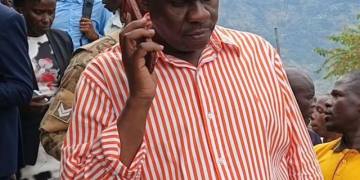
The remarks come weeks after Local Government Minister Ballam Barugahara and State Minister for Local Government Justine Namara led inspection tours in districts including Bulambuli and Mbale, where several engineers, contractors and technical officers were arrested over alleged shoddy work, abandoned projects and misuse of public funds.
Images of the arrests circulated widely on social media, drawing praise from some members of the public but concern from professional bodies.
“The gains in the fight against corruption are lost when that fight is reduced to theatre, a mockery, public humiliation before cameras, content creation for social media, or playing to the gallery,” he said.
Peterson said UIPE stated on July 11, expressing concern over what it described as arbitrary arrests of engineers.
While emphasizing that no professional should be shielded from accountability, he argued that engineering investigations differ fundamentally from ordinary criminal investigations.
“Investigating the technical aspects of an engineering project is not the same as investigating burglary or petty crime,” he said.
Engineering projects, he explained, require specialized assessment to determine whether defects result from negligence, poor supervision, inadequate funding, flawed designs, procurement failures or factors beyond the control of individual engineers.
“Investigating the technical aspects of an engineering project is not the same as investigating burglary or petty crime. You need competent technical personnel with the right skills to support those investigations before arrests are made.” Mweisga explained.
According to Mwesiga, public infrastructure failures should not automatically be blamed on district engineers alone because many local governments operate under severe technical and financial constraints.
He said several districts have too few qualified engineers to supervise the growing number of government-funded projects, while many engineering departments remain inadequately facilitated to inspect works, monitor contractors and enforce quality standards.
Peterson argued that government should use the current anti-corruption campaign as an opportunity to strengthen engineering capacity in local governments by recruiting more engineers, adequately funding technical departments and equipping professionals with the resources needed to supervise projects effectively.
He also cautioned against turning engineers into scapegoats for broader institutional failures involving procurement, budgeting, political interference and contract management.
“Our institution shall stand up to protect the rights of our members, who seem to be perceived as soft targets while the real systemic issues remain unaddressed,” he said.
He maintained that accountability and due process should reinforce, rather than undermine, one another.
“There is no justification whatsoever for arbitrariness. Even if the allegation is murder, due process must be followed. When anyone sidesteps the process, that subtracts from the very corruption fight that we all support.”
He said the institution fully supports President Yoweri Museveni’s campaign against corruption but believes lasting improvements in public infrastructure will require reforms that go beyond arrests.
Among the proposals advanced by UIPE are increasing the number of engineers employed by local governments, strengthening technical supervision of public projects, ensuring engineering investigations are conducted by qualified experts, and providing district engineering departments with adequate operational resources.
The debate reflects a growing national conversation over how best to improve accountability in public infrastructure. While government maintains that firm action against corrupt officials is necessary to protect public resources, professional engineers argue that enforcement alone cannot solve chronic weaknesses in local government service delivery.
For Mwesiga, the challenge is not whether corruption should be punished, but whether Uganda’s anti-corruption strategy is addressing the root causes of failing infrastructure.
The institution says unless government simultaneously strengthens engineering capacity, improves supervision and addresses resource constraints facing local governments, arrests alone are unlikely to deliver better roads, schools, health facilities and other public infrastructure-URN. Give us feedback on this story through our email: kamwokyatimes@gmail.com