The Auditor General raised concerns about the Ministry of Education’s dependence on one technology vendor to manage the national Education Management systems. A recent Auditor General’s report has raised red flags over this arrangement, noting limited involvement of Ministry technical staff in core operations.
“Critical system administration and configuration functions for EMIS remain largely under the control of the system vendor, with limited involvement of Ministry technical staff,” the report states. The Auditor General warned that the situation exposes the Ministry to vendor lock-in risks, weakens system ownership, and threatens long-term sustainability.
The administration and configuration functions of the national Education Management Information System (EMIS) have, in the last four years, been run by SMSOne, a private technology vendor supervised by the ICT Ministry. The EMIS was launched in 2022 as a centralised digital platform meant to serve as a one-stop centre for education data and information across the country.

The system holds sensitive data of more than 13 million learners and staff from nursery to secondary school level, but technical control has not been fully transferred to the ministry.
The Auditor General advised that the Ministry of Education expedite the recruitment, training, and deployment of internal technical staff to take over key system administration roles and reduce reliance on the vendor. Several government institutions that previously allowed third parties to develop or manage critical digital systems have faced serious challenges before.
In August 2021, Kyambogo University was thrown into panic when data belonging to approximately 2,900 students was deleted from its electronic campus academic management system. The incident occurred just weeks before a major graduation ceremony, disrupting the academic records of many students who were set to graduate.
The university’s Vice Chancellor, Prof. Eli Katunguka, blamed former IT staff who had developed the previous system, while the former employees denied the claims and demanded a police investigation. The case highlighted the dangers of inadequate system handovers and over-dependence on external parties.
The ongoing debate underscores broader questions about government capacity to own and sustainably manage large-scale digital education infrastructure, even as the country pushes for greater digitisation of public services.
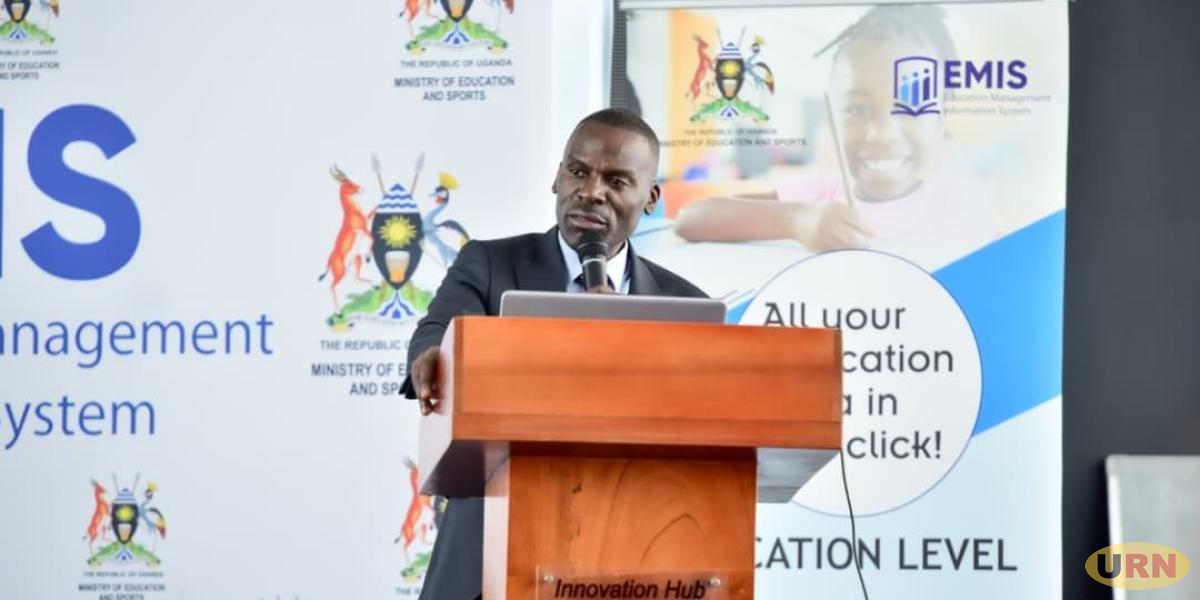
Vincent Ssozi, Assistant Commissioner for Statistics, Monitoring, and Evaluation at the Ministry of Education, allayed fears, saying adequate precautions have been taken to protect the system. He explained that SMSOne still controls parts of the system because the company has an ongoing contract. The contractor is reportedly upgrading the platform from EMIS 1.0 to a more advanced EMIS 2.0 version.
“When the system was deployed, we got feedback, and we have been perfecting the system with more functionality and making it user-friendly. So the developers have been helping on such things,” Ssozi said. He assured the public that the Ministry cannot be locked out of the system and that data cannot be misused because the developer operates under close supervision by the Ministry of ICT.
The EMIS is facing other practical challenges. For instance, details of all Senior One and Senior Five students across the country are yet to be fully captured in the system. The gap stems from a lack of integration between EMIS and the Uganda National Examinations Board (UNEB) system, which is required for the smooth transition of learner data from one education level to another.
Ssozi acknowledged the technical issues and said the ministries and UNEB are working to resolve them so that the affected students can be properly uploaded-URN. Give us feedback on this story through our email: kamwokyatimes@gmail.com