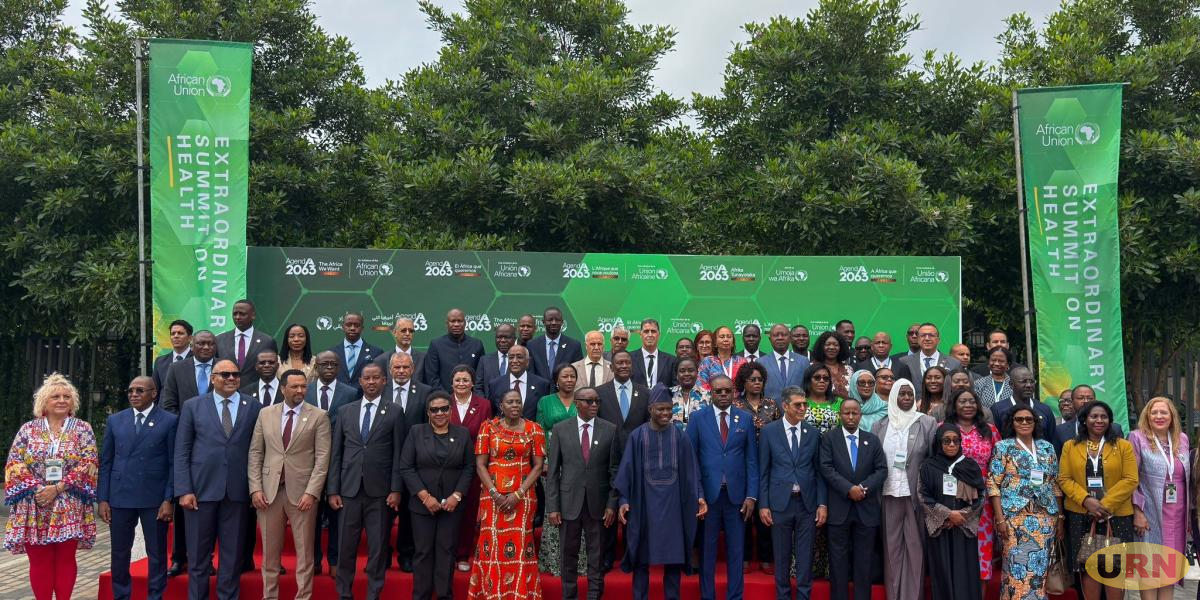
UNAIDS Executive Director Winnie Byanyima has called on African leaders to tackle the inequalities that continue to fuel the HIV/AIDS epidemic, saying ending AIDS by 2030 will depend on sustained financing, equitable access to medical innovation, and the protection of human rights. Addressing the African Union’s first Extraordinary Assembly dedicated to health, Byanyima said Africa had already demonstrated its global leadership by speaking with one voice during negotiations on the recently adopted United Nations Political Declaration on HIV/AIDS.
“Africa spoke with one voice and the world listened,” Byanyima said.
“The declaration reflects Africa’s priorities and gives us a powerful platform to rally the whole world behind the actions needed to end AIDS by 2030 and strengthen preparedness for future pandemics.” She told heads of state and government that the fight against HIV cannot be won without addressing the structural inequalities that continue to drive epidemics.

“Epidemics thrive on inequality. We end epidemics by closing inequalities,” she said.
Byanyima identified three priority areas requiring urgent action: sustainable health financing, equitable access to new medical technologies, and the protection of human rights and gender equality. She warned that many African countries continue to struggle with shrinking fiscal space, mounting debt burdens and inequities in the global financial system, limiting their ability to invest adequately in resilient health systems.
“Sustainable financing is not charity. It is an investment in health security, in our development and in our futures,” she said. Byanyima also urged governments and international partners to ensure that scientific breakthroughs are accessible to all, arguing that innovation has little value if it remains out of reach for those who need it most.
“Innovation without access is not innovation. It is discrimination,” she said, pointing to delays African countries have experienced in accessing antiretroviral medicines, COVID-19 vaccines and newer long-acting HIV prevention technologies.
She further stressed that protecting human rights remains central to ending AIDS, saying discrimination, stigma and gender inequality continue to undermine prevention and treatment efforts across the continent.
Following Byanyima’s remarks, World Health Organization Director-General Dr. Tedros Adhanom Ghebreyesus echoed the call for stronger and more resilient health systems, warning that declining international funding threatens decades of progress against HIV and other major diseases. While acknowledging that new HIV infections in Africa have fallen by 40 percent since 2010, Tedros said the continent still bears the world’s highest burden of the epidemic.
“The same challenge runs through maternal health, tuberculosis, malaria, neglected tropical diseases and rising non-communicable diseases. These are not separate crises. They are one crisis,” he said.
Tedros said Africa’s health systems must become the foundation of the continent’s response not only to HIV but also to emerging health threats, including disease outbreaks occurring in conflict-affected areas.
He cited the ongoing Ebola outbreak in Bunia, in the Democratic Republic of the Congo’s Ituri Province, where insecurity has complicated surveillance and response efforts.
Calling for greater domestic investment in health, Tedros urged African leaders to prioritize primary health care, expand local manufacturing of medicines and medical products, and remain accountable for the commitments made during the summit.
“The declaration is only as strong as the follow-through behind it,” he said.
Tedros reaffirmed WHO’s commitment to supporting African governments, saying the continent has both the capacity and the leadership needed to transform health outcomes.
“You have the roadmap, the evidence and the authority to change the trajectory of this continent’s health for generations. WHO will be at your side every step of the way,” he said. Africa CDC Director-General Dr. Jean Kaseya reinforced the calls for stronger domestic investment, warning that Africa’s health security is being tested by a worsening Ebola outbreak that has exposed critical gaps in vaccine access, medicines and emergency financing.
Kaseya told African leaders the outbreak had surpassed 1,000 confirmed deaths, making it one of the most severe Ebola emergencies the continent has faced in recent years. He said the crisis underscores the need for Africa to build stronger, self-reliant health systems capable of responding rapidly to outbreaks.
“These are people dying. They are dying because we don’t have vaccines, we don’t have medicine. We don’t have funding,” Kaseya said, urging greater continental solidarity to contain the outbreak.
He also revealed that he had written to the United States Secretary of Health requesting the lifting of travel restrictions on Uganda, arguing that the country had mounted a strong response to the outbreak and should not be penalized for its efforts.
Turning to financing, Kaseya announced that African countries had exceeded their initial target of mobilizing US$100 million for outbreak response and had now set a new goal of raising US$200 million from within the continent. “Our new objective is to achieve US$200 million coming from Africa. This is what we call sovereignty. This is what we call leadership,” he said.
Kaseya said Africa’s challenge is not simply a shortage of resources but how those resources are managed. He called for greater investment in digital health systems, local pharmaceutical manufacturing and the African Pooled Procurement Mechanism to reduce dependence on external partners and strengthen the continent’s preparedness for future health emergencies.
“It’s not that Africa lacks money. It’s about managing the resources better,” he said.
He concluded that integrating sustainable financing, digital innovation, local manufacturing and community-based health care would enable Africa to build resilient health systems. “If we bring local manufacturing, sustainable financing, the digital agenda and community focus, Africa will win,” Kaseya said.
The summit brought together African heads of state, ministers and development partners to chart a path toward greater health sovereignty, sustainable financing and stronger health systems under the African Union’s Agenda 2063, while advancing the goal of ending AIDS as a public health threat by 2030.
Expected outcomes include: Adoption of a Declaration on implementing the fully costed AU Roadmap to 2030, strengthened political commitment to ending AIDS and TB, and reducing maternal deaths, increased momentum for sustainable domestic health financing and local pharmaceutical manufacturing, stronger regional and international partnerships for health, Improved governance of National Public Health Institutes, renewed commitment to resilient health systems and universal access to quality healthcare, adoption of a Monitoring and Evaluation Framework to track progress and implementation-URN. Give us feedback on this story through our email: kamwokyatimes@gmail.com