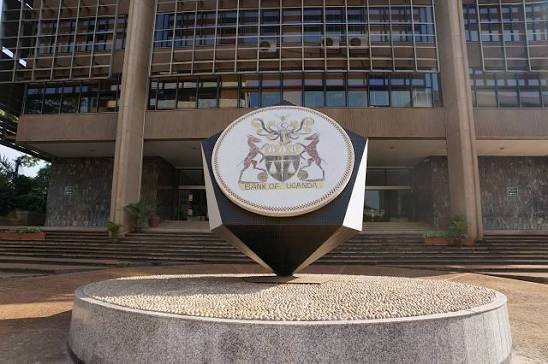
The Bank of Uganda recorded a surplus of 1.32 trillion in the financial year 2025/26, representing 100 percent increase from the previous year, while boasting lower that forecast expenditure figures. These results reflected budget discipline, prudent expenditure management, and responsible deployment of resources, while recognising that monetary policy operations carry financial costs,” says Deputy Governor, Augustus Nuwagaba.
In a bid to guard against a repeat of past incidents, risk management remained a priority in the Bank’s operations across all levels like the budgeting process, project execution, and daily operations.
”The Bank has cautiously developed its risk‑appetite framework comprising of risk registers, key risk indicators, cybersecurity controls, and incident‑management arrangements,” says Prof Nuwagaba.

He says that in 2026/27, they will deepen digital transformation, staff capability, operational resilience, financial discipline, and responsible resources use all aimed at building the Central bank of the future.
The Bank registered a 24 percent jump in net operating income to 1.91 trillion shillings for the year ended June 2026, according to the financial performance results. This figure does not include foreign exchange gains and losses, in a year that was characterised by both appreciation (in mainly in the first three quarters) and depreciation especially in the last four months.
”Performance was achieved despite geopolitical tensions, foreign exchange pressures and increased monetary policy and liquidity-management interventions,” says Executive Director Finance, Richard Byarugaba. “Although these interventions increased interest costs, the Bank maintained expenditure discipline and contained controllable costs within approved budgets.”
The results signed off by Auditor General Edward Akol, also show that the performance was boosted by “prudent expenditure and general management of costs,” resulting in a the cost-to-income ratio of 47.5 percent, against the 75 percent target.
Shareholders’ funds strengthened by 25 percent, supported by the net surplus generated during the financial year, while foreign exchange reserves increased by 56 percent to 6.688 billion dollars.
Byarugaba says that this has enhanced the Bank’s external financial resilience and capacity of to meet its monetary and reserve management obligations.
The priorities that were pursued included financial sustainability by strengthening capital reserves and maintaining sufficient financial capacity to sustainably execute the Bank’s statutory mandate, according to Byarugaba.
Going forward, the Bank says, it will focus on sustaining earnings growth, strengthening cost and risk management, optimising resource utilisation and preserving adequate capital and liquidity buffers to support its statutory mandate.
The growth was driven mostly by stronger interest earnings, comprising 1.92 trillion shillings, followed by increased returns from the expanded foreign exchange reserve portfolio of 642 billion shillings. This was also in addition to interest from advances to Government and Government securities of 1.102 trillion shillings.
”The Bank maintained strong cost efficiency and expenditure discipline during FY 2025/26 despite pressures from increased monetary policy operations and higher administrative costs,” he says. When interest expense on monetary policy operations is excluded, the Bank shows total expenses increased by 11 percent to 736 billion shillings, largely driven by employee benefits and general administration costs of 445 billion.
Despite higher interest costs of 327 billion shillings arising from monetary policy and liquidity-management interventions to mitigate shocks, BoU maintained controllable operating expenditure within approved budgets, hence the lower than forecast resulting 47.5 percent income-cost-ratio.
During the year, BoU’s total assets increased by 21 percent to 38.7 trillion, supported mainly by a 46 percent increase in foreign assets. Foreign exchange reserves grew by 56 percent to 6,688 billion.
Money in Circulation
Currency in circulation increased by 12 (an additional 1.1 trillion shillings) in 2024/25, to 10 trillion shillings by the end of 2025/26. This growth was mainly driven by an increase in the value of banknotes, which rose by 12% (or 1.073 trillion), while the value of coins increased by 2% (5.2 billion shillings) over the same period. “The growth in currency in circulation suggests that cash demand remained resilient during FY 2025/26, notwithstanding the continued expansion of digital payment channels,” the Bank says.
It also argues that the stronger growth in banknotes compared to coins indicates that the increase in cash demand was largely concentrated on higher-value transactions.
Banknote issuance during the year was managed to optimise the use of both new and reissued notes. During the year, the Bank issued banknotes valued at 14.2 trillion, 4.6 trillion shillings of this being in new notes and the 9.6 trillion shillings being reissued notes.
According to officials, the relatively high proportion of reissued notes reflects the effectiveness of the banknote sorting process in facilitating the recirculation of “fit notes”, thereby reducing reliance on new banknote issuance.
The Bank notes that the environment in the latter part of the financial year characterised by the escalation of the Middle East conflict, the drop in export prices and the slowdown in tourism earnings, among others, were unforeseen, though this did not greatly affect the performance.
”Preserving confidence in the value of currency remains the BoU’s foremost responsibility.” says Governor Atingi-Ego. “Inflation remained below the 5% medium-term target throughout the year.” He also defended the Bank’s actions on the Central Bank Rate and raising banks’ Cash Reserve Ratio.
”Supported by prudent monetary policy, favourable domestic supply conditions, exchange-rate stability and fiscal-monetary coordination, these outcomes allowed the Monetary Policy Committee to maintain the Central Bank Rate at 9.75% while increasing the Cash Reserve Requirement from 9.5% to 11% to absorb excess liquidity and guard against emerging inflationary pressures,” said the Governor. “In doing so, we sought to balance support for economic activity with our commitment to safeguarding price stability and anchoring inflation expectations.”
But last week, BoU was compelled to raise the CBR by 225 basis points to 22 percent in addition to the recent upward revision of the Cash Reserve Ratio to 13.5% in a bid to limit the availability of cash for lending to the private sector-URN. Give us feedback on this story through our email: kamwokyatimes@gmail.com