By KT Reporter
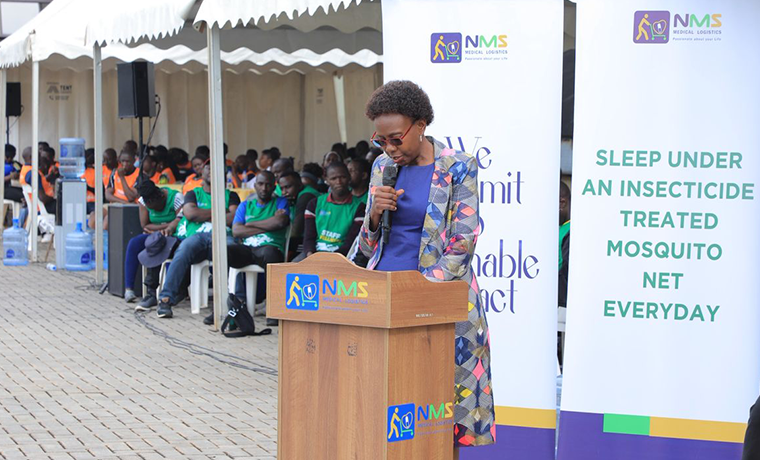
The Minister of Health, Dr Jane Ruth Aceng, has said Uganda has built one of the most robust health security systems in the world, capable of preventing, detecting, and responding rapidly to disease outbreaks.
She attributed this to strong community-based surveillance and sustained government investment in health infrastructure.

Addressing journalists at the NRM Secretariat in Kampala, Dr Aceng highlighted the achievements of the ruling government, which is seeking to extend its leadership beyond 40 years.
She said Uganda’s disease surveillance system starts at the grassroots, where Village Health Teams (VHTs) and Community Health Extension Workers are trained to identify and report unusual health events within communities.
Aceng explained that these frontline health workers are equipped with digital tools, including iPads installed with reporting applications, enabling them to transmit real-time data through the Integrated Community Health Information System directly to district health offices and the Ministry of Health.
Dr Aceng noted that Uganda has established 17 Regional Emergency Operations Centres that receive daily reports from districts nationwide.
She said system allows the ministry to monitor health trends through a central dashboard and respond swiftly to emerging threats.
The minister revealed that more than 400 epidemiologists have been trained, with plans to increase the number to match Uganda’s vulnerability to disease outbreaks due to its location in the Congo Basin and tropical rainforest region.
She added that specialised isolation and treatment units have been established in major hospitals, including facilities in Kampala and regional referral hospitals.
Dr Aceng said once an unusual health event is reported, emergency response teams are immediately deployed to investigate, collect samples and either analyse them using mobile laboratories or transport them through the national sample transport network to reference laboratories.
She cited Uganda’s handling of the COVID-19 pandemic as evidence of the system’s effectiveness, noting that the country was ranked among the top ten best-performing nations globally during the crisis. Turning to community health services, Dr Aceng emphasised that disease prevention begins and ends at the community level.
.She disclosed that more than 5,290 Community Health Extension Workers have so far been trained, with an additional 3,000 currently undergoing training. The government targets more than 20,000 extension workers nationwide under the Parish Development Model, where community health services are anchored at the parish level.
On digitalisation, Dr Aceng said the health sector has implemented three major systems: a national electronic medical records system, a community health information system and an enterprise resource planning system that tracks medicines from procurement to the district level.
She also noted improvements in medical supplies, saying the National Medical Stores operates Africa’s largest and most modern pharmaceutical warehouse at Kajjansi, with the capacity to store vaccines for large-scale disease outbreaks.
Government investment in medicines, she said, has increased by 60 per cent over the past five years, while life expectancy has risen from 46 to 68 years.
On health infrastructure, she said several general hospitals have been renovated, staffing levels increased, and modern equipment installed, including digital X-ray machines in regional referral hospitals.
Health Centre IVs have been upgraded to operate as community hospitals, while more than 430 Health Centre IIIs have been established over the past five years, raising national coverage to 71 per cent.
In emergency medical services, Dr Aceng said ambulance coverage has increased from 2 per cent in 2015 to 64 per cent, with a national fleet of 450 ambulances, including intensive care and marine units.
She added that government investment in laboratories has significantly expanded disease detection capacity through public health laboratories, mobile labs and five nationally recognised centres of excellence, including the Uganda Virus Research Institute and the National TB Reference Laboratory
According to the minister, laboratory funding has increased from Shs11 billion in 2015 to Shs84 billion in 2024, excluding partner support.Dr Aceng said these investments have positioned Uganda to respond effectively to both current and future public health threats.
NRM Deputy Secretary General Rose Namayanja Nsereko said the achievements demonstrate the party’s commitment to protecting gains in the health sector and urged voters to support the NRM in the January 15, 2026, elections to further strengthen healthcare delivery.
However, despite the gains outlined by the government, many Ugandans continue to seek medical treatment abroad, particularly in India, Kenya, Turkey and South Africa.
Health experts explain that while Uganda’s health security system is strong in disease surveillance and outbreak response, gaps remain in specialised and tertiary care.
Critics argue that the country still lacks sufficient specialised doctors, advanced diagnostic equipment and high-end treatment facilities for complex conditions such as cancer, heart disease, kidney failure, and neurological disorders.
They also point to frequent medicine stock-outs, high patient-to-doctor ratios, limited intensive care capacity, and inconsistent service quality across public hospitals.
Lack of basics like X-ray machines at some of the district facilities has been raised at the opposition candidate and the ruling party’s presidential campaigns.
Civil society organisations further note that underfunding at the facility level, low health worker pay, and governance challenges affect service delivery, pushing patients who can afford it to seek care abroad or in private hospitals locally.
They argue that strengthening referral hospitals, retaining specialists, and improving patient experience are critical if medical tourism out of Uganda is to be reduced.
Nevertheless, government officials maintain that ongoing investments are intended to gradually close these gaps and reduce the need for Ugandans to seek treatment outside the country.
-URN. Give us feedback on this story through our email: kamwokyatimes@gmail.com