By KT Reporter
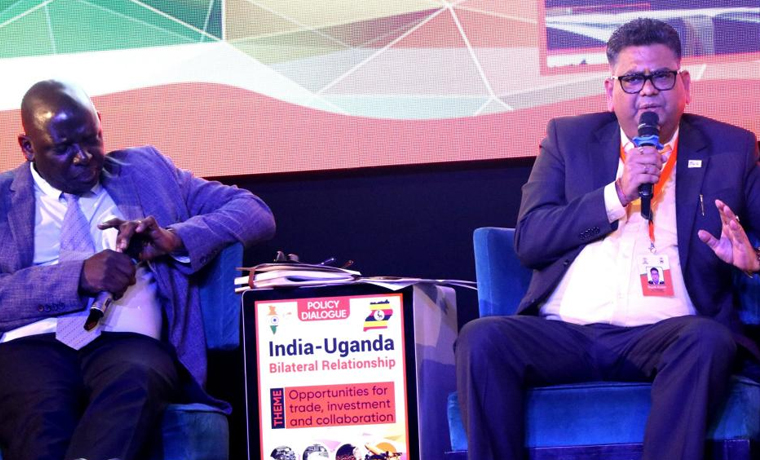
Traders attending the India-Uganda bilateral relationship policy dialogue have expressed concern over the absence of incentives for importers of pharmaceutical products complaining that they are instead strained by what they referred to as double taxation.
The traders insisted that they currently face double taxation on many surgical products including gloves whereby they have to undergo several verifications whereby in addition to the pre-export verification of conformity fees paid in India, once they arrive in Uganda, they have to pay for certifications by the Uganda National Bureau of Standards -UNBS and the National Drug Authority -NDA.

They further expressed frustration that after paying more than 300 dollars for testing in India, sometimes when the shipment gets here it is failed for standards by Ugandan regulators.
However, when responding to these concerns, Patricia Bageine Ejalu, UNBS Deputy Executive Director in charge of Standards, said that what traders are referring to as duplication is not actually double taxation or duplication of each other’s requirements as each of the regulators does a different thing.
Saying that there’s an ongoing review of the NDA act to streamline their mandate, Ejalu explained that especially for food supplements and medical devices, there are tests that UNBS does and those that are done by NDA when it comes to medicinal claims in some of these products.
On his part, Jude Ochieng, a Tariff Supervisor at Uganda Revenue Authority -URA said actually the tax structure on pharmaceutical products currently do not have duties and added however that the incentive schemes are more generous for companies that set up here because the government is currently pushing for import substitution.
Ochieng was speaking just after researchers at the Economic Policy Research Center -EPRC shared results of their analysis showing that in 2024 alone, Uganda imported from India high value goods including pharmaceutical products, vehicles and machinery worth over 1.3billion dollars.
They also noted that India’s direct foreign investment stock into Uganda had grown two-fold from 128million in 2016 to 353million in 2023.
EPRC Executive Director Sarah Sewanyana said that while Uganda and India have signed several agreements to facilitate trade between themselves there are still hurdles and trade imbalances noting that India needs to soften further to allow imports from Uganda. She said that in 2024, Uganda recorded a trade deficit exceeding 208 million dollars.
This dialogue, attended by the High Commissioner of India to Uganda Upender Singh Rawat, was meant to explore partnerships between the two countries and showcase investment opportunities that each of the countries can explore.
Rajesh Kumar the chairman of Indian Business Forum Uganda, highlighted Indian businesses’ contributions to the national economy in terms of taxes and jobs. He told investors, Uganda was flowing with opportunities that need to be tapped.
-URN. Give us feedback on this story through our email: kamwokyatimes@gmail.com