By KT Reporter
As the world celebrates the International Day for Biological Diversity under this year’s theme Harmony with Nature today Agaba Denis, a Ugandan teacher and conservationist, perfectly demonstrates how showing schoolchildren Eco-friendly ways to farm can protect endangered mountain gorillas while lifting families out of poverty.
His innovative program trains students to grow mushrooms and indigenous medicinal trees, creating a model that can be expanded to other places. Its outcomes include helping protect the 459 endangered mountain gorillas in Bwindi Impenetrable National Park – a UNESCO World Heritage Site and home to nearly half the world’s remaining population – as well as wildlife in Mgahinga Gorilla National Park, amid ongoing threats from habitat loss and human-wildlife conflict.

Agaba’s initiative is implemented through Wildlife Clubs of Uganda (WCU) and supported by conservation education resources by the Pan African Conservation Education (PACE) run by UK-based conservation organization, Tusk. The programme teaches students sustainable agricultural practices, including mushroom cultivation.
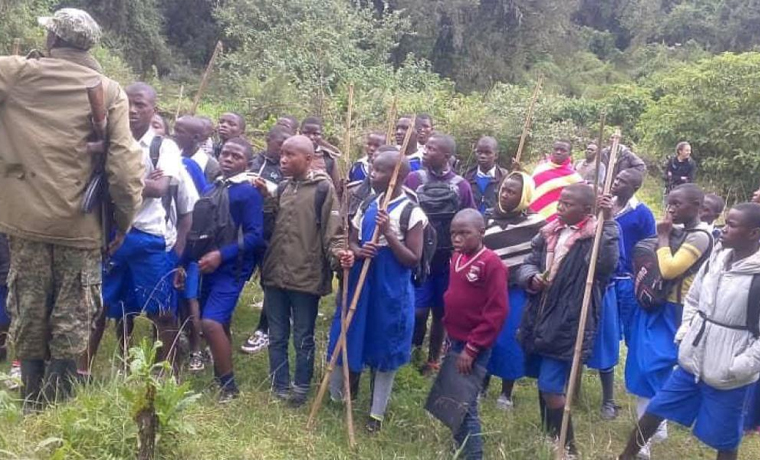
At two institutions in Kisoro District, St. George Primary School and Mutolere School of Nursing, students have been successfully growing and selling mushrooms since the start of 2024, earning income for their schools. The harvested mushrooms are also part of the meals at the two institutions as protein substitutes.
“When children learn to grow mushrooms, they take that knowledge home,” Agaba, who acts as the regional coordinator for WCU in Kigezi Sub-region, said.
“Families now have an alternative source of food and income, which means they rely less on the forest for survival.”
The connection between mushrooms and gorillas may not be obvious at first glance, but in this densely populated region, where communities often depend on forest resources for firewood, medicinal plants, and farmland, reducing deforestation is critical. By providing families with sustainable livelihood options, Agaba’s program helps curb illegal logging, bushmeat hunting, and other activities that threaten gorilla habitats.
For many families near Bwindi and Mgahinga, poverty drives destructive environmental practices. When parents struggle to afford school fees or basic necessities, they may turn to the forest for quick resources – cutting trees for charcoal or encroaching on parkland for agriculture. Agaba’s mushroom initiative disrupts this cycle.
“One student’s family started growing mushrooms at home after learning the technique in school,” Agaba said. “Now, they sell their harvest at local markets, earning enough to pay school fees and buy household essentials – without cutting down a single tree.”
A kilogram of mushroom sells for 8,000 Ugandan Shillings at the local market. Late last year students at St. George Primary School sold their surplus mushrooms worth 270,000 Ugandan Shillings and spent the money to buy books for the school, Agaba said.
The economic benefits are tangible, but the conservation impact is even more profound. Bwindi’s mountain gorillas, a key ecotourism attraction, depend on intact forests for survival. By reducing the need for forest exploitation, Agaba’s students are indirectly safeguarding the gorillas’ future.
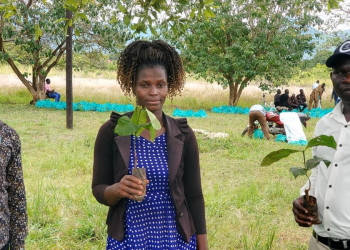
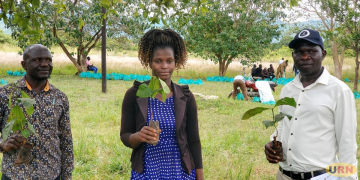
The mushroom project is just one part of Agaba’s broader conservation education strategy. Through Wildlife Clubs, students also learn tree-planting (including indigenous species like Prunus africana), organic farming, and plastic recycling – all designed to foster environmental stewardship.
The Prunus africana, known locally as the “African cherry,” forms the backbone of the medicinal component. Its bark, used to treat everything from fevers to prostate conditions, has been traditionally harvested from wild trees in gorilla habitat.
“This is conservation that works on multiple fronts,” explains Agaba. “The mushrooms provide immediate income, while the medicinal trees offer long-term healthcare solutions. Together, they reduce the need to enter the forest where gorillas live.”
While two schools have seen success in mushroom growing, Agaba is optimistic that the 86 active schools under his program will take up the initiative. This he believes could help entire communities shift from forest dependence.
The challenge, he says, is the considerable distance between schools, which makes training and monitoring their progress difficult. To address this issue, Agaba seeks partnerships with local tour companies. Tourists visiting the area to see gorillas could also visit schools, where students showcase their initiatives aimed at protecting the gorillas’ habitat.
“These tourists could donate to the schools, providing motivation for both students and teachers by showing them that their efforts are recognised and can generate income,” Agaba said.
As the world marks International Day for Biological Diversity (May 22), Agaba’s work underscores the power of grassroots conservation. His message to educators and policymakers is clear: “Invest in children. When they learn sustainable skills, they don’t just improve their own lives – they protect our planet.”-URN. Give us feedback on this story through our email: kamwokyatimes@gmail.com