By KT Reporter
The Ministry of Health has delivered a consignment of R21 Matrix M malaria vaccine to Gulu District as part of the government’s efforts to combat Malaria disease in Northern Uganda.
The 3,900 doses of vaccines were delivered a week ago to the district health department. They are intended to protect the vulnerable population, especially children under five years who are at high risk of malaria infection.

The delivery marks the beginning of a nationwide malaria vaccination programme designed to complement existing prevention measures such as the use of insecticide-treated mosquito nets and indoor residual spraying in 105 high-risk districts.
William Onyai, the Gulu District Health Educator, told Uganda Radio Network on Monday that they have started distributing the vaccines to all 22 health facilities where vaccination is expected to be conducted.
Onyai noted that they will commence vaccination once the Ministry rolls out mass national vaccination against malaria. The Health Ministry is set to launch the Malaria vaccine into the routine immunization schedule on April 2 from Apac District, one of the 105 high-risk districts selected for the vaccination programme.
According to Onyai, while the vaccines will help in reducing the frequency of malaria, its severity and reducing deaths in children, it won’t take away other preventive measures such as seeking early treatment for symptoms of malaria, sleeping under insecticide-treated mosquito nets among others.
He noted that for children to get maximum protection from the vaccine, a child is recommended to get four doses of the vaccine with the first being at six months, the second at seven months, the third at eight months and the fourth dose at 18 months.
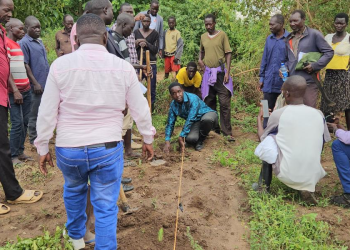
Onyai encouraged parents and guardians of children between six to 18 months to embrace the vaccine, arguing that it’s safe. To avoid vaccine hesitancy within the community, Onyai said they embarked on mass sensitization, including training local leaders, cultural and religious leaders, to debunk some of the misconceptions peddled in rural areas about vaccines.
Dr Kenneth Cana, the acting Gulu District Health Officer, noted that all health workers in all the health facilities underwent training for administering the malaria vaccine in the last two weeks.
According to Dr Cana, the vaccination exercise will kick off today across the selected 22 health facilities, and he called on parents and guardians to embrace it.
The government’s plans to introduce the malaria vaccines come amidst the high disease burden, with statistics indicating that at least 16 children die of the disease every day across the country.
In Gulu District in Particular, Malaria remains among the top five causes of morbidity in children under five years, according to the district’s sector performance indicator for quarters 1 and 2 for the financial year 2024/25.
Data provided by the district biostatistician indicate that during the period, a total of 10,434 cases of malaria were recorded among children under the age of five.
Meanwhile, in children above five years, there were a total of 39,081 cases of malaria were registered from the 22 health facilities.
Cumulatively, both cases in children under five and above five years accounted for 49 percent of the total top causes of morbidity in the district.
According to the data, malaria disease, however, accounted for 7 percent of the top five causes of mortality in children under and above five years.
Uganda is one of 17 countries introducing the malaria vaccine as recommended by the World Health Organization (WHO)-URN. Give us feedback on this story through our email: kamwokyatimes@gmail.com