By KT Reporter
Pader District has failed to implement the Micro Scale Irrigation Scheme despite receiving over 800 million shillings under the Uganda Intergovernmental Fiscal Transfers (UGIFT) Program.
The initiative, co-financed by the World Bank and the government, was designed to support small-scale farmers in growing crops during the dry season. However, reports from the district indicate that procurement delays, contractor inefficiencies, and financial constraints among farmers have stalled the project, leaving funds unutilized and beneficiaries frustrated.

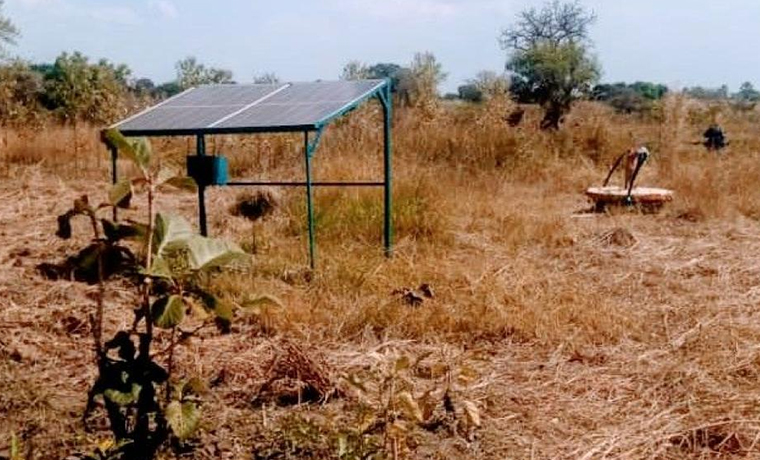
The scheme requires farmers to co-fund the irrigation systems, contributing 25% for solar-powered systems and 75% for diesel or petrol-powered systems. The guidelines state that to qualify, a farmer must own less than 2.5 acres and contribute at least one million shillings before installation. Despite the district’s mobilization efforts, only seven farmers committed.
According to the district production department, sensitization and farm visits were conducted in the 2022/2023 financial year, and five demonstration sites were planned. However, only one was installed in Puranga Town Council and overseen by one of the farmers identified as Martine Okello, while the remaining four in Pader and Pajule Town Councils, Pader and Latanya Sub-counties, remained incomplete.
Phillips Acaye, the district senior agricultural engineer and focal person for the program, has attributed the delay to procurement challenges and contractor inefficiencies. He revealed that the contractor failed to report on time due to delays in securing bank funding. As a result, 75% of the allocated 106 million shillings was returned to the Treasury, further delaying the project.
The department further explained that, in the 2023/2024 financial year, an additional 353.8 million shillings was allocated. Although all five demonstration sites were eventually set up, no irrigation systems were installed for the 21 individual farmers.
The contractor reportedly prioritized other districts, and the procurement department deemed it impossible to hire another contractor within the financial year. And, due to that, 373 million shillings, which would have meant for purchasing irrigation equipment, was also returned to the Treasury.
Simon Peter Nyeko from Awere Sub-county explained that he had to seek a loan from Centenary Bank to meet his contribution. He questioned the flat rate of five million shillings per irrigation system, arguing that it lacks flexibility and value for money.
Bonny Odora Okello from Latanya Sub-county expressed frustration over delays, stating that the requirement for group payments complicates the process since farmers have different financial capacities. He also blamed the district leaders, particularly the procurement team, for ignoring technical and focal persons during decision-making.
A district executive member, speaking on the condition of anonymity, called for an investigation into the alleged mismanagement of funds, emphasizing that timely execution would have ensured farmers were already benefiting from the program. Acaye revealed that 476.3 million shillings have been allocated in the 2024/2025 financial year, and efforts are being made to ensure closer coordination with contractors.
With the rainy season already underway, farmers fear the project may once again fail to deliver, and some have called on the Office of the President to intervene.
Many farmers remain skeptical about whether the program will ever materialize as delays and inefficiencies continue to hinder progress as the program is expected to end this June 2025-URN. Give us feedback on this story through our email: kamwokyatimes@gmail.com