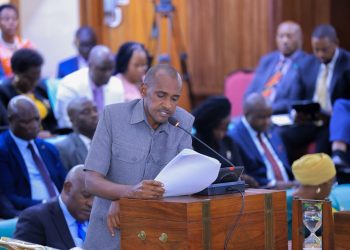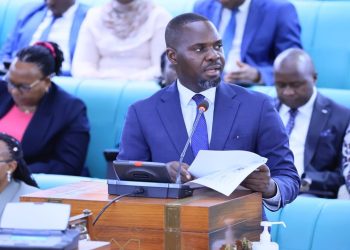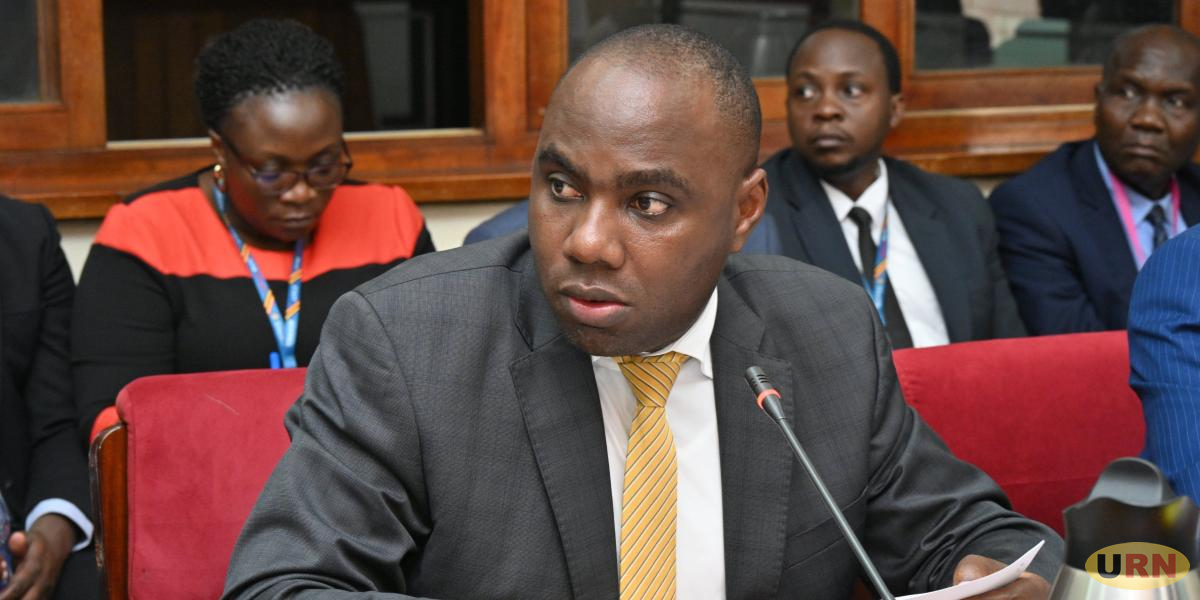
Finance Minister Henry Musasizi on Tuesday tabled a government proposal in Parliament to borrow up to €142.69 million (approximately UGX 674.114 billion) from Citi Bank to upgrade two strategic roads in the Kigezi sub-region.
The roads serve as vital arteries to Bwindi Impenetrable National Park, a United Nations Educational, Scientific and Cultural Organization – UNESCO World Heritage Site and home to mountain gorillas.
The financing would convert the 47-kilometre Hamurwa–Kerere–Kanungu Road and the 32-kilometre Kanyantorogo–Butogota–Buhoma Road to paved standard. Buhoma serves as a primary northern gateway for gorilla trekking, one of Uganda’s highest-value tourism products.

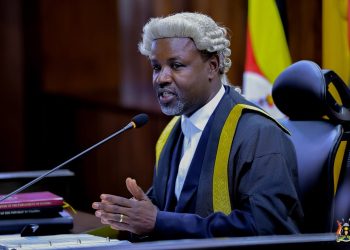
Deputy Speaker Thomas Tayebwa referred the request to the Committee on National Economy for scrutiny in line with Parliament’s Rules of Procedure. The proposal has been laid but not yet approved.
“These are not roads of where they are. They are roads of where the business is,” Musasizi told the House on 21 October 2026, framing the project as an investment in tourism revenue rather than purely local connectivity.
He described tourism as “the only sure way now of attracting revenue” and noted that government is mobilising resources for additional tourism roads, including links such as Kitgum to Kidepo.
Tayebwa backed the economic case, highlighting the competitive gap with regional peers. “In a neighbouring country, you find a tourist is paying US$25,000 per night. In our country, you negotiate for US$500 per night,” he said, adding that tourists he had spoken to questioned how they could travel on the current roads.,
The initiative aligns with President Yoweri Museveni’s campaign pledges in November 2025, when he committed to tarmacking stretches including the broader Hamurwa–Kerere–Kanungu–Kanyantorogo–Butogota–Buhoma corridor as part of infrastructure priorities for Kanungu and the wider Kigezi region to boost trade and service delivery.
Uganda’s tourism sector has posted strong post-pandemic recovery. Official figures from the Ministry of Tourism, Wildlife and Antiquities show international visitor arrivals rose 19.7 percent to about 1.64 million in 2025, generating approximately US$1.62 billion (around UGX 5.8 trillion) in receipts.
Tourism accounts for a significant share of service exports and supports hundreds of thousands of jobs. Gorilla tourism specifically remains a high-yield segment, with Bwindi and Mgahinga parks generating substantial revenue through trekking permits and related services.
Under Article 159 of the Constitution and the Public Finance Management Act, 2015, government borrowing requires prior parliamentary approval.
Loan proposals are typically examined by the Committee on National Economy for terms, sustainability and project readiness before a plenary vote.
Recent standard operating procedures aim to streamline processing while emphasising performance thresholds for externally financed projects. The roads form part of the gorilla tourism circuit that underpins Uganda’s positioning as a premier wildlife destination.
The Committee on National Economy will now review the draft financing terms, disbursement schedule, repayment obligations and project details. Parliament retains the final authority to approve, amend or reject the borrowing request-URN. Give us feedback on this story through our email: kamwokyatimes@gmail.com