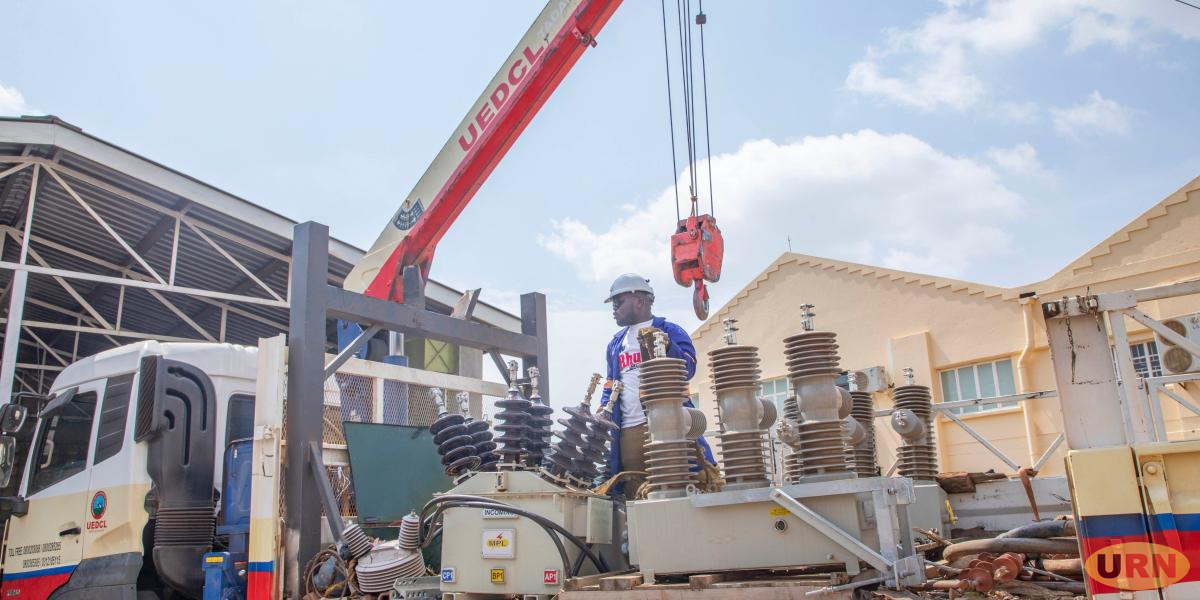
Electricity distributor has attributed persistent power interruptions to rapidly growing demand, overloaded substations and inadequate alternative supply routes.
Eng. Joselynne Rwabogo Rwakakooko, Acting Managing Director of Uganda Electricity Distribution Company Limited (UEDCL), acknowledged the gap between customers’ expectations and the network’s current performance, saying the company was prioritising areas experiencing the most frequent disruptions.
“What a customer ultimately wants is for the power to stay on, and to return quickly if it fails,” Rwakakooko told delegates at the ongoing Renewable Energy Conference 2026 and Expo at Kampala Serena Hotel.

“Our responsibility is not simply to explain these constraints, but to resolve them through both short-term fixes and long-term assets.”
According to Rwakakooko, UEDCL’s customer base has expanded from approximately 1.6 million five years ago to 2.78 million, an increase of about 74 per cent. The growth has intensified pressure on infrastructure that has not expanded at the same pace.
Substations, particularly in Kampala and the central business district, are reportedly operating at 80 per cent capacity or above.
Many lack redundant feeders that would allow electricity to be rerouted when a fault occurs, leaving customers without power until repairs are completed.
UEDCL figures put peak demand at approximately 1,488 megawatts against firm generation capacity of about 1,450MW. Sector projections presented at the event indicate a potential supply deficit of 147MW by the end of the current financial year.
The country’s electricity generation is predominantly renewable, particularly hydropower.
While this supports a lower-carbon electricity mix, dependence on water availability makes hydrological conditions an important consideration in long-term supply planning.
UEDCL has secured approval for a $135 million investment package, equivalent to approximately Shs562.82 billion. The package forms part of a broader, multi-year network recovery programme estimated at nearly $1 billion, or about Shs4.17 trillion, through 2030.
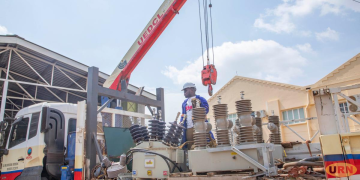
Among the interventions under way are transformer upgrades at Kawanda, intended to ease pressure on Gayaza, Namugongo and Seeta; alternative supply routes in Mukono; and transformer improvements in Mityana and Mubende, which the company says have significantly reduced interruptions.
Network connections to the new Maya substation are also expected to improve supply to Mutundwe, Budo and Nakawuka.
The company is recruiting 100 additional technicians and intensifying vegetation management to reduce faults caused by trees and other obstructions near electricity lines.
UEDCL has also pledged to improve customer communication by providing more specific and accurate information about outages instead of relying on generic explanations.
The company’s assumption of distribution responsibilities from private concessionaire Umeme on April 1, 2025, provides important context for the investment challenge.
The transfer marked the end of Umeme’s 20-year concession and UEDCL’s return to full operational control of the national distribution network. The extent to which current outages reflect inherited infrastructure weaknesses, transition-related difficulties or subsequent operational decisions requires clearer performance data.
Eng. Cecilia Menya, Commissioner for the Electrical Power Department at the Ministry of Energy and Mineral Development, outlined plans to increase generation capacity, including the proposed Kiba Hydropower Project.
Following stakeholder consultations, a 510MW option has been selected. She explained that in the interim, the ministry is pursuing gas-to-power options, including a projected 39–51MW from the Tilenga and Kingfisher oil developments, alongside expressions of interest for a further 100MW.
Other interventions include the proposed 20MW second phase of the Ituka solar project, biomass cogeneration and network upgrades intended to unlock electricity from constrained small hydropower plants.
Abdon Atwine, Commissioner for Rural Electrification, told URN that grid electrification had recovered to approximately 25 per cent following a post-COVID-19 decline, while off-grid access, primarily through solar, stood at about 37.5 per cent.
The Electricity Access Scale-Up Project targets approximately 1.5 million new connections.
Dr Adela Ngeisha of Makerere University Business School questioned whether continued grid expansion risked overloading the existing system and called for greater consideration of microgrids and mini-grids.
Dr Ruth Atuhaire pressed for clearer information on electricity export revenues, cumulative environmental impacts of major projects near oil developments and tourism assets, regional equity in investment, and preparedness for a shift away from charcoal amid rising fuel and financing costs.
Akut Rosette Marie urged the sector to incorporate circular-economy principles so that retired electrical equipment could be recycled rather than discarded.
Rwakakooko described rising electricity demand as evidence of economic progress, pointing to the country’s ambitions for universal access, industrialisation and national development. “The surging demand for electricity is a sign of economic progress as we push toward universal access, industrialisation and our National Development Plan targets,” she said, adding that the company was prioritising areas experiencing difficulties-URN. Give us feedback on this story through our email: kamwokyatimes@gmail.com