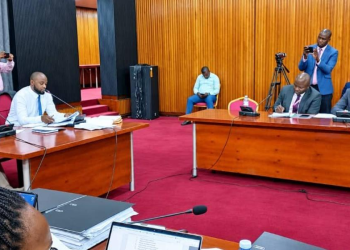
Agago District authorities have welcomed a human-wildlife conflict assessment aimed at addressing crop destruction, livestock killings, and delayed compensation for communities affected by stray elephants and buffaloes around Kidepo Valley Conservation Area.
The assessment is being conducted by Karenga Kaabong Abim Kotido Kitgum Agago (KKAKKA) Community Wildlife Association in partnership with the African Wildlife Foundation (AWF) to establish the extent of human-wildlife conflicts and identify interventions to improve coexistence between communities and wildlife.
The exercise comes amid growing fear among residents, particularly in Lapono and Adilang sub-counties, where elephants and buffaloes have reportedly destroyed crop gardens and attacked livestock.

The assessment team reported that acres of crops had been destroyed, one cow killed and two others injured, while two people, including 16-year-old Oyoo Masiliano, a resident of Tee-Obita Village in Lapono Sub-county, and Arin James from Kiwaro in Lokole Sub-county, were reportedly killed in separate incidents on Monday this week.
The incidents have heightened fear among residents, with some people reportedly afraid to access their gardens for cultivation and harvesting, while children also face difficulties going to school.
Peter Abas, the executive director of KKAAKA Community Wildlife Association, said the assessment would help identify the challenges communities face, including inadequate compensation rates and delays in payments for losses caused by wildlife.
Abas said several districts covered by the association lack locally established compensation rates for crop damage, forcing authorities to rely on rates developed for other areas.
“For Kitgum and Agago, we are using the compensation rates of Gulu, which we are using for the region of Acholi,” Abas said.
He urged district councils to develop local compensation rates that reflect the value of crops grown in their respective areas, including maize, sesame, millet and potatoes, subject to approval by the government evaluator.
Abas said locally determined rates would help ensure that farmers receive compensation that reflects the actual value of their losses rather than relying on rates that may not adequately represent local conditions.
The association has distributed crop-damage reporting forms and registers to affected sub-counties, including Adilang, Adilang Town Council, Lerakato, Lapono, Laimuto, Paimol and Omiya-Pachwa.
Residents whose crops are damaged are expected to record their losses in the registers and complete the forms to enable follow-up and tracking of compensation claims.
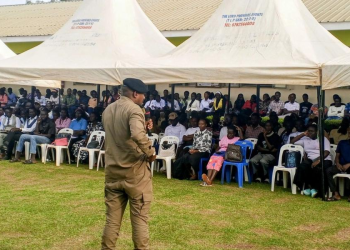
Abas said the assessment had also involved household interviews in Lapono and Adilang, where two enumerators interviewed 53 households each to establish the extent of losses and how wildlife incursions have affected livelihoods.
Samuel Nyeko, the Agago Principal Assistant Secretary, said the district had continued receiving complaints from communities over crop destruction and delays in compensating people affected by wildlife.
Nyeko said the findings would guide decisions by the district and conservation organisations on how to address the challenges.
He urged district officials and other stakeholders participating in the exercise to provide accurate information to ensure that the findings reflect the experiences of affected communities.
Regina Lamwaka, the Agago District Speaker, said the district council was ready to work with technical officials and the assessment team to establish local compensation rates.
Lamwaka said the council needed reliable data to guide its decisions and pledged to support efforts to have the proposed rates presented for approval.
She also called for stronger grievance committees and clearer procedures for reporting wildlife-related incidents, saying many residents had lost confidence in the compensation process because of prolonged delays.
“Some people even give up, saying that even if you give them the data and information, they will not be paid,” Lamwaka said.
Sam Okidi, the Agago District Agricultural Officer, attributed some of the conservation challenges to increasing pressure on land as the population grows and more forests are cleared for cultivation.
Okidi also cited uncontrolled bush burning and changing weather patterns, saying the destruction of natural habitats and drying of water sources could affect wildlife movements.
Churchill Olal, the Agago District Natural Resources Officer, called for better coordination among district leaders on conservation matters.
Olal said conflicting statements by local leaders about conservation areas could undermine conservation efforts and create confusion among communities.
He also cautioned against implementing infrastructure projects within wildlife habitats without detailed environmental impact assessments, saying such developments could disrupt animal movements and their natural environment.
The assessment is part of a wider exercise covering six districts in the Kidepo landscape.
The findings are expected to inform future interventions by the African Wildlife Foundation and its partners to address human-wildlife conflict and improve conservation efforts-URN. Give us feedback on this story through our email: kamwokyatimes@gmail.com