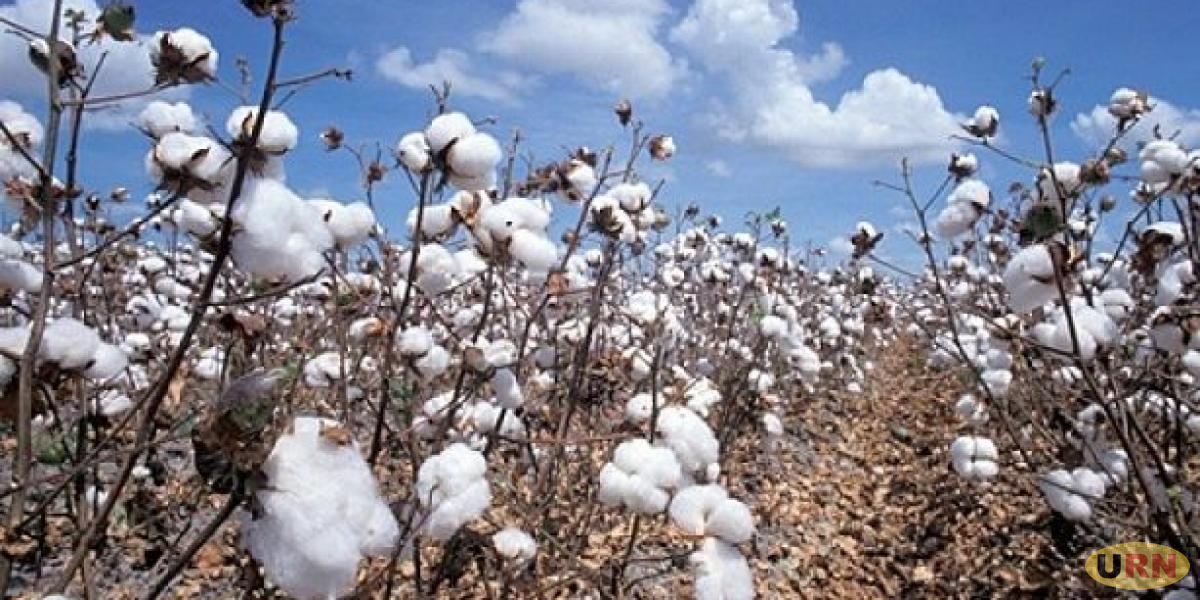
President Yoweri Museveni has called for increased cotton production to supply Uganda’s textile industry, citing the low earnings of smallholder farmers and urging greater involvement of large-scale producers and public institutions such as the Uganda Prisons Service.
Speaking during the virtual 64th Independence Day celebrations at State House, Entebbe, on Friday, Museveni questioned cotton production figures presented by the Commissioner General of Prisons, Can. Dr Johnson Byabashaija, before being informed that the service’s output had increased from approximately one million kilogrammes in 2024 to 2.35 million kilogrammes in 2025.
The President initially took the reported figure of one million to mean bales, prompting him to recall Uganda’s historical production peak of approximately 480,000 bales in 1969 and demand clarification.

“Are you sure? You check,” Museveni said, asking officials to verify the figures.
Byabashaija subsequently clarified that the reported output was measured in kilogrammes and estimated that the 2025 production represented 4,700 bales, a bale being 400 kilogrammes.
However, the figures require further reconciliation. At 400 kilogrammes per bale, 2.35 million kilogrammes would translate into approximately 5,875 bales rather than 4,700. Prison Service is yet to clear the discrepancy.
Museveni used the exchange to explain why he has encouraged cotton production by large-scale farmers and public institutions, arguing that Uganda needs reliable supplies of the crop to support its textile industry but must also ensure that farmers earn enough to improve their livelihoods.
He recalled visiting cotton-growing households in Pallisa District, where he said farmers were producing approximately 200 kilogrammes per acre and receiving about Shs200 per kilogramme.
At that yield and price, a farmer would earn about Shs40,000 per acre annually before deducting production costs.
Museveni said such returns cannot lift smallholder households out of poverty, particularly those with limited land that must be divided between food production and income-generating activities.
He recalled challenging an investor operating a cotton-processing facility to help farmers increase yields from 200 kilogrammes to 1,000 kilogrammes per acre.
At the same price of Shs200 per kilogramme, the higher yield would increase gross earnings from 40,000 to 200,000 shillings per acre.
Uganda Prisons Service has been involved in cotton production as part of government efforts to increase agricultural output, generate revenue and equip inmates with practical skills.
The service introduced its cotton programme in October 2016 following a presidential directive to use prison farms to support the textile industry’s demand for raw materials.
Published Prisons Service information indicates that cotton was cultivated across 40 prison farms covering 5,145 acres during the reporting period, with an annual average production of 2,963 bales. The service subsequently set a target of expanding cotton cultivation to 10,000 acres.
The programme is intended to support industrial growth and government revenue while providing inmates with agricultural skills that could help them reintegrate into society after release.
However, the service faces challenges associated with inadequate machinery, weather variability and labour-intensive farming methods, according to government planning documents.
The latest figures presented by Byabashaija suggest an increase in prison cotton output between 2024 and 2025. The extent of that growth, however, needs to be assessed against consistent production records and verified bale conversions.
Cotton was historically one of Uganda’s important agricultural export commodities, supporting rural livelihoods, textile processing and foreign exchange earnings. Museveni cited the country’s reported production peak of 480,000 bales in 1969 as an indication of the sector’s former scale-URN. Give us feedback on this story through our email: kamwokyatimes@gmail.com