Uganda remains free of Ebola, the Ministry of Health declared on 6 October 2026, hours after Kenya confirmed its first death from the virus in a patient who had spent less than 24 hours on Ugandan soil.
In a statement signed by Director General of Health Services Prof. Charles Olaro, the ministry moved quickly to calm domestic and international nerves.
Screening teams at Entebbe International Airport recorded a normal temperature when the traveller departed on Jambojet flight JM8523 to Nairobi on 3 October.

“Uganda remains free of Ebola and continues to maintain strong surveillance and preparedness measures to protect public health,” Olaro said.
The patient, a Kenyan national who had lived in the Democratic Republic of Congo for seven years, fell ill about a month earlier in the DRC. He travelled by road to Kampala before boarding the flight.
Upon arrival in Nairobi he was admitted to hospital, tested positive for Bundibugyo ebolavirus (BDBV), and died on 6 October.
Kenyan authorities have quarantined 28 contacts, including family members and health workers, and are tracing 23 fellow passengers. The episode is a reminder of how porous regional borders can turn a distant outbreak into an immediate diplomatic and public-health challenge.
It also tests the systems Uganda has spent years refining under the Public Health Act (Cap. 310), which empowers the Minister of Health to declare infectious diseases notifiable, impose isolation and quarantine, and enforce disease-control measures.
Ebola virus disease has long been designated a notifiable disease under subsidiary legislation issued pursuant to that Act.
The current outbreak, caused by the rare Bundibugyo strain first identified in Uganda’s Bundibugyo District in 2007, was declared in Ituri Province, DRC, on 15 May 2026.
The World Health Organization elevated it to a Public Health Emergency of International Concern two days later.
As of 5 October 2026, the DRC had recorded 8,603 confirmed cases and 4,148 deaths across seven provinces and 64 of 167 health zones, a case-fatality rate of approximately 48 percent. Ituri remains the epicentre with 6,450 cases. More than 2,235 patients have recovered and 896 remain hospitalised in isolation.
The outbreak is now the second-largest Ebola epidemic ever recorded globally and the deadliest in DRC history.
Genetic sequencing of 22 genomes indicates a new animal-to-human spillover with 25 novel mutations, distinct from previous Bundibugyo events in 2007–08 and 2012. Critically, no licensed vaccine or approved antiviral treatment exists for this strain.
Uganda itself was drawn into the early phase. Between May and July 2026, the country recorded 20 confirmed cases and two deaths, 15 imported Congolese nationals seeking care and five local infections among health workers and a driver.
More than 800 contacts were monitored. The last patient was discharged on 16 July.
After completing the mandatory 42-day observation period (twice the maximum incubation period), the World Health Organization declared Uganda’s outbreak over on 27 August 2026. WHO Director-General Dr Tedros Adhanom Ghebreyesus praised the response.
“Uganda has demonstrated that with decisive action, Ebola outbreaks can be brought under control quickly.”
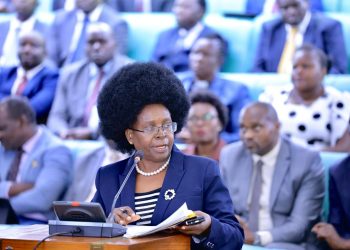
Uganda’s rapid containment was not accidental. In July 2026 Health Minister Dr Chris Baryomunsi updated Parliament on the outbreak status, reporting zero new cases in the preceding 21 days and outlining the final countdown to the 42-day mark.
The Committee on Health, chaired at the time by Hon. Dr Monday Julius Rude (Bukonzo East), publicly applauded the government’s interventions while pressing for sustained investment in border screening, laboratory capacity and cross-border cooperation with the DRC.
That parliamentary scrutiny sits within a longer tradition of legislative oversight of epidemic preparedness.
Lawmakers have repeatedly examined the adequacy of the Public Health Act framework, the resourcing of the National Public Health Emergency Operations Centre, and the need for stronger regional information-sharing protocols.
The brief transit of the Kenyan case will almost certainly return to the floor of Parliament as MPs demand reassurance that the same systems that extinguished the domestic outbreak remain fully operational.
The Ministry of Health says it has intensified measures including enhanced temperature and health screening at Entebbe and all major land borders with the DRC and South Sudan (more than 71,000 travellers were screened earlier in the outbreak); real-time information sharing with WHO, Africa CDC, Kenya and DRC authorities; isolation units, mobile laboratories and rapid-response teams kept on standby; and ongoing community risk communication emphasising early reporting, hand hygiene and safe burial practices. The economic stakes are high.
Rumours alone can empty markets, disrupt cross-border trade with the DRC and Kenya, prompt travel advisories and overwhelm health facilities with worried patients.
Canada has already extended immigration restrictions covering residents of the DRC, Uganda and South Sudan until 27 November 2026, citing ongoing regional risk even after Uganda’s outbreak was declared over.
By confirming that the Kenya case involved only a short, asymptomatic transit and that national surveillance remains active, Ugandan authorities are seeking to protect public confidence, safeguard the economy and preserve regional cooperation.
The public is urged to remain calm, rely on official information and continue observing recommended public-health measures. Alerts can be made via the Ministry of Health toll-free line 0800-100-066, SMS to 6767, or U-Report on 8500-Ug. Parliament Watch. Give us feedback on this story through our email: kamwokyatimes@gmail.com