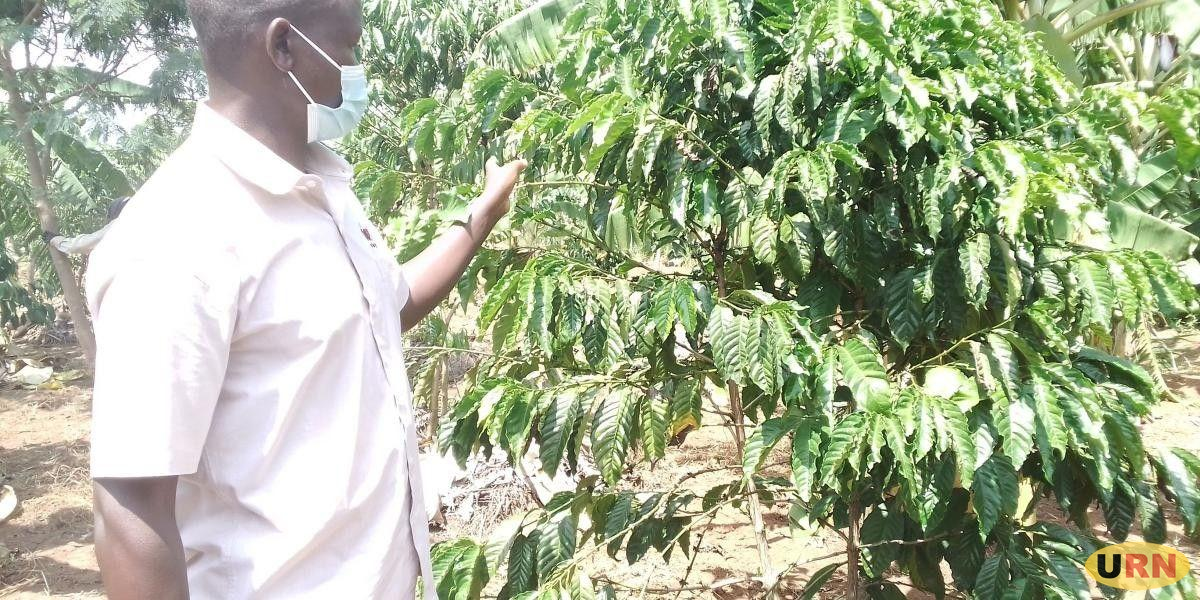
About six in every 10 coffee seedlings distributed to farmers in drought-hit Agago District have survived, despite nearly four months of dry weather that threatened the district’s new coffee crop. The survival rate comes after intense sunshine killed many of the 290,000 seedlings distributed to farmers, with some farmers struggling to keep the young plants alive after planting.
Nicholas Okino, the regional coffee extension coordinator at the Ministry of Agriculture, Animal Industry and Fisheries, said recent monitoring visits showed that reports that the entire crop had been lost were inaccurate. “On average, 60 percent survived,” Okino said.
He said some farmers had kept the seedlings under trees after receiving them, while others had already planted them when the dry spell intensified. The survival rates, however, varied significantly from farmer to farmer depending on how the gardens were prepared and how the seedlings were managed during the drought. In Kuywee, Vanessa planted 900 seedlings and lost 200, leaving 700 alive.

Okiyo Peter planted 10,000 seedlings and reported that 9,000 had survived. In Lapono, Ogwang Samuel planted 900 seedlings, of which 800 survived. Okino attributed the better survival rates in some gardens to proper preparation, including digging planting holes in advance and caring for the seedlings during the dry spell.
He urged farmers planning to grow coffee next year to prepare their gardens before collecting seedlings. “The hard task should already be done by the time the seedlings are distributed,” Okino said. John Obol Akal, a farmer in Agengo Sub-county, said he received 450 seedlings and managed to keep 370 alive despite the harsh conditions.
Akal said his farm has hard soil that can remain dry for up to a month, making access to water critical to the survival of the young coffee trees. “Water helped me a lot because I used to pour water daily whenever it was very hot,” he said. The survival of thousands of seedlings offers a rare positive development in a district that has been badly affected by the prolonged dry spell.
Agago has experienced nearly four months of severe drought, destroying food crops and affecting livestock, leaving many farming communities struggling to recover. District Chairperson Wilson Otto said the crisis had exposed the vulnerability of farmers who depend almost entirely on rainfall. “Agago District has experienced one of the driest periods for a period of almost four months. Our people have lost their crops; they have lost their animals,” Otto said.
He said the response to drought should move beyond emergency relief towards investment in irrigation systems that can allow farmers to continue producing food and livestock feed during prolonged dry spells. Otto called for increased investment in groundwater-powered irrigation and affordable technologies that can be adopted by smallholder farmers.
“The bigger investment focus of government and different humanitarian organisations should now be on irrigation. How can we make it extremely cheap for our people to adopt in a way that can allow them to have crops and feed their animals? That is what can support us,” he said. For Agago farmers, the experience with the coffee seedlings has demonstrated that even during prolonged drought, access to water and proper garden preparation can make the difference between losing a crop and keeping it alive-URN. Give us feedback on this story through our email: kamwokyatimes@gmail.com