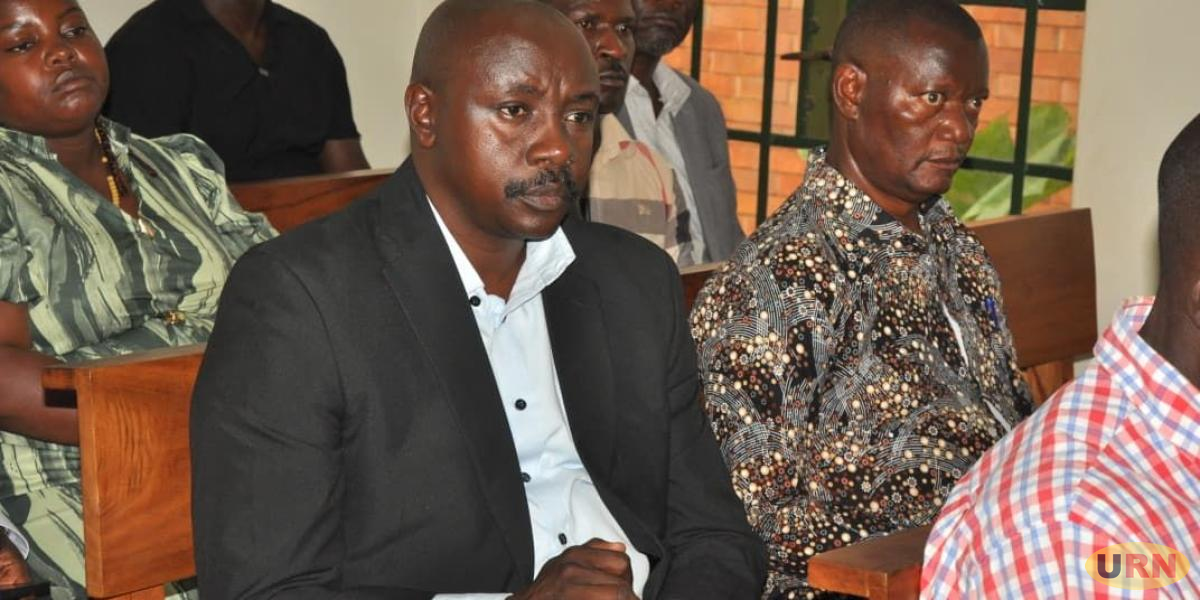
Former Wakiso District Returning Officer Tolbert Musinguzi has challenged his inclusion as a respondent in his personal capacity in a petition challenging the election of Ian Kyeyune as Wakiso District LCV Chairperson. Musinguzi, through his lawyer John Musiime, argued before the High Court in Wakiso that he cannot be held personally liable for actions he took while performing his official duties as a returning officer under the direction of the Electoral Commission.
The objection was raised during a scheduling and conferencing session before Justice George Okello on Wednesday. The election petition was filed by Nasifu Najja, the National Unity Platform (NUP) candidate who lost to Kyeyune. Najja is challenging the election on several grounds, including alleged irregularities during the nomination process, electoral offences, flaws in tallying and declaration of results, and restricted access to the tally centre.
Kyeyune is the first respondent, the Electoral Commission the second respondent, while Musinguzi is listed as the third respondent. Musiime, who also represents the Electoral Commission, relied on Section 48 of the Electoral Commission Act, which protects members and employees of the Commission and other persons performing its functions from personal liability for acts done in good faith while carrying out their official duties.

“My Lord, we still have an issue as to whether the petition is properly before this court,” Musiime said. He later clarified that the objection specifically concerned Musinguzi’s inclusion as a third respondent in his personal capacity. Musiime argued that Musinguzi’s actions during the nomination of candidates, polling, custody of electoral materials, tallying and declaration of results were performed as part of his official responsibilities and under the authority of the Electoral Commission.
He said the Electoral Commission, rather than Musinguzi as an individual, was the proper respondent because it is a body corporate capable of suing and being sued in its own name. The lawyers argued that allowing electoral officials to be sued personally over actions performed in their official capacity could expose public officers to unnecessary liability and discourage them from carrying out their statutory responsibilities.
Musinguzi has since been appointed Regional Election Officer based in Luweero. Justice Okello declined to determine the objection at the preliminary stage and directed the parties to frame it as an issue for determination during the hearing of the petition. The court also considered an application by Musiime seeking to strike out one of Najja’s affidavits on grounds that it contained hearsay evidence.
Najja’s lawyers, led by Kenneth Paul Kakande, opposed the application. Justice Okello questioned whether an entire affidavit could be struck out simply because some of its contents were allegedly hearsay. He said an affidavit could be struck out at a preliminary stage where, among other circumstances, there was a defect in its commissioning by a commissioner for oaths or where it violated applicable witness protection provisions.
The judge said concerns about hearsay could instead be addressed through cross-examination or considered when the court evaluates the evidence at the conclusion of the case. He cautioned against striking out the entire affidavit, saying it would amount to “throwing the baby out with the bathwater.” Musiime also challenged a ground in the petition questioning the legality of Kyeyune’s nomination.
He argued that any challenge to Kyeyune’s nomination should have been raised during the nomination process or within the period prescribed by electoral law, rather than being introduced after the election. The parties, with the guidance of the judge, subsequently agreed on the main issues that will determine the petition. These include whether the petition is properly brought against Musinguzi in his personal capacity, and whether Najja can raise pre-nomination and nomination complaints against Kyeyune after the election without having previously challenged them before the Electoral Commission.
If the court finds that such challenges are permissible, it will consider whether Kyeyune was qualified to contest for the position of Wakiso District LCV Chairperson. The court will also determine whether the Electoral Commission conducted the election in accordance with Part Ten of the Local Governments Act and, if any non-compliance is established, whether it substantially affected the election results. Other issues include whether Kyeyune personally committed any illegal practice or electoral offence, or whether any such offence was committed with his knowledge, consent or approval.
The court will also consider the appropriate remedies, should any of the grounds in the petition succeed. However, the scheduling and conferencing were not completed because of objections to several affidavits filed by Najja. Kyeyune and the Electoral Commission argued that about 40 of Najja’s affidavits were filed out of time and without leave of court. Kakande maintained that the affidavits were filed within the prescribed period. Justice Okello is expected to rule on the pending objections on October 12, after which the scheduling and conferencing is expected to be concluded and hearing dates set-URN. Give us feedback on this story through our email: kamwokyatimes@gmail.com