The National Enterprise Corporation (NEC), the commercial arm of the Uganda People’s Defence Forces (UPDF), has generated more than Shs27.6 billion in dividends from its joint ventures over the past 15 years and reinvested the proceeds in strategic national projects.
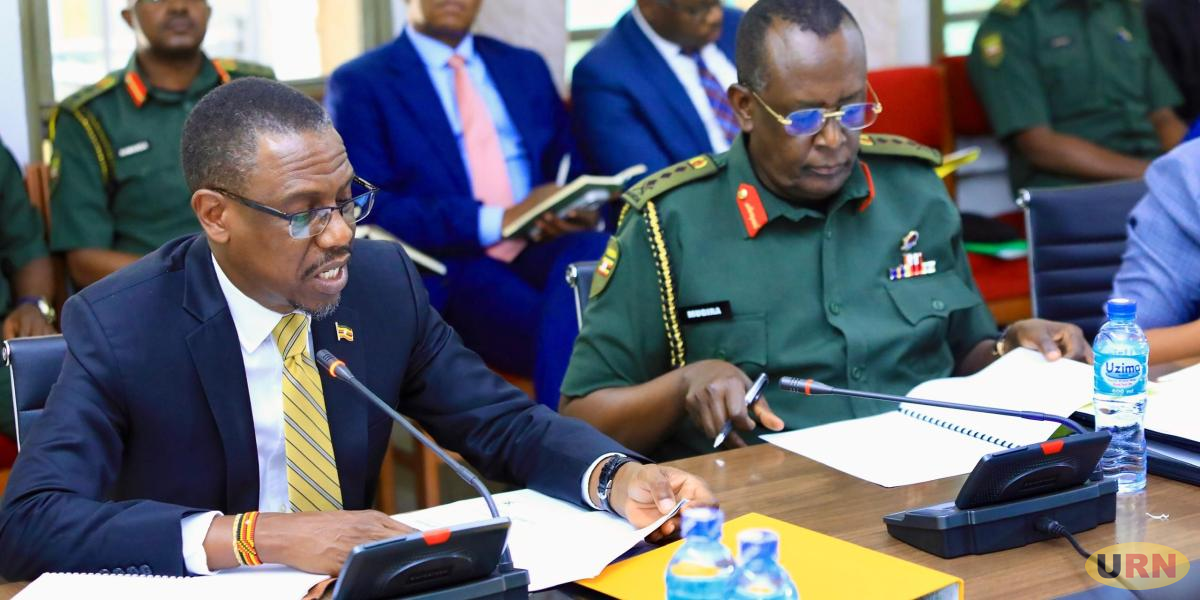
Defence Minister Kiryowa Kiwanuka told Parliament on Tuesday that NEC has relied heavily on partnerships with private investors because government funding to the corporation has remained limited. Kiwanuka was appearing before Parliament’s Committee on Physical Infrastructure, chaired by Mbarara South Division MP Mwine Mpaka, and later before the Committee on Defence and Internal Affairs, chaired by Gomba West MP Robina Rwakoojo, alongside NEC’s leadership.
The minister said NEC has received only about Shs2 billion annually from government over the past 15 years, mainly to meet salaries and basic operational costs. He said limited funding has pushed NEC into joint ventures where partners provide much of the capital, equipment, technology, and working capital needed to run commercial enterprises.

“Resulting from these joint ventures, NEC has been in a position to generate dividends amounting to over Shs27.6 billion, which has been reinvested into productive projects,” Kiwanuka told lawmakers. Lt. Gen. James Mugira, the NEC Chief Executive Officer, cited several projects that have benefited from the corporation’s reinvestment, including an oil waste management facility in Kyangwali in the Albertine Graben, expansion of the NEC Uzima mineral water production line and a surgical masks factory.
NEC subsidiary Luwero Industries Limited operates the Kyangwali facility in partnership with China Oil HBP Group. The facility treats solid and liquid petroleum waste generated by Uganda’s emerging oil industry, supporting environmental management as the country moves towards commercial oil production.
The plant was commissioned by President Yoweri Museveni in early 2023 and was constructed at a reported cost of about $6 million, equivalent to roughly Shs24 billion. NEC Uzima, meanwhile, produces bottled natural mineral water to East African standards and has been positioned as part of efforts to promote import substitution and the Buy Uganda Build Uganda (BUBU) policy.
The surgical masks factory was established as part of Uganda’s industrial response to the COVID-19 pandemic and has since contributed to the country’s local manufacturing capacity. NEC was established by an Act of Parliament in 1989, now Cap. 312, as the commercial arm of the Ministry of Defence and the UPDF. Its mandate includes producing goods and services for the defence forces and the wider public and participating in productive activities for national development.
The corporation operates across sectors including agriculture, construction, manufacturing, security services and other defence-related industries through its subsidiaries and joint ventures. Its commercial role is also anchored in Article 209(d) of the 1995 Constitution, which requires the UPDF to engage in productive activities for the development of Uganda. Article 208 of the Constitution further establishes the UPDF as a productive force that is subordinate to civilian authority. The parliamentary scrutiny comes as NEC seeks to demonstrate how its commercial ventures and partnerships can generate resources for reinvestment while supporting strategic national projects-URN. Give us feedback on this story through our email: kamwokyatimes@gmail.com