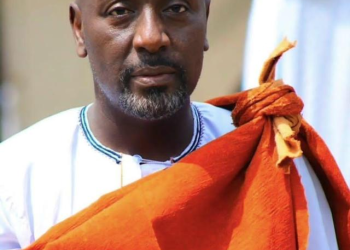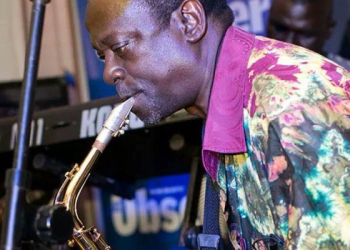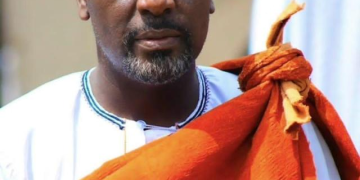
Just after dawn on Thursday, 24 September 2026, veteran musician Moses Matovu, 77, co-founder of the legendary Afrigo Band, was fatally attacked in Kibuli Market Zone B, in Kampala’s Makindye Division. He was rushed to Kibuli Hospital but succumbed to his injuries, which included a severe head wound and heavy blood loss.
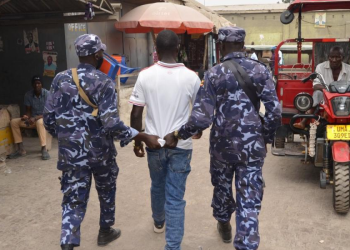
Police initially described the attack as the work of unidentified assailants. Investigators have since indicated that Matovu had spent the early morning hours at the home of a woman identified as Rose Tumusiime, reportedly leaving her residence around 5:30 am. As the two departed, they are alleged to have run into a man with a prior connection to Tumusiime, sparking a confrontation that turned fatal. Tumusiime has been taken into custody and is helping detectives with their inquiries; a male suspect is still being sought.
Kampala Metropolitan Police spokesperson Rachael Kawala confirmed that a suspected murder case has been opened at Kabalagala station, though she stressed that the full circumstances are still being established.

Matovu was a founding member of Afrigo Band, formed in 1975 and widely regarded as one of East Africa’s most enduring live acts. As a saxophonist, vocalist, and bandleader, he was a fixture of Uganda’s music scene for five decades, with strong personal ties to the Kibuli neighbourhood where he was attacked. Local Government Minister Balaam Barugahara condemned the killing as a “senseless act of violence” and called on security agencies to track down those responsible.
Matovu’s death has revived public attention on a string of earlier killings involving prominent Ugandan men, all of which unfolded in the pre-dawn or late-night hours, and all connected in some way to the home of a female friend or companion. Spanning nearly three decades, these cases share a similar setting and timing but differ sharply in motive, method, and how far justice was ultimately served.
Gerald Kiddu
In the early hours of Friday, 15 May 1997, rally driver Gerald Kiddu, then 40 and associated with Dembe Enterprises, was shot dead by unknown gunmen at the Bunga home of a female friend, Harriet Kansiimire. The killing became entangled in controversy and featured prominently in the Ssebutinde Commission of Inquiry into the Uganda Police Force, a landmark 1990s probe into police corruption and misconduct.
Businessman Karim Hirji was named a prime suspect amid claims of interference in the investigation, though allegations of bribery against specific officers were never conclusively proven. A recommendation was made for Scotland Yard to take over the case. Nearly three decades on, Kiddu’s killers have never been identified or convicted, and the case remains one of Uganda’s best-known unsolved murders.
Paul Katende aka Dr Dick Walusimbi
Late on the night of 28 March 2002, actor Paul Katende, known to television audiences as Dr Dick Walusimbi from the popular Ebonies comedy series That’s Life Mwattu, was shot by unknown gunmen in the Kweba Zone area of Mutundwe, near Rubaga. Reports at the time indicated he had just dropped off a female friend and fellow performer, Harriet Nalubwama.
Grace Ignatius Katumba, a former Local Defence Unit member and special police constable, was later charged over the killing. Like several other high-profile files from that era, the case resurfaced periodically in public discourse without ever reaching full resolution.
Maj Gen James Kazini
Former Uganda People’s Defence Forces (UPDF) army commander Maj Gen James Kazini, 52, was killed in the early hours of 10 November 2009 at the Namuwongo home of his girlfriend, Lydia Draru. Kazini had spent the evening with Draru, dropped her home around 5 am, briefly returned to his own residence in Munyonyo, and then went back to her house alone. A domestic dispute followed, with neighbours reporting raised voices and a call for help.
Draru, then 28, is said to have struck Kazini repeatedly with an iron bar or metal pipe. She later admitted to the killing but claimed self-defence, alleging he had been abusive toward her and threatened to retrieve a firearm.
A post-mortem attributed his death to severe head and brain trauma from blunt-force injury. Draru was initially charged with murder but was ultimately convicted of manslaughter, sentenced to 14 years, and released early for good conduct after serving most of her term. Unlike the Kiddu and Katende cases, Kazini’s death led to a conviction, though it was treated by the courts as a domestic tragedy rather than a targeted killing.
A Troubling Thread
Taken together, the deaths of Kiddu (1997), Katende (2002), Kazini (2009), and now Matovu (2026) trace a recurring, if coincidental, pattern: prominent Kampala men killed in the quiet hours before or after dawn, in or near homes tied to female companions. The methods differ: gunfire in the earlier two cases, blunt trauma in Kazini’s and now apparently in Matovu’s, and so do the outcomes. Kiddu and Katende remain part of Uganda’s list of prominent unsolved murders, while Kazini’s case at least produced a conviction, even if a lesser one than originally sought.
Police have, in each instance, pointed to ongoing investigations, the recovery of evidence, and efforts to identify or arrest suspects. Public reaction has tended to focus less on the individual cases than on the broader unease they raise: the vulnerability of well-known figures during unguarded, private hours, the entanglement of personal relationships with violent death, and the Ugandan justice system’s uneven record in bringing such cases to a clear conclusion.
As detectives continue to examine the scene of Matovu’s killing, take statements from Tumusiime, and search for the second suspect, the earlier cases offer a sobering, if unwelcome, precedent, a reminder that these are questions Uganda has faced before, without ever fully answering them-URN. Give us feedback on this story through our email: kamwokyatimes@gmail.com