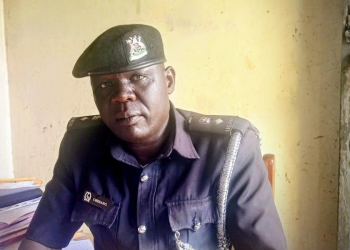
Special Police Constables (SPCs) deployed during the 2026 General Elections have not been paid their dues for many months after the polls. They revealed that they are still in possession of police uniforms as evidence that they were not fully paid.
Several SPCs who were not retained after the elections claim they were underpaid or never fully compensated. Ron Turusi, a resident of Ntinda in Nakawa Division under Kira Road Police Division, says similar complaints are shared by colleagues countrywide through their WhatsApp groups, with most receiving payment for only one or two months. He said that while the Electoral Commission paid their allowances, most of their grievances are against the police. He alleged that they are threatened whenever they visit the police divisions where they were deployed.
“Whenever we go to Kira Road Police Station, they threaten us. Others tell us our issues are beyond their control. Our first salary was paid through the liaison office, but now when we return to follow up, we are threatened. We want to know whether the government decided to use us for free.” Ron said.

Isma Sseruwagi, another SPC who guarded the Kyanja Muslim polling station, said he was only paid for January out of the three-month contract. He said most of his colleagues did not receive any payment at all, and they still have the police uniforms that were meant to be returned after receiving full payment as proof.
He called upon the Minister for Local Government, Balaam Barugahara, to intervene and investigate alleged corruption within the police. He said he allegedly followed the matter closely and has information that the person who misappropriated their funds is among the top police leadership.
Ron said it is frustrating that they no longer fit into their communities, with friends disassociating from them and branding them government spies, yet they did not even receive their hard-earned money.
Another complainant, who preferred to remain anonymous, said he is still holding onto the police uniform because they have not been paid, yet he is no longer a police officer. He claimed that some of those still in possession of the uniforms have started using them to commit robberies, driven by frustration over the police’s failure to pay them.
“We underwent training and signed three-month contracts, after which we were deployed to police stations in our respective areas of origin. Most of us were paid for only one month, and now, more than eight months later, we still have the uniforms and shoes in our possession as evidence, because the contract stipulated that we were to return them only after receiving payment for the final month. So, we have to ask, should we put on the uniforms, go onto the streets, and find a way to pay ourselves?” he said.
He said police should not taint their image by misappropriating the small amount of money meant for the poorest Ugandans who worked under difficult conditions.
When contacted, Deputy Police Spokesperson Diana Nandawula expressed surprise at reports that Special Police Constables (SPCs) deployed during the 2026 general election were still demanding payment for guarding duties. She said she was not aware of the issue and would consult the Directorate of Human Resources at Naguru Police Headquarters to establish where the problem lies.
In October 2025, the Uganda Police Force recruited about 100,000 Special Police Constables (SPCs) to support security operations during the election period. The recruitment targeted Ugandans aged 18 years and above with at least a Primary Leaving Examination (PLE) certificate, as part of efforts to boost manpower during the polls.
The recruits underwent a one-month basic training and were deployed on three-month contracts at a monthly salary of 496,00 shillings. The Electoral Commission also provided a daily allowance of 75,000 shillings to SPCs deployed at polling stations. After the elections, police retained a few SPCs for further training, armed them, and deployed them to permanent stations, while others were demobilized-URN. Give us feedback on this story through our email: kamwokyatimes@gmail.com