Uganda’s attempt to revive its ageing railway network has been overshadowed by a parliamentary investigation that has exposed disturbing pattern of procurement irregularities, weak internal controls, questionable disposal of public assets and failures in safeguarding the country’s strategic railway infrastructure.
The findings are contained in the Report of the Parliamentary Sectoral Committee on Physical Infrastructure, which was adopted by Parliament on Thursday, September 3, 2026, during a sitting chaired by Speaker Jacob Marksons Oboth-Oboth.
At the centre of the inquiry is a Spanish-funded railway rehabilitation project worth about €28.96 million, or approximately Shs123 billion, including a substantial component intended to build technical capacity within Uganda Railways Corporation (URC).

But instead of producing the institutional transformation expected from the investment, the Committee found evidence of what it characterised as “a profound breakdown in accountability, from questionable capacity-building arrangements and procurement decisions to the disappearance and disposal of railway wagons.”
Committee Chairperson Mwine Mpaka delivered the central indictment revealing that public money intended to rebuild Uganda’s railway capacity had, in the Committee’s assessment, been diverted towards arrangements that benefited consultants and foreign firms rather than strengthening the supposed national transport backbone.
“We have established a systematic failure where public funds meant to build local railway capacity and rehabilitate critical transport infrastructure were instead deployed to enrich individual consultants and foreign firms under the guise of technical expertise,” Mpaka said.
The findings echo concerns Parliament had already raised in August when its Physical Infrastructure Committee demanded that URC account for railway wagons reportedly sold as scrap. One of the most striking findings concerns a capacity-building contract valued at about €4.82 million (Shs21 billion), which was intended to bring international railway specialists to Uganda and provide structured, long-term technical training to URC personnel.
Instead, the Committee found that the promised foreign experts did not relocate to Kampala as envisaged under the contract. Some URC employees were allegedly presented within the project arrangements as foreign experts, while continuing to earn their ordinary local salaries.
According to Parliament, almost 90 per cent of the capacity-building component, about €4.33 million, went to five foreign experts, with some reportedly earning as much as €32,500 (about Shs140 million) per month.
The Committee further found that training originally envisaged as multi-day or extended professional programmes was reduced to one-day refresher workshops.
The result, lawmakers argued, was not merely poor value for money but a fundamental failure of the project’s purpose supposedly designed to transfer specialised railway expertise to Uganda did not deliver the depth of training contemplated in the contract.
The Committee described the expenditure in unusually severe terms, calling it “astonishing, inconceivable, incredible, and inexcusable.”
The Committee also questioned expenditure on international travel. Money was allocated for overseas and back-office travel linked to the training programme, yet investigators found that the expected international travel did not occur as anticipated.
The Committee found that project managers continued signing off monthly payments despite circumstances it considered evidence of substantial contractual non-compliance.
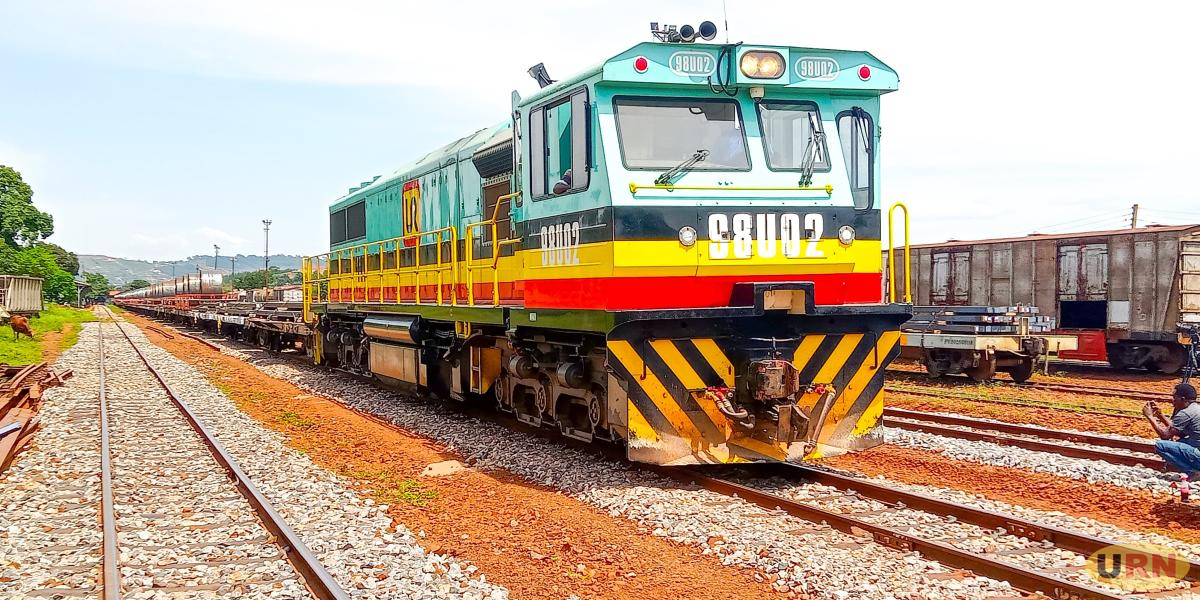
URC initially reported that 394 wagons could not be accounted for following migration to the Translogic digital tracking system, with 113 classified as permanently lost. Parliament’s inquiry, however, uncovered evidence that some of the missing rolling stock had not simply vanished from the records. The Committee established that 152 wagons were sold domestically to private steel companies, while a further 28 wagons were advertised and sold in Tanzania.
Parliament calculated that the domestic scrap sales should have generated approximately Shs4.43 billion based on the estimated weight of the wagons. URC, however, acknowledged receiving only about Shs2.03 billion.
That leaves a reported Shs2.39 billion gap, while dozens of wagons remained unaccounted for. The Committee’s findings therefore raise questions not only about how the wagons were disposed of, but also about valuation, authorisation, proceeds collection, documentation and the ultimate beneficiaries of the transactions.
The PPDA Act also requires officials involved in procurement or disposal to disclose conflicts of interest and bars conflicted officials from participating in the relevant proceedings.
The project was expected to acquire four new double-cabin pickup trucks for project implementation, with the vehicles ultimately reverting to URC. Instead, investigators found that three second-hand vehicles were purchased from local bonded warehouses.
More controversially, the Committee found that after the project ended, the vehicles were allegedly sold directly to URC insiders, including the project’s contract manager, for what it described as nominal cash payments.“Upon project completion, instead of handing them over to the state, the contractor sold the vehicles directly to URC insiders, including the project’s contract manager, for nominal cash payments,” the report states.
The PPDA Act’s conflict-of-interest provisions are particularly relevant. The law requires officials involved in procurement and disposal to disclose personal interests and prohibits conflicted officials from participating in proceedings. Breaches can attract criminal penalties.
The Committee also questioned how €60,000 (about Shs263 million) allocated for furniture for the training school was utilised. Investigators found that the money resulted in only four tables and four chairs at URC headquarters, while the offices occupied by the Spanish consultants were also reportedly equipped using project resources.
The Committee found that Consultrans S.A.U., which was involved in the project’s feasibility study and assessment of URC’s capacity needs, was subsequently linked to the award of works to its sister company, Imathia Construction, through direct procurement.
“By allowing a single entity, Imathia Global Group, to conduct the initial feasibility study, draft the technical specifications, supply the rails, and evaluate its own capacity-building performance, URC management created a textbook conflict of interest.”
The Committee’s concerns are not confined to locomotives, wagons and contracts. It also highlighted the continuing loss and encroachment of railway land, with thousands of parcels reportedly affected.
The Uganda Railways Corporation Act, Cap. 216, establishes URC as a statutory corporation and gives it responsibility for railway services and associated infrastructure. The Act defines railway property broadly and places responsibility for corporate policy, property and business affairs on the Board. It also makes clear that URC’s statutory powers must be exercised subject to other laws.
Parliament has now placed the burden of response squarely on the Executive. Among its recommendations, the Committee called for the Inspectorate of Government to investigate and prosecute, where evidence supports such action, former URC management officials, members of the contract management team and members of the Adhoc Board of Survey implicated in causing financial loss.
It also called for the Auditor General to undertake a comprehensive forensic audit and tracking exercise covering URC’s locomotives and rolling stock dating back to 2006.
The Committee further recommended urgent action to protect railway corridors from encroachment, including coordinated enforcement by relevant government agencies.
Perhaps most importantly, it wants URC to replace vulnerable manual reconciliations with a real-time, auditable digital asset-tracking system. That recommendation may ultimately prove more important than any single prosecution.
A railway system handling hundreds of locomotives and wagons cannot depend on spreadsheets, paper records and institutional memory to establish where strategic public assets are located.
The railway is intended to provide a cheaper and more efficient alternative for bulk cargo, reduce pressure on roads and strengthen Uganda’s connection to the wider East African transport corridor.
URC was created by law to build, operate and maintain railway services and associated infrastructure. Its statutory board is charged with ensuring that the corporation is operated efficiently, economically and according to sound commercial principles-URN. Give us feedback on this story through our email: kamwokyatimes@gmail.com