Uganda’s mineral production value almost doubled to 464.7 billion shillings in the financial year 2023/24, even as the extractive sector’s contribution to the economy declined.
The fifth Uganda Extractive Industries Transparency Initiative (UGEITI) Report.
The report shows that the sector’s contribution to Gross Domestic Product (GDP) fell from 1.47 percent in 2022/23 to 1.28 percent in 2023/24.

At the same time, the sector’s contribution to government revenue increased from 1.13 percent to 2.18 percent, while its contribution to employment edged up from 0.026 percent to 0.027 percent. Its contribution to total exports, however, declined from 0.001 percent to 0.0004 percent.
The latest figures are contained in UGEITI’s fifth report covering the financial year 2023/24.
The previous report, covering 2022/23, put the value of mineral production at Shs248.5 billion and total extractive-sector revenue at 530.17 billion shillings.
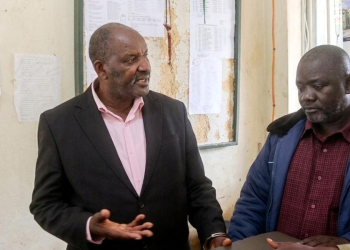
Edgar Mutungi, Senior Technical Officer for Data Analysis at the UGEITI Secretariat, said the economic contribution figures should be understood within the classification used by the Uganda Bureau of Statistics, which groups mining, oil and gas under the mining-sector classification.
“Contribution of the mining sector to GDP was actually 1.28 percent for the year 2024,” Mutungi said.
According to Mutungi, the sector accounted for 0.027 percent of employment, 0.0004 percent of total exports and 2.18 percent of government revenue flows.
The report compiled by MOORE Insight for Uganda EITI will be officially launched at the beginning of September.
Members of the Multi-Stakeholder Group met on Thursday to reconcile the figures captured in the report as part of Uganda’s commitment to the Extractive Industries Transparency Initiative (EITI).
UGEITI reports that the value of mineral production rose from 248.5 billion in 2022/23 to 464.7 billion shillings in 2023/24, an increase of about 87 percent.
The previous report had recorded a 23 percent increase from 201.9 billion in 2021/22 to 248.5 billion shillings in 2022/23.
The latest increase was largely driven by iron ore, whose production value rose to Shs289.3 billion, accounting for 62.25 percent of total mineral production.
Limestone followed with 102.9 billion shillings, or 22.13 percent, while pozzolana contributed 23.2 billion shillings, representing about five percent.
The sharp rise marks a significant change in the composition of Uganda’s mineral production.
In 2022/23, limestone was the leading mineral, accounting for 39 percent of production value, followed by iron ore at 37 percent.
Mutungi said the report consolidates production information submitted by individual companies and other producers to provide an overall picture of mineral production.
“Once we consolidate the information, we have a figure of production at the tune of 464 billion,” he said.
Artisanal and small-scale miners emerged as the largest single contributor to reported production in the latest assessment, accounting for 151.7 billion shillings, or 32.6 percent.
They were followed by Sino Minerals Investments Company Limited at 122.9 billion, Hima Cement Limited at Shs83.8 billion, and Tororo Cement Limited at 41.2 billion shillings.
Mutungi said the latest assessment also captures the contribution of licensed artisanal and small-scale miners following changes in the mining regulatory framework.
“Following the new law, the mining law, ASM is now with licenses,” he said.
The concentration of production among a relatively small number of producers remains significant. In the previous assessment, five companies accounted for 89 percent of total mineral production.
The increase in production was accompanied by a sharp rise in the reported value of mineral exports.
Mineral exports increased from 33.6 billion in 2022/23 to 119.2 billion shillings in 2023/24, an increase of about 255 percent.
It should be noted that following the President’s ban on the export of raw minerals just a few minerals are currently being exported.
The previous assessment reported 96.6 million kilogrammes of mineral exports, with vermiculite/perlite/chlorites and iron ore accounting for 83 percent of the export value.
In the latest assessment, total mineral exports were reported at about 9.7 billion kilogrammes, with iron ore emerging as the leading export category.
Mutungi said the report combines export information submitted by companies with information from government agencies to establish the country’s mineral export position.
“Our exports for that year were at 9.7 billion… And when it comes to value, it’s 119 billion that was exported in the financial year,” he said.
The dramatic increase in export value alongside the increase in production points to a major expansion in mineral activity during the reporting period.
However, the report’s detailed export tables use different classifications, and the underlying figures should be read alongside the methodology used by UGEITI.
Despite the relatively modest contribution to GDP, the wider extractive sector generated substantially more revenue during the year.
UGEITI reports total extractive-sector flows of Shs663.2 billion in 2023/24, up from Shs530.17 billion in 2022/23, an increase of about 25 percent.
The previous report attributed 299.95 billion shillings to mining and 230.23 billion shillings to oil and gas.
Of the 663.2 billion shillings reported in the latest assessment, government revenues accounted for 606.4 billion shillings, or 91.42 percent.
Social and environmental expenditure accounted for 55.7 billion shillings, while subnational payments amounted to 1.2 billion shillings. But after reconciliation of company disclosures with government records, the figure was revised to 599.2 billion shillings.
Mutungi said reconciliation is intended to provide a more accurate picture of the money generated and paid by companies.
“The initial revenues I have showed you of 663 billion are the wider collected revenues, but when we undertake a reconciliation process, that is, we get company revenues and we reconcile them with the revenues submitted by the government, we come up with a figure which now gives us a more accurate and in-depth picture of the revenues that were submitted or collected that year,” he said.
TotalEnergies EP Uganda was the largest contributor to the reconciled revenues, accounting for 195.2 billion shillings, or 33 percent.
Hima Cement contributed 117.2 billion shillings, followed by Tororo Cement at 101.4 billion shillings and CNOOC Uganda Limited at 101.2 billion Shillings.
Uganda National Oil Company contributed 29.9 billion shillings, while other companies accounted for 54.4 billion shillings.
By revenue stream, Pay-As-You-Earn was the largest source at 191.9 billion shillings, followed by withholding tax at 144.4 billion shillings, VAT at 88.9 billion shillings and customs payments at 80.1 billion shillings.
Mutungi said the reconciliation process also enables UGEITI to identify the companies and revenue streams that account for the largest contributions.
“Upon reconciliation, we also got a picture of how the revenue streams had contributed.”
Despite the increase in production, exports and revenues, UGEITI says important gaps remain in the quality and completeness of company reporting.
Twenty extractive companies were selected for reconciliation in the latest assessment.
Thirteen submitted reporting templates, while seven did not. More significantly, only four of the 20 companies submitted signed reporting templates.
The 16 companies without signed templates accounted for 98.5 percent of the reconciliation scope.
The report, however, notes that government revenue reporting had full coverage through the certified submission by the Uganda Revenue Authority.
The findings have renewed calls for the government to strengthen the legal framework for EITI reporting and make participation mandatory for relevant companies and government entities.
UGEITI also recommends greater disclosure of project-level capital and operating costs, extractive contracts, beneficial ownership information and audited financial statements.
The initiative further wants Uganda to improve reporting of environmental and social expenditures, develop a framework for greenhouse-gas emissions disclosure and complete and update the mining cadastre.
Mutungi that the reconciliation process remains central to establishing a clearer picture of the sector.
He said the report seeks to bring together information on revenues, economic contribution, production, exports and company-government disclosures to provide a consolidated assessment of Uganda’s extractive industries.
The latest figures therefore present a mixed picture: mineral production and export earnings expanded sharply, and extractive revenues increased, but the sector’s measured contribution to GDP and exports remained small, while significant gaps in company reporting continue to challenge transparency-URN. Give us feedback on this story through our email: kamwokyatimes@gmail.com