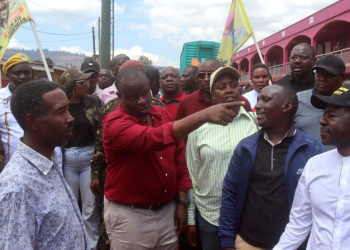
Traders and residents in Ntoroko District are urging the government to reopen weekly markets and border crossings with the Democratic Republic of Congo (DRC), saying the prolonged restrictions imposed to contain the Ebola outbreak have severely disrupted livelihoods and local trade.
The restrictions were introduced in May after Uganda confirmed an outbreak of the Bundibugyo strain of Ebola Virus Disease (EVD). On May 15, health authorities announced a confirmed case in Kampala, prompting the government to activate emergency public health measures to prevent further transmission of the highly infectious disease. As part of the containment strategy, the government temporarily suspended cross-border movement with the DRC.
At the same time, local authorities in Ntoroko halted operations at weekly markets and livestock trading centres due to the high risk of transmission associated with large gatherings and cross-border interactions.

The affected markets include Butungama in Kyabukunguru, Nyakasenyi, Rwebisengo Town Council, Kibuuku Central, Kisege, Makondo Livestock Market, Kakogha Livestock Market, and Bugando Livestock Market. At the time, Ntoroko Deputy Resident District Commissioner (RDC) Cyrus Muzeyi said residents would continue accessing food and other essential commodities within their communities, but trading activities in the affected markets would remain suspended until the Ebola situation improved.
However, traders say the restrictions have left many families without a reliable source of income. Charles Mumbere, a businessman in the district, says the closure of markets and the border has affected nearly every household that depends on trade. According to Mumbere, farmers can no longer sell their produce while traders have lost access to their traditional markets, making it increasingly difficult for families to meet basic needs such as paying school fees and providing daily necessities. Livestock trader Onani Kiiza says cattle and goat markets were the main source of income for many households in the district.
He explains that before the restrictions, traders regularly sold livestock to buyers from both Uganda and the neighbouring DRC. However, with livestock markets closed and cross-border trade suspended, many are left with animals they cannot sell. Kiiza notes that some families rely almost entirely on livestock trading rather than crop farming, making the continued closure especially devastating. “Our products have no market anymore because most buyers come from the DRC.
We ask the government to reopen the border and the markets so that we can resume business,” Kiiza said. Moses Kisembo, a resident of Kibuuku Town Council, says vendors who depended on the weekly markets have watched their daily earnings disappear, leaving many struggling to support their families. Similarly, Charles Bwambale of Karugutu Sub-county says numerous traders have exhausted their savings and are finding it increasingly difficult to keep their businesses operational.
He adds that many parents can no longer afford to pay school fees because trading was their primary source of income. Amos Muhanuzi from Bweramule Sub-county says the closure has also affected consumers, forcing families to travel long distances to purchase essential goods at higher prices while incurring additional transport costs.
Responding to the concerns, Deputy RDC Cyrus Muzeyi said the restrictions were introduced purely as a public health measure to prevent the spread of Ebola and protect communities from infection. He said the government remains guided by recommendations from the Ministry of Health and will only reopen the affected markets and border trading points once health authorities determine that it is safe to do so.
According to the Ministry of Health, as of Monday, Uganda had recorded 20 cumulative confirmed Ebola cases, including 17 recoveries, two deaths, and one patient still under admission. Health authorities say surveillance and response efforts remain ongoing as the country works to bring the outbreak to an end-URN. Give us feedback on this story through our email: kamwokyatimes@gmail.com