Leaders of Persons with Disabilities (PWDs) in the West Nile sub-region are seeking an audience with President Yoweri Museveni. They want to discuss persistent challenges affecting their livelihoods, education, healthcare and access to essential public services. The leaders say they have repeatedly missed opportunities to meet the President whenever he visits the region, denying them a chance to present pressing social and economic issues that require his intervention.
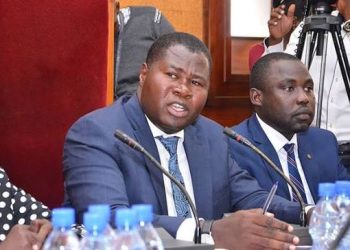
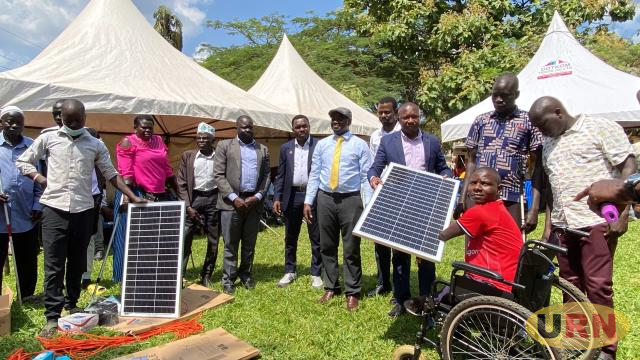
The appeal was made by Robert Ssewagudde, the Workers’ Representative for Persons with Disabilities in the 12th Parliament, during the handover of 70 solar power systems to district PWD leaders. The event brought together Resident District Commissioners (RDCs) and Resident City Commissioners (RCCs) from across West Nile.
Speaking through a sign language interpreter, Ssewagudde said persons with disabilities continue to face numerous challenges that require the President’s attention and support. “If you get an opportunity to meet the President, or when the President comes to Arua, I humbly request that our leaders for Persons with Disabilities, including councillors and district chairpersons, are involved in those meetings so that we can present our concerns directly,” he said.

Among the key issues raised by PWD leaders are high unemployment, low literacy levels, limited access to healthcare and the difficulties many face in supporting their families because of inadequate service delivery. According to the 2024 National Population and Housing Census, Uganda has 10,771,312 persons living with disabilities.
Of these, 1,098,586 have communication or speech difficulties, 1,979,613 have hearing impairments, 2,010,453 have visual impairments, while 2,075,931 experience difficulty walking or climbing stairs. The leaders said these disabilities continue to limit access to public services and prevent many people from fully benefiting from government development programmes.
Paul Didi Maiku, the Chairperson of Persons with Disabilities in Obongi County, said land ownership remains a major challenge despite constitutional provisions guaranteeing every Ugandan the right to own property. He noted that many persons with disabilities struggle to acquire land or process land titles because of financial and institutional barriers.
The leaders said a meeting with President Museveni would provide an opportunity to present their concerns directly and propose practical solutions, arguing that many of their issues fail to reach the Head of State through existing channels.
Beatrice Eloyi, a leader representing Persons with Disabilities in Moyo District, said unreliable electricity supply in the Madi sub-region continues to affect children with disabilities, limiting their ability to study at night. She welcomed the donation of solar power systems, saying they would provide temporary relief to affected households and learners.
Government officials attending the event reaffirmed their commitment to improving the welfare of persons with disabilities through various government programmes. Arua City Mayor Lawrence Alionzi said government remains committed to ensuring that persons with disabilities are included in national development initiatives while acknowledging that significant challenges remain.
The Deputy Resident City Commissioner for Arua Central Division, Namoma Ivan James, also assured the leaders that government would continue supporting interventions aimed at improving the lives of persons with disabilities.
The 2024 National Population and Housing Census shows that about 26 percent of children aged between six and 12 years with disabilities and 34.2 percent of those aged 13 to 17 years are out of school. The report further indicates that more than half of young people with disabilities remain excluded from education, employment and training opportunities, highlighting the continuing challenges of achieving inclusive development and social equity in Uganda-URN. Give us feedback on this story through our email: kamwokyatimes@gmail.com