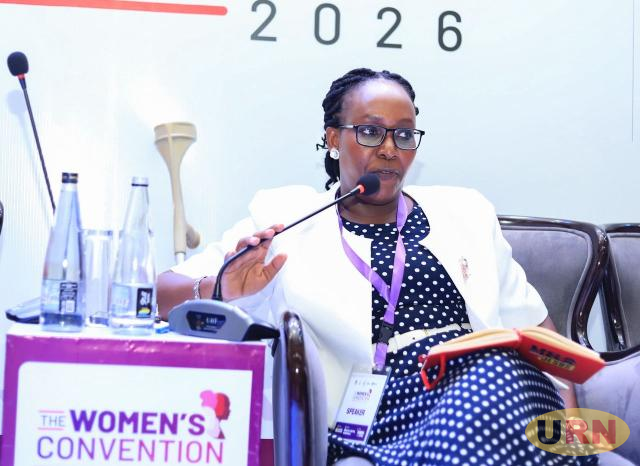
National Female Representative for Persons with Disabilities, Laura Kanushu, has urged Parliament to consider introducing term limits for affirmative action seats in Parliament. She argued that the country’s affirmative action framework should be reviewed more than three decades after it was introduced.
Kanushu proposed this while addressing newly elected Members of Parliament during their induction at Speke Resort Munyonyo. She was presenting findings on affirmative action, women’s political participation and strengthening female representation in Parliament. Referring to a PhD study by former legislator Peace Mutuuzo, Kanushu said Uganda’s affirmative action policy has reached a stage where lawmakers must assess whether it is still achieving its intended objectives.
She noted that the 1995 Constitution introduced affirmative action by reserving one parliamentary seat for every district woman representative and allocating 30 percent of local government positions to women. The arrangement was intended to be a temporary measure lasting 10 years but has never undergone a comprehensive review.

“The affirmative action policy has been there for over 31 years, and it has not been reviewed,” Kanushu told legislators. “As the 12th Parliament, we might need to think about whether we want to review affirmative action, especially for women. The study identifies the absence of term limits for reserved seats as one of the legal and political challenges affecting the growth of women’s leadership.
It argues that prolonged occupancy of reserved seats may discourage political renewal and limit opportunities for emerging female leaders. Kanushu, however, cautioned against introducing term limits exclusively for reserved seats. She argued that if Parliament adopts term limits, they should apply to all elective offices.
“This research actually proposes term limits on reserved seats. It does not propose term limits for open seats,” she said. “The issue of term limits should cut across. It shouldn’t be put on only the women representatives.” She said limiting only reserved seats would disadvantage women who later seek to contest constituency seats against long-serving incumbents. “How do I compete with someone who has served seven terms when I am coming as a first-timer?” she asked.
Kanushu also challenged Parliament to consider constitutional reforms that would move Uganda beyond the current affirmative action model to equal representation between men and women. ” I think 31 years is enough for us to rethink the 30 percent reserved seats. What if we amend the Constitution and go for 50-50 representation? The ball is in our hands because we are the lawmakers,” she said.
The presentation was based on research involving interviews with 38 Members of Parliament, 80 local councillors and representatives from all political parties.
According to the findings, women continue to face structural, economic and cultural barriers that prevent many from contesting directly for constituency seats.
The study found that women’s representation in Parliament has stagnated at between 33 and 34 percent since 2006 despite the affirmative action framework. Between 2011 and 2021, only 5.4 percent of women won open parliamentary constituency seats.
In the 2011 elections, no woman was elected as a district chairperson through an open contest. The research also found that public awareness of affirmative action laws remains low, with many community members and even some legislators unable to identify the legal provisions establishing women’s representation.
Kanushu urged women MPs to become authoritative voices on gender issues by strengthening their legislative and policy knowledge.
“If you represent women, people should wake you up at 2 a.m., and you should be able to explain women’s rights and the laws that brought you to Parliament,” she said.
While acknowledging criticism that reserved seats have not delivered the expected transformation, Kanushu maintained that affirmative action remains necessary.
She, however, challenged women leaders to demonstrate measurable improvements in the lives of those they represent. “If women are still living the way they used to live 30 years ago, then we cannot justify our representation to anyone. Our work must reflect in the people we represent,” she said. She also urged established women leaders to mentor younger politicians instead of viewing them as rivals.
The debate comes amid growing public scrutiny of Uganda’s special interest representation system.
While reserved seats have significantly increased women’s participation in decision-making since the 1995 Constitution came into force, critics argue that the arrangement has become permanent without delivering proportional gains in gender equality or encouraging more women to successfully contest open constituency seats.
Kanushu’s proposals are likely to fuel debate in the 12th Parliament as lawmakers consider whether Uganda’s affirmative action framework should be reformed to promote both gender equality and political renewal-URN. Give us feedback on this story through our email: kamwokyatimes@gmail.com