Uganda has expanded electricity generation and extended the national grid to millions of people, yet many communities remain without reliable or affordable access to power. Through the story of fatal electrocutions in eastern Uganda and insights from energy governance expert Siraj Magara Luyima, this analysis argues that the country’s electricity challenge is no longer one of generation but of governance.
Drawing lessons from Kenya and Nigeria, it makes the case for decentralising electricity planning and service delivery so that local governments can respond more effectively to community energy needs. When a young man in Bunanimi Village in Mbale District died after stepping on a live wire lying across a village footpath, neighbours gathered the following morning to mourn another life lost.
But the story that spread beyond the village was different. It was said he had died from a snake bite. The tragedy highlights a much larger problem. Uganda’s electricity infrastructure has reached many rural communities, but meaningful access to electricity services remains limited because of governance failures.

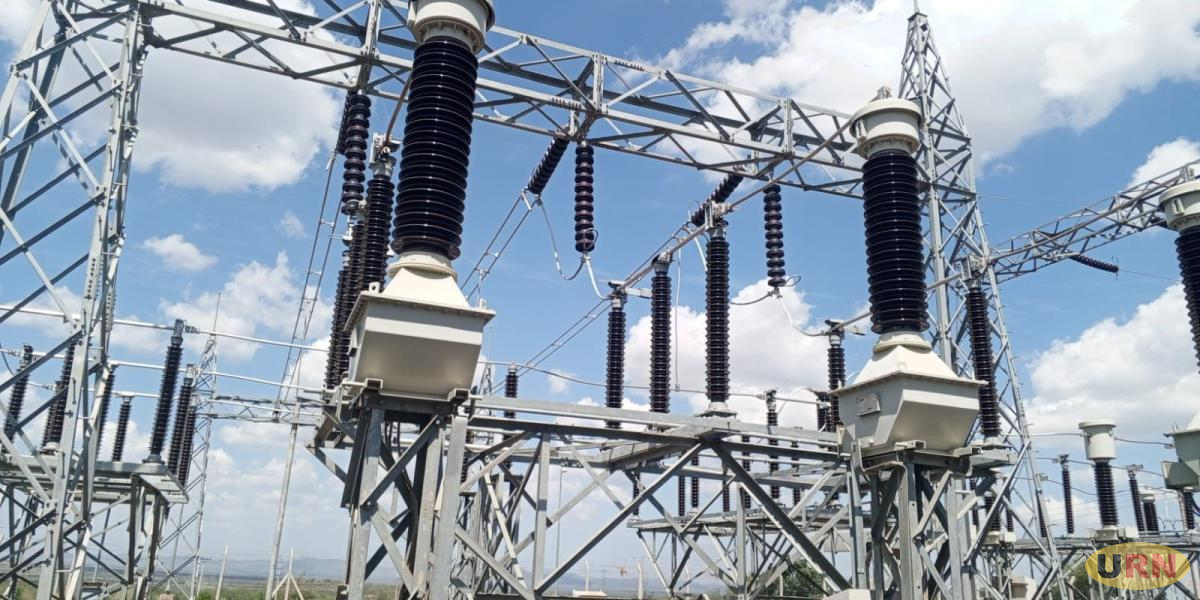
Across many villages in the Bugisu and Sebei sub-regions, electricity poles carrying live wires stand above banana plantations and homesteads. Yet many settlements remain unconnected to the three-phase power network, while others lack transformers altogether. To access electricity, some residents resort to stringing thin wires onto live distribution lines. Every such connection carries the risk of electrocution. Whenever these makeshift wires snap and fall onto footpaths or compounds, they become deadly traps.
Whether every such death is officially recorded as an electrocution or not, the underlying reality is undeniable: electricity infrastructure has reached many communities, but electricity services have not. This paradox illustrates a central challenge in Uganda’s electricity sector. Expanding generation alone will not solve the country’s electricity access problem unless governance and service delivery improve.
Stories of electricity theft, fatal electrocutions, and deaths often attributed to “snake bites” emerged during a recent dialogue organised by the Advocates Coalition for Development and Environment (ACODE), with support from the Natural Resource Governance Institute (NRGI). Many observers might dismiss illegal electricity connections as simple acts of criminality. Indeed, electricity theft imposes high costs on utilities and paying consumers.
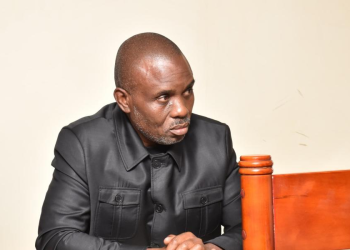
However, Siraj Magara Luyima, Energy and Extractives Coordinator at Oxfam in Uganda, argues that the issue requires greater context.”Don’t blame electricity theft on people. Government is not present to provide electricity solutions,” he said. According to Luyima, the absence of government institutions responsible for electricity services at the local level has created an institutional vacuum that helps explain a phenomenon often labelled simply as electricity theft.
“You go to the district, and you cannot find an energy officer. You go to KCCA. Anybody managing energy? Nobody,” he said. He emphasised that this is not an excuse for illegal connections but rather an acknowledgement that where electricity infrastructure exists without accessible services, informal solutions become almost inevitable.
Luyima argues that most districts neither budget nor plan for electricity services. “If you have a problem with energy in your village, where do you run to? Where do you get the solution? Where do you report? Who will come to your rescue? It is the kamyufu.” In many districts across central Uganda, kamyufu refers to informal electricians who carry out illegal connections. Some possess considerable technical skills, having previously worked for the former Uganda Electricity Board or, more recently, Umeme.
“It’s partly because the government is not present to provide electricity solutions that the power you pay for includes the electricity that I have stolen,” Luyima observed. For years, he has argued that improving electricity access requires decentralising electricity governance.
Uganda has made remarkable progress in expanding electricity generation. Installed generation capacity now exceeds 2,000 megawatts, while the national grid has steadily expanded over the past decade. Yet many households, businesses, and public institutions continue to experience unreliable supply, frequent transformer failures, delayed repairs, and limited last-mile connectivity. For Luyima, the country’s electricity challenge is no longer one of generation but one of governance.”The core problem is not simply infrastructure. It is overcentralised planning, budgeting, and accountability in the electricity subsector, which has left local governments and citizens largely disconnected from energy decision-making.”
He says the consequences are evident across regions such as Bugisu and Sebei. “When transformers fail, villages wait months or even years for replacement. When electricity poles are vandalised, there is little local ownership over repairs. When communities need additional connections, there is no district office with the authority or budget to respond.”
Uganda has invested heavily in expanding the national grid, but the institutions responsible for ensuring electricity reaches homes and businesses safely and efficiently remain concentrated in Kampala. According to the Electricity Regulatory Authority, Uganda’s installed generation capacity stood at approximately 2,098.6 megawatts by February 2026, while the number of grid-connected customers had reached an estimated 2.7 million.
Government policy positions electricity as a driver of socio-economic transformation under the National Development Plans and Vision 2040. Yet major disparities in access persist, particularly in rural Uganda. National grid access stands at only 25.3 per cent, with rural access at just 9.1 per cent, compared with 49 per cent in urban areas. This remains well below Kenya’s estimated 64 per cent electricity access rate and the Sub-Saharan African average of 43 per cent.
Studies in Uganda continue to identify a significant gap between ambitious policy targets and implementation. High connection costs, affordability challenges, and unreliable supply remain among the principal barriers. The Electricity Connections Policy (2018–2027) openly acknowledges this implementation gap, noting that although Uganda adopted ambitious electricity access targets under the National Development Plan II, Vision 2040, and Sustainable Development Goal Seven, practical mechanisms for achieving those targets had not been adequately established.
The policy therefore proposes financing mechanisms, subsidies, and institutional arrangements to increase national electricity connectivity to 60 per cent by 2027, recognising that infrastructure expansion alone cannot guarantee access. For Luyima, extending electricity infrastructure is not the same as delivering electricity services.
“This is the reason why electricity passes above people’s homes but remains beyond their reach and why informal solutions become almost inevitable” He argues that key decisions concerning network expansion, transformer placement, maintenance schedules, and investment priorities remain concentrated within national institutions, leaving local governments with little authority over electricity planning or budgeting. The result, he says, is a disconnect between community needs and national decision-making.
“Even in rapidly growing areas near Kampala, communities can wait years for a single transformer because every decision must be processed centrally.” The consequences are reflected in Uganda’s electricity losses, estimated at between 15 and 17 per cent. Much of these losses is attributed to illegal connections, meter tampering, and electricity theft.
Luyima believes communities often regard electricity infrastructure as government property rather than a shared public asset. Without local ownership, vandalism increases, theft becomes more common, and fault reporting slows. He recalls asking several manufacturing firms involved in mineral value addition about their greatest challenge. “Number one, they will tell you about electricity. Number two, electricity. Number three, electricity.”
Reliable electricity remains fundamental to industrialisation, agro-processing, mining, and small businesses. Without responsive local planning, even well-designed national industrialisation policies struggle to achieve their intended impact. Uganda would not be entering unfamiliar territory by decentralising electricity governance. Across Africa, governments are increasingly recognising that while national authorities should retain overall policy direction, electricity planning and service delivery are often more effective when local institutions play a greater role.
Kenya provides one example. Following the 2010 Constitution, the country devolved significant responsibilities to 47 county governments, each with its own planning and budgeting functions. Recognising that energy needs differ across regions, Kenya, with support from the United Nations Industrial Development Organization (UNIDO), developed a Decentralized Sustainable Energy Planning Manual to strengthen county-level energy planning.
The manual guides counties in assessing local energy resources, identifying community needs, preparing sustainable energy projects, and integrating electricity planning into broader development programmes. It also recognises that electricity provision alone does not automatically generate development. Successful rural electrification requires close engagement with communities, support for local enterprises, and alignment with broader economic development priorities.
Nigeria has pursued similar reforms through a different approach. For decades, the country’s electricity sector remained highly centralised despite earlier privatisation efforts. Persistent challenges, including inadequate transmission infrastructure, high technical losses, poor revenue collection, and unreliable electricity supply, prompted further reforms.
The Electricity Act 2023, together with constitutional amendments, fundamentally reshaped electricity governance by allowing states to establish their own electricity markets, create state electricity regulatory authorities, regulate electricity generation and distribution within their territories, license mini-grids, and attract private investment. Interstate electricity transactions remain under federal regulation, preserving national coordination while allowing greater local autonomy.
The reforms also promote renewable energy development, public-private partnerships, and competitive electricity markets tailored to local conditions. Already, states including Lagos, Enugu, Edo, Ekiti, and Kaduna have enacted their own electricity laws to improve electricity services and attract investment.
The experiences of Kenya and Nigeria demonstrate that decentralisation is not about dismantling national electricity systems. Rather, it involves assigning responsibilities to the level of government best placed to understand local needs and respond quickly to local challenges. Uganda already operates a decentralised political system. Districts prepare development plans, manage health services, oversee education, and maintain local roads.
Yet electricity remains one of the few essential public services with almost no institutional presence at the district level. Luyima argues that districts should employ energy officers, prepare local electricity plans, budget for critical infrastructure such as transformers, monitor service delivery, and work with communities to protect electricity assets. These proposals are neither radical nor unprecedented. They reflect reforms already underway elsewhere on the continent.
The lesson from Kenya is that local energy planning produces solutions tailored to local economies and community priorities. The lesson from Nigeria is that devolving regulatory and planning powers can stimulate innovation, attract investment, and strengthen accountability without weakening national oversight. For Uganda, decentralising electricity governance is therefore not an experiment.
It is an opportunity to adapt proven regional reforms to address delayed service delivery, unsafe electricity connections, infrastructure vandalism, and limited household access, bringing electricity governance closer to the communities it is meant to serve-URN. Give us feedback on this story through our email: kamwokyatimes@gmail.com