Farmers in Kitgum and Lamwo districts are slow to adopt black soldier fly farming despite efforts by agricultural officers and development partners to promote the enterprise as a low-cost source of livestock feed and income. Officials implementing the Uganda Climate Smart Agricultural Transformation Project (UCSATP) say resistance from farmers is threatening efforts to expand the enterprise, which is among the project’s key value chains aimed at improving household incomes and reducing livestock production costs.
Barnabas Opiyo, the District Focal Person for the Climate Smart Agricultural Transformation Project in Kitgum, said many farmers remain reluctant to venture into black soldier fly production due to misconceptions, fear of handling larvae, and a preference for traditional farming enterprises. “The uptake of black soldier flies is very low because many farmers want to combine it with other enterprises, yet the project intends it to be undertaken as a standalone business enterprise,” Opiyo said.
Under the project model, farmer groups are expected to specialize in producing black soldier fly larvae and sell them to poultry, fish, and rabbit farmers as a protein-rich feed ingredient. However, many groups want to engage in both larvae production and livestock enterprises, contrary to project guidelines. The black soldier fly enterprise is one of four value chains being promoted under UCSATP alongside crops, livestock, fisheries, and beneficial insects.

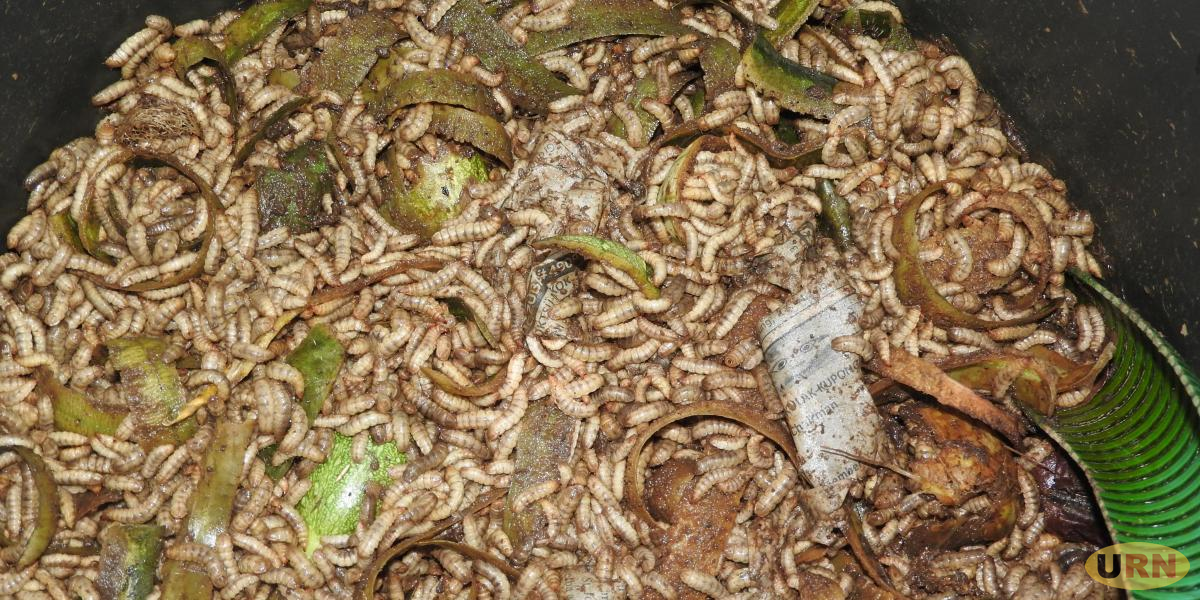
According to project officials, black soldier fly larvae contain high levels of protein and can significantly reduce farmers’ dependence on expensive commercial animal feeds. The insects feed on decomposing organic matter, including food waste from schools, hotels, restaurants, and breweries, turning waste into valuable livestock feed. Despite these benefits, adoption remains low. Opiyo said fear surrounding insects continue to discourage participation, particularly among some women farmers.
Opiyo said the project is particularly encouraging urban-based enterprises because towns generate larger volumes of organic waste needed to feed the larvae. “When you compare town and village settings, towns generate more organic by-products because of the concentration of schools, hotels, and other institutions,” he said.
Opiyo said that although the initial investment costs can be higher than those of some traditional agricultural enterprises, the enterprise requires little land and offers higher projected returns. The district has so far registered only six farmer groups in black soldier fly production against a target of ten groups. Th six groups are yet to start production of the black soldier flies.
He said more groups may be recruited if some of the registered groups withdraw due to low interest.
Cyrus Komakech, the District Focal Person for the Climate Smart Agricultural Transformation Project in Lamwo district, said the farmers in the district are slow to adopt the enterprise because it is new. According to Komakech, only one group showed interest in taking up the enterprise, but later pulled out.
He said the department is continuing to sensitise more farmers to encourage wider adoption of the enterprise, which he says is lucrative, and could save farmers from expensive feed. Patrick Otinga, a farmer from Agoro Sub-county, said many people are not yet convinced that rearing insects can become a profitable business.
“I have heard about black soldier flies during training, but I am not yet convinced. We have grown crops and reared livestock for years, and this is something completely new to us,” Otinga said. Margaret Akello, a poultry farmer, said many community members still associate flies with dirt and disease.
“People are struggling to understand how flies can become a source of income. Some farmers think it is unhygienic and are afraid to invest their time and resources,” she said. Komakech, however, maintained that black soldier flies do not spread diseases and offer an environmentally friendly way of managing organic waste while generating income-URN. Give us feedback on this story through our email: kamwokyatimes@gmail.com