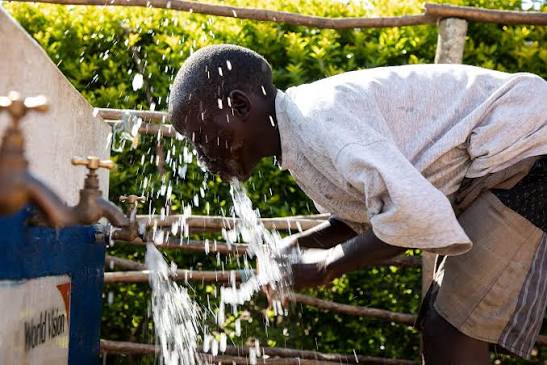
Access to clean water has been disrupted for hundreds of residents in Omiya Pacwa Sub-county, Agago District, after a solar-powered rural water supply scheme was vandalized, affecting supply to several villages.The destruction of water pipes and solar panels has left residents of Lamica, Morulem, Labima, and Abilnino villages walking up to two kilometres in search of water. District officials say the damaged infrastructure was part of a multi-billion-shilling rural water project aimed at improving access to safe water in underserved communities where coverage remains below 50 percent.
The solar-powered water scheme was constructed by SHAKTI Pumps Limited for Shs5.99 billion under the Support to Rural Water Supply and Sanitation Project. The project was funded by the Export-Import Bank of India and the Government of Uganda through the Ministry of Water and Environment. Investigations by district officials indicate that some community members cut water pipes and damaged other components of the system to create unauthorized access points for livestock watering and domestic use.
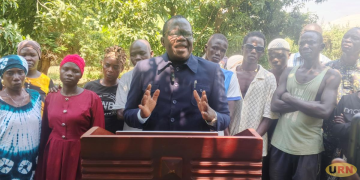
Speaking during a joint technical inspection, Agago Assistant District Water Officer Christopher Odokonyero said initial concerns over technical defects had largely been addressed, with recent findings pointing to community interference as a major cause of the challenges affecting the system. “We do not want to keep blaming the contractor when that is not the case. Our own people are damaging the infrastructure, and that is affecting service delivery,” he said.

Officials from the Ministry of Water and Environment and the Northern Umbrella of Water and Sanitation, who participated in the inspection, called for increased community sensitization to protect the project. Patrick Okello, an engineer with Northern Umbrella of Water and Sanitation, warned that repeated vandalism was affecting efforts to ensure a stable water supply, especially in villages located farthest from the main reservoir.
“The most difficult part of operating a water system is when there are continuous breakdowns. Every time a pipe is cut, the water supply is interrupted, and it takes time to rebuild pressure throughout the network,” Okello explained. He said continued pipe cutting makes it difficult to maintain a reliable water supply at the tail end of the system.
“Even if water was flowing from the first day, we can never achieve a stable supply in the furthest areas if people continue cutting pipes,” he said. Okello urged residents to raise concerns through local authorities instead of damaging the infrastructure. “If communities need additional water points, they should request them through the proper channels rather than destroying the system,” he added.
The district leaders had earlier postponed the handover of the solar water schemes in February this year due to performance concerns. However, technical teams now say vandalism has emerged as a major obstacle to the project’s operation. Ezra Waguzibya, the site engineer at SHAKTI Pumps Limited, said the contractor had taken measures to reduce vandalism by reinforcing vulnerable sections of the pipeline network.
“Compared to before, vandalism has reduced, although some sections are still being targeted. We have strengthened some of the vulnerable points, particularly around trading centres,” Waguzibya said. Residents say the vandalism has worsened their access to water. Carla Atoo, a resident of Lakwa Village in Omiya Pachwa Sub-county, said some communities have gone weeks without a reliable supply.
“There was no water the whole of last month. Some months, water comes only on one or two days in the entire month, and we must struggle to get water from distant places. Now today, we have water after more than two weeks, and the line is long,” Atoo said. Patrick Odokonyero, a resident of Kaciciro, said that although vandalism was a major challenge, rats had also damaged sections of the pipeline by exposing the pipes.
“Rats burrowed holes that exposed the pipes, leaving them vulnerable to vandalism. The low water supply on the other side is largely a result of vandalism, as people remove the fittings used to connect the pipes. I believe that if the trenches had been dug deeper, the pipes would not have been exposed so easily,” Odokonyero said. District officials warned that unless communities take ownership of the project and protect the infrastructure, efforts to improve access to safe water in the area could be undermined.
The vandalism comes at a time when the government is investing heavily in expanding safe water coverage across rural Uganda, particularly in regions where access remains critically low-URN. Give us feedback on this story through our email: kamwokyatimes@gmail.com