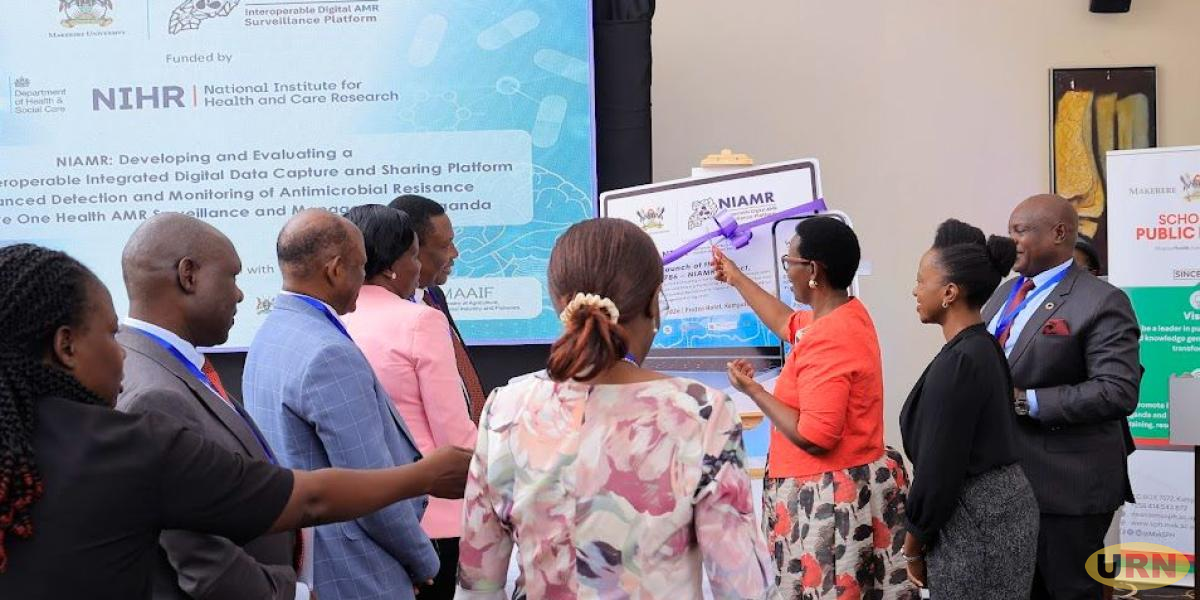
Permanent Secretary in the Ministry of Health, Dr Diana Atwine, has challenged Ugandan scientists to develop homegrown solutions to tackle the growing threat of antimicrobial resistance (AMR). She said that the country cannot continue relying on expensive treatments developed elsewhere.
Speaking on Friday at the launch of a digital AMR surveillance platform, Atwine said Uganda is already witnessing a worrying trend in which commonly used and affordable antibiotics are becoming ineffective, yet alternative treatments remain scarce and costly. The new platform will serve as a central repository for drug resistance data collected from the health, agriculture, environment, and wildlife sectors, enabling authorities to better track and respond to the growing problem.
Atwine urged researchers to explore the potential of indigenous medicinal plants as a source of future treatments, arguing that Uganda should not wait for Western scientists and pharmaceutical companies to provide solutions.

Her remarks came shortly after scientists raised concern that the true scale of antimicrobial resistance in Uganda remains unclear because data is fragmented across different sectors. According to Prof Henry Kajumbula, a microbiologist at Makerere University, the country needs a clearer understanding of which medicines are facing resistance and in which geographical areas.
He said this informed the decision to establish a centralized data-sharing platform that can support evidence-based policy and clinical decisions. The platform is being developed under the National Integrated Interoperable Digital Data Capture and Sharing Platform for Enhanced Detection and Monitoring of Antimicrobial Resistance to Improve One Health AMR Surveillance and Management in Uganda (NIAMR) project.
The system will be accessible to both clinicians and policymakers. Prof Josephine Nabukenya, an informatics specialist at Makerere University and the project lead, said artificial intelligence and machine learning will be used to analyse data from different regions and sectors and present it in a form that can easily be understood by both scientists and non-scientists.
Dr Martha Grace Ajulong, Commissioner for Pharmacy and Natural Therapeutics at the Ministry of Health, said the platform would help shift decision-making from expert opinion to evidence generated through data. She noted that the ministry has on several occasions revised the essential medicines list based on concerns about resistance, only to find that some drugs remained effective in certain settings.
She cited Ampicillin and Chloramphenicol, which had previously been removed from the list but were later found to still be effective in some rural health facilities. Current estimates indicate that about 30,000 Ugandans die each year from infections caused by germs that can no longer be treated with readily available antibiotics. Such infections include pneumonia, sepsis, and meningitis.
Kajumbula said one of the biggest drivers of antimicrobial resistance in Uganda is the lack of adequate diagnostic testing, which often leads to the unnecessary or incorrect prescription of antibiotics. He stressed that patients should first be tested to determine whether they have a bacterial infection and, if so, which antibiotic is most appropriate-URN. Give us feedback on this story through our email: kamwokyatimes@gmail.com