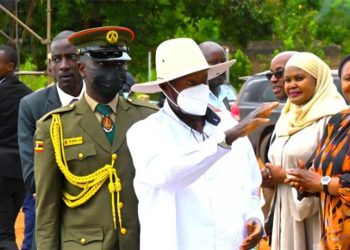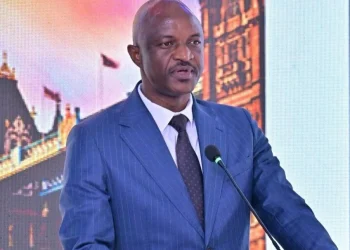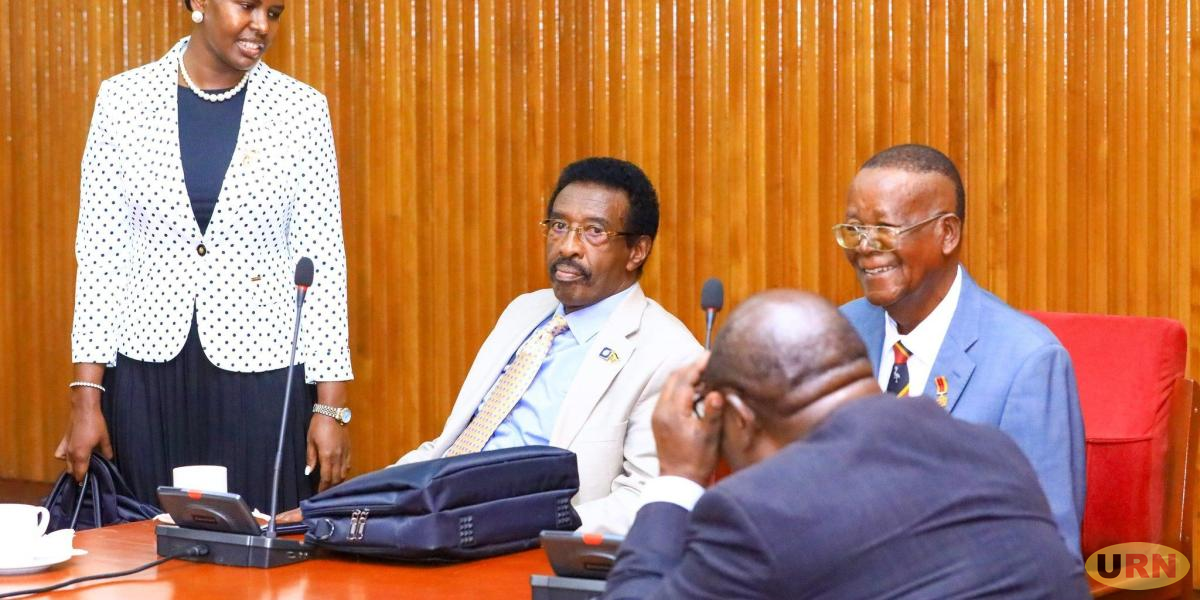
Parliament’s Appointments Committee on Monday commenced the vetting of newly appointed Cabinet Ministers and Ministers of State, launching a constitutionally mandated process that will determine which of President Yoweri Museveni’s latest ministerial nominees formally assume office. The exercise is chaired by Speaker of Parliament Markson Jacob Oboth.
Among the first nominees to arrive at Parliament before the committee was Dr. Chris Baryomunsi, who was recently transferred from the Ministry of ICT and National Guidance to the Ministry of Health, one of the government’s most demanding portfolios.
His nomination comes at a time when health sector in Uganda faces mounting pressure to strengthen disease surveillance systems, improve health infrastructure, address shortages of medical personnel and essential medicines, and enhance preparedness against public health emergencies, including recurrent outbreaks of Ebola and other infectious diseases.

Also scheduled to appear before the committee is Kiryowa Kiwanuka, the former Attorney General who has been nominated as Minister of Defence and Veteran Affairs. The appointment places him in charge of a strategically significant ministry responsible for national security policy, military administration and the welfare of veterans.
State Minister for Agriculture Frank Tumwebaze, who retained his portfolio in the reshuffle, was among the early arrivals. His reappointment is expected to provide continuity in a sector that remains central to Uganda’s economy, contributing significantly to export earnings while employing the majority of the population.
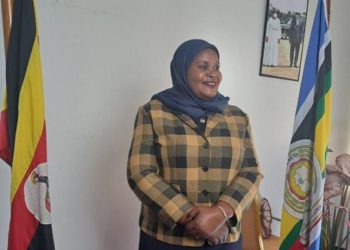
Other nominees vetted included Minister for the Presidency Milly Babalanda, veteran politician Prof. Ephraim Kamuntu, Maj. Gen. Jim Muhwezi Katugugu and Kampala Capital City and Metropolitan Affairs Minister Minsa Kabanda.
The vetting exercise derives its authority from Article 113 of the Constitution of Uganda, which requires parliamentary approval of ministerial appointments made by the President before nominees can formally assume office.
The process is further governed by Parliament’s Rules of Procedure relating to the Committee on Appointments, which empower the committee to examine nominees’ academic qualifications, professional competence, integrity, leadership record and suitability for public office.
Constitutional lawyer Nicholas Opiyo argues that the vetting process serves as one of Parliament’s most important checks on executive power. “Parliament’s approval role is intended to ensure that appointments are based not only on political considerations but also on competence, integrity and public confidence,” he said. “It is a critical accountability mechanism within onstitutional framework.”
Political analyst Dr. Sarah Bireete notes that while most presidential nominees have historically been approved, the process offers an important opportunity for scrutiny.“The significance of vetting lies not merely in rejecting or approving nominees. It allows the public, through Parliament, to assess the vision, preparedness and credibility of those who will manage critical national sectors,” she said.
Although Uganda’s Appointments Committee has often approved most ministerial nominees, historical precedents demonstrate that the process can occasionally block controversial appointments. Past vetting exercises have seen nominees rejected over inadequate academic qualifications, integrity concerns, corruption allegations and questions regarding constitutional eligibility.
The current vetting exercise carries additional political significance as it unfolds alongside the inauguration of the 12th Parliament and renewed efforts by government to implement NDP IV, which prioritizes human capital development, industrialization, wealth creation and improved service delivery.
The Appointments Committee is expected to continue vetting the remaining nominees in the coming days before issuing its decisions, paving the way for the new Cabinet to be formally sworn in and begin implementing the government’s agenda-URN. Give us feedback on this story through our email: kamwokyatimes@gmail.com