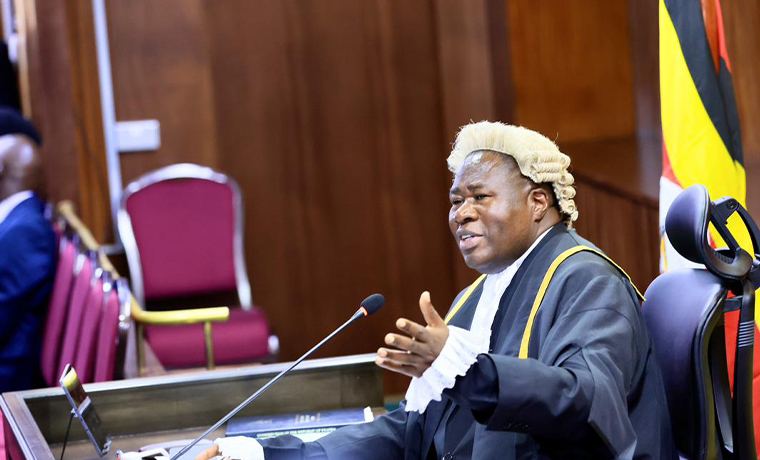
Speaker of Parliament Jacob Marksons Oboth-Oboth has directed the Clerk to Parliament to present a status report on the construction of the new parliamentary chambers. His directive follows a protest by Members of Parliament over severe congestion and lack of seating space during Thursday’s sitting.
“Within two weeks, the Clerk will give me the status report on that building and what needs to be done and when it’s going to be completed, and I’ll report here,”
Oboth-Oboth told the House after concerns were raised by lawmakers, including Leader of Opposition Joel Ssenyonyi. “The work has started today. We are going to do what they call resetting the factory default,” the Speaker added.

The remarks followed heated complaints from MPs who said the overcrowded chamber had become unworkable, with several legislators left without seats and others forced to sit in the gallery or squeeze into already congested rows.
Mukono Municipality, MP Betty Namboze raised a procedural matter under Rule 9 of Parliament’s Rules of Procedure, questioning the disorderly seating arrangements and the failure to provide accommodation for all legislators. “I’ve been sitting down, for example, I don’t have a seat,” Namboze said. “Wouldn’t it be procedural for you to guide us on the issue of seating before we proceed, and to make sure that each one of us is properly accommodated?”
Namboze also noted that some MPs had occupied seats reserved for opposition legislators without authorization from the Speaker, while technical problems, due to congestion, had affected the microphones in some sections of the chamber. The visibly packed chamber also sparked concern amid the ongoing Ebola outbreak, with MPs seated shoulder-to-shoulder during proceedings.
Leader of Opposition Joel Ssenyonyi described the situation as embarrassing and blamed the delays in constructing the new parliamentary chambers for the worsening congestion.
“This Parliament, I am told, was made for about 80 people at the time it was constructed. We are now 529 members. When you add the ex-officials, we shall be 550 plus,” Ssenyonyi said. “There are new chambers that have been under construction for donkey’s years. Money is appropriated every financial year. Why has that place become a bottomless pit? Why do they not finish constructing that place so that members don’t sit on their laps?” he added.
The current parliamentary chamber, commissioned in 1960, was originally designed to accommodate about 82 legislators. However, Uganda’s Parliament has expanded to more than 550 members, including ex-official members, overwhelming the available space.
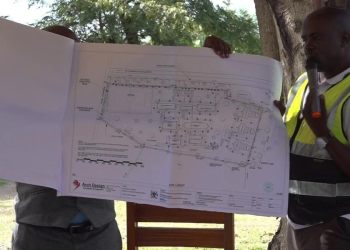
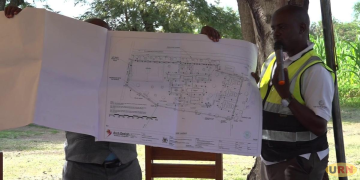
Construction of the new parliamentary chambers officially began on July 25, 2017, opposite the National Theatre along Sir Apollo Kaggwa Road. The project was initially expected to be completed by July 2020, but has suffered repeated delays linked to redesigns, funding challenges, and construction setbacks.
According to Parliament’s latest Strategic Plan, the project is currently estimated at 45 percent completion as of the first quarter of the 2024/2025 financial year. The estimated project cost has increased to approximately 220.2 billion Shillings from the original contract sum of about 179.8 billion Shillings following several structural modifications.
Recent audit findings indicate that more than 263 billion Shillings has already been spent on the project, even as completion timelines continue to shift. The latest projected completion date is reportedly December 2027. The redesign of the chambers increased the structure from eight to nine floors to create more office and seating space for legislators and include a parliamentary museum-URN. Give us feedback on this story through our email: kamwokyatimes@gmail.com