By KT Reporter
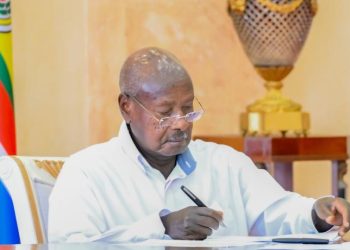
Uganda is on course to achieve its long-awaited First Oil by June 2026, President Yoweri Museveni has reaffirmed, describing the milestone as a key launchpad for the country’s industrial transformation. The President’s message was delivered by Energy Minister Ruth Nankabirwa Ssentamu during the closing of the 11th Annual Oil and Gas Convention 2026 held in Munyonyo on Wednesday.
In the speech, Museveni said Uganda’s petroleum sector is now transitioning from years of exploration and infrastructure development into actual production, which he said must translate into jobs, industrial growth, and long-term economic transformation. “Uganda is ready for First Oil,” Nankabirwa said on behalf of the President, reiterating the government’s position that oil should drive structural transformation rather than merely serve as an export commodity.

Uganda’s oil journey dates back more than two decades and gained momentum following Heritage Oil’s discovery of commercially viable oil reserves in the Albertine Graben in 2006. According to the Uganda National Oil Company, the country has since confirmed approximately 6.5 billion barrels of oil, of which about 1.4 billion barrels are commercially recoverable.
The sector registered significant progress in 2022 after Final Investment Decisions unlocked nearly $ 10 billion for the Tilenga and Kingfisher oil projects being developed by TotalEnergies and CNOOC. A key component of Uganda’s export infrastructure is the East African Crude Oil Pipeline, a 1,443-kilometre heated pipeline stretching to the Tanzanian port of Tanga.
The pipeline is expected to transport up to 216,000 barrels of crude oil per day at peak production. Government officials, however, say the country’s strategy goes beyond crude exports. A major pillar of the oil agenda is value addition through the planned 60,000-barrel-per-day refinery in Hoima and downstream industries at Kabalega Industrial Park targeting petrochemicals, fertilisers, and manufacturing.
Officials believe the refinery project could save Uganda an estimated two billion dollars annually, currently spent on fuel imports, while positioning the country as a regional energy hub. Sarah Birungi Banage described the refinery as transformative, saying it would fundamentally restructure Uganda’s economy and reduce dependence on imported petroleum products.
The oil sector is also expected to play a central role in Uganda’s broader ambition of growing the economy from approximately 50 billion dollars to 500 billion dollars through agro-industrialisation, tourism, mineral-based industrialisation, and science and technology. Uganda’s petroleum industry operates under a legal and policy framework that includes the Petroleum Exploration, Development, and Production Act of 2013, which provides for local participation and technology transfer.
The government recently launched the National Petroleum Policy 2025, which further emphasizes local content, value addition, and alignment with global energy transition priorities. Officials estimate that the oil and gas sector could generate up to 150,000 direct jobs and over 300,000 indirect employment opportunities by 2030. However, the government acknowledges that achieving these benefits will require continuous investment in skills development, particularly in engineering, logistics, and technical services.
Industry experts at the convention emphasized that achieving First Oil should only mark the beginning of Uganda’s long-term energy ambitions. Jonan Kisakye noted that attention must now shift toward sustaining production, attracting long-term investment, and building a resilient petroleum industry. Meanwhile, Barbara Nakayenze stressed the importance of community trust and effective grievance-handling mechanisms around oil projects.
State Minister for Trade Wilson Mbadi called for stronger partnerships to ensure oil revenues support wider industrial development. “We must produce oil while building factories, roads with domestic bitumen, farms supplied by local fertilisers, and youth employed in modern industry,” Mbadi said. Despite optimism surrounding the sector, experts caution that Uganda’s oil reserves are finite, with production projected to last between 25 and 30 years.
The government says it is therefore investing simultaneously in renewable energy projects such as hydropower and solar energy to guarantee long-term energy security. Observers say Uganda’s success will largely depend on policy consistency, institutional strength, transparency, and accountability in managing oil revenues and investments.
-URN. Give us feedback on this story through our email: kamwokyatimes@gmail.com