By KT Reporter
Climate change is no longer a distant threat—it is reshaping Africa’s food systems, threatening livelihoods, and testing resilience across the continent.
At a recent Regional Forum on Scaling Climate-Smart Agriculture in Addis Ababa, experts emphasized that the Kampala Declaration and Action Plan (KADAP) is now moving from strategy to action.

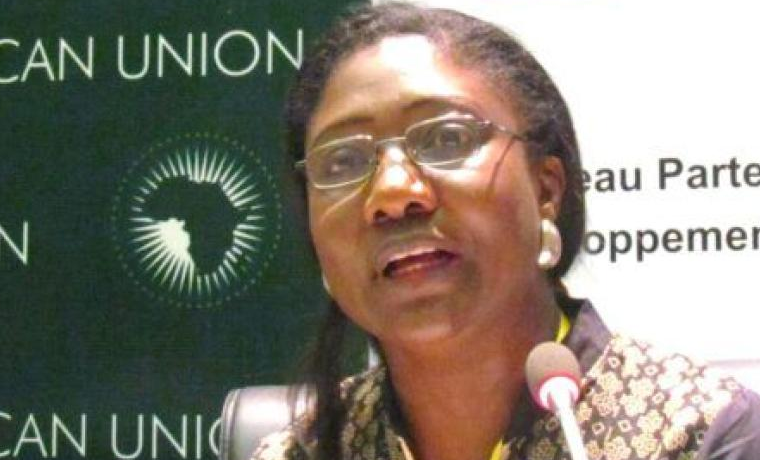
“Integrating climate-smart agriculture is not a parallel agenda; it is a delivery pathway for achieving productivity, resilience, and food security simultaneously,” said Estherine Lisinge-Fotabong, Director of Agriculture, Food Security, and Environmental Sustainability at AU-NEPAD.
“The Kampala Declaration has set the roadmap; now we must embed CSA into national and regional planning processes.” Said Lisinge-Fotabong.
“CSA moves from pilot programs to systemic transformation when integrated into governance, investment, and monitoring frameworks.” She said.
The forum, organized by IGAD, the World Bank, and CCARDESA, brought together ministers, technical experts, and development partners to align CSA priorities with national investment plans.
Uganda was represented by State Minister for Agriculture, Bright Rwamirama. The forum explored the tools that will help to domesticate the declaration at the national level.
The Kampala Declaration and Action Plan (KADAP),officially known as theKampala CAADP Declaration on Building Resilient and Sustainable Agrifood Systems in Africa- is a 10-year strategy (2026–2035) adopted by African Union (AU) Heads of State and Government to transform agriculture across the continent.
Adopted in January 2025 in Kampala, Uganda, it succeeds the 2014 Malabo Declaration as the third phase of the Comprehensive Africa Agriculture Development Programme (CAADP) .
The beginning of 2026 ushered in the implementation phase of Kampala Declaration and Action Plan (KADAP). Madam Lisinge-Fotabong highlighted the KADAP Kampala Implementation Guidelines, focusing on four pillars: governance, analytics, investment design, and mutual accountability.
“Climate-smart agriculture must be anchored in national planning systems, not confined to climate desks or isolated projects,” she said.
“CSA moves from pilot programs to systemic transformation when integrated into governance, investment, and monitoring frameworks.”
She noted that with aligned efforts and partnerships, Africa can move decisively from fragmentation to coherence. Climate-smart Agriculture (CSA) has emerged as a holistic approach to end food security and promote sustainable development while addressing climate change issues.
CSA is a set of agricultural practices and technologies that simultaneously boost productivity, enhance resilience, and reduce greenhouse gas emissions.
Dr. Johannes Volker, Managing Director at UNIQ, stressed the need for practical action: “These are not just plans on paper. We identify concrete investment options and policy reforms to scale CSA in African countries.”
“Our goal is to bridge the gap between strategy and implementation, turning ideas into real investments and reforms.” Both speakers underscored the importance of partnerships and local ownership. “CSA must be locally owned, technically robust, and financially viable,” Dr. Volker said.
“With aligned efforts and partnerships, Africa can move decisively from fragmentation to coherence,” added Lisinge-Fotabong.
Looking ahead, African countries are focused on embedding CSA into national development plans, aligning public spending with resilience goals, and strengthening regional coordination. The message is clear: the Kampala Declaration is no longer just a commitment, it is a call to action, turning ideas into tangible change for Africa’s farmers and communities.
“Integrating climate-smart agriculture is not a parallel agenda, it is a delivery pathway for achieving productivity, resilience, and food security simultaneously.”
-URN. Give us feedback on this story through our email: kamwokyatimes@gmail.com