By KT Reporter
A night of misery for hundreds of motorists stranded along the Kampala–Masaka Road has ignited a sharp political exchange between opposition figures and government authorities, with blame traded over what caused one of the worst traffic gridlocks on the highway in recent memory.
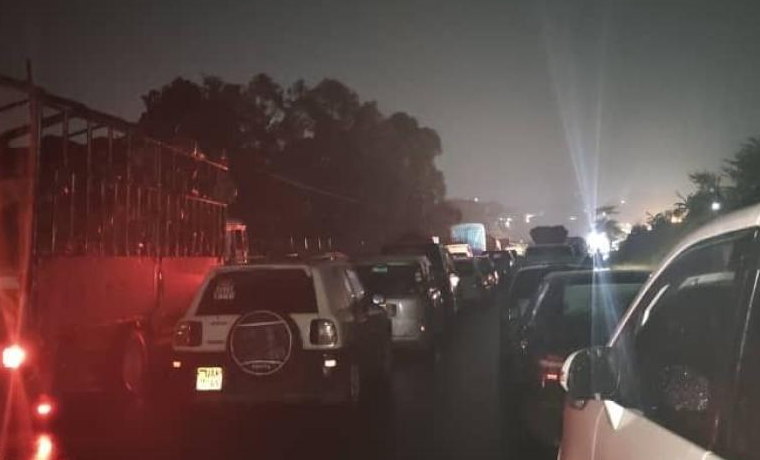
The jam, which began on Monday evening and stretched well into Tuesday, left travelers trapped for up to 16 to 20 hours on a journey that ordinarily takes about two hours. Tempers flared as social media filled with images of immobile vehicles and exhausted passengers sleeping by the roadside.

NUP leader and presidential candidade Robert Kyagulanyi, popularly known as Bobi Wine, was among the first figures to comment. In a post on X (formerly Twitter), he laid the blame squarely on President Yoweri Kaguta Museveni.
“Pole sana to all citizens who spent the night on Kampala–Masaka Road and those who are still stuck,” Kyagulanyi wrote. “A journey that should ordinarily take 2 hours, taking close to 20 hours! Why? Because Dictator Museveni blocked sections of the road for hours as he campaigned in Mpigi and, at some point, decided to sit in the middle of the road while addressing people!”
Kyagulanyi described the gridlock as a symptom of poor governance, arguing that no leader should have the power to inconvenience citizens to such an extent.“Imagine those who are stuck with patients, trying to run them to hospitals; NO BODY should have the right to inconvenience citizens in this manner!…it all begins by having leaders who understand that they are servants.”
On the ground, motorists echoed the frustration, though many were less concerned with politics than with the hours lost on the road.
“I have spent 16 hours driving to Kampala,” said Charles, a commercial driver interviewed while inching through traffic. “This suffering is terrible and must stop.” But police and State House have strongly rejected claims that the President or his convoy caused the gridlock, urging the public not to “distort facts.”
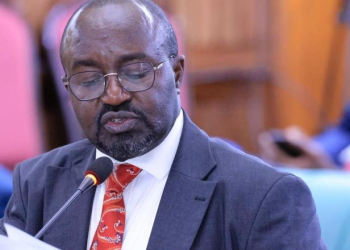
Michael Kanunura, the Police Spokesperson for the Directorate of Traffic and Road Safety, said investigations and traffic reports showed that the congestion was caused by a combination of traffic volume, road indiscipline, and accidents, not presidential movements.
“It is not true that the President of Uganda had any connection with the traffic jam in Mpigi along the Masaka–Kampala highway,” Kanunura said. “This gridlock was caused by the high volume of traffic from Masaka heading toward Kampala coupled with indiscipline of motorists.”
According to police, some drivers created illegal extra lanes, blocking vehicles traveling in the opposite direction toward Masaka from Mpigi. The situation was compounded by a crash involving a truck and a lorry at Lungala, which temporarily cut off the road entirely, and a broken-down trailer near Kamengo.
“Traffic police finally managed to restore order and the vehicles finally moved,” Kanunura added. “Let us not distort facts.” State House reinforced that position in a statement issued on Tuesday, describing accusations against President Museveni’s convoy as “false, inaccurate and misleading.”
While acknowledging the inconvenience suffered by road users, State House said presidential road closures are limited and time-bound, in line with international security standards, and are carefully coordinated to minimize disruption.
Instead, the statement pointed to several contributing factors: heavy end-of-month traffic as holidaymakers returned to Kampala from upcountry, poor road discipline by motorists who created multiple lanes, and a heavy downpour that reduced visibility and forced some drivers to temporarily park.
“Significant overnight delays occurred at the same time last year, when there were no presidential campaigns in districts along the route,” the statement noted, arguing that the incident was being wrongly politicized.
The Kampala–Masaka Road is a critical transport artery linking the capital to southern and southwestern Uganda, and congestion during festive seasons is a recurring problem. Analysts say the latest gridlock underscores longstanding challenges of road capacity, enforcement, and driver behavior, which often come into sharp focus during peak travel periods.
As motorists gradually cleared the highway, authorities appealed for patience and responsible road use, especially during heavy traffic and adverse weather. But for those who lost an entire night on the road, the debate over responsibility offered little comfort, only renewed questions about whether Uganda’s busiest highways are equipped to handle the pressures placed on them at year’s end.
-URN. Give us feedback on this story through our email: kamwokyatimes@gmail.com