By KT Reporter
For decades, Evelyn Lanyero has relied on selling hot-pressed shea butter oil as her main source of income. In Acholi, where formal employment is scarce, the shea butter trade has long been a lifeline for rural women.
At the bustling centre of Lacekocot in Pader district, Lanyero, 45, and more than 50 other women used to collect, dry, roast, grind, and press shea butter for hair food, cooking, and skincare products.

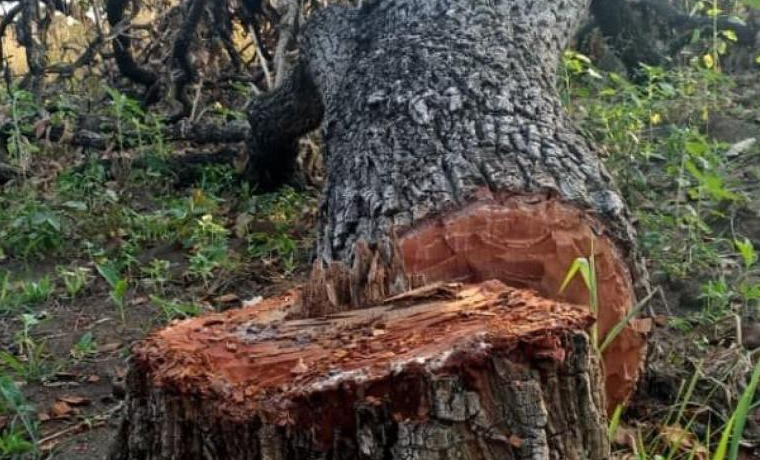
But for over ten years, their livelihoods have been steadily undermined by commercial charcoal dealers who operate with little fear of enforcement.
“We used to pick nuts within walking distance. Now, we hire boda bodas to go further, and we still return with less because the trees are going fast,” said Lilly Adong, another shea butter dealer in Atanga trading centre, Pader district.
Gerima Mustafa, a shea nut tree conservation advocate from West Nile, explained the long-term economic impact.
“Cutting down a single shea tree can cost a rural woman millions of shillings in lost income over time,” he said.
“Women earn a steady income through harvesting, processing, and value addition, and that disappears the moment a tree is felled for charcoal or timber.”
Mustafa gave a concrete example: “On average, in one harvest season, a woman can collect up to 150 kilograms of shea nuts from a tree. One kilogram sells at about 2,000 shillings.
That’s 300,000 shillings lost per tree—just at the raw nut level.” The losses grow when nuts are processed into butter or value-added products.
“A kilogram of raw shea butter sells for around 30,000 shillings. But when used in creams or other products, one kilogram can generate between 70,000 and 120,000 shillings,” Mustafa said.
He added that women in cooperatives, trained in processing and value addition, earn significantly more than those selling at farm-gate prices. Shea trees can live up to 300 years, meaning a single tree can support five generations. Yet charcoal production—particularly by outsiders striking deals with local landowners—is decimating the population across Acholi, Lango, and West Nile sub-regions.
“The wanton destruction is brought by charcoal dealers. They come, make deals with so-called landlords, and once they access the land, they cut trees indiscriminately,” Mustafa said.
He accused some district governments of benefiting from the charcoal trade while enforcement at key exit points remains weak. “If the government were serious, charcoal trucks would not be leaving these regions. West Nile, for example, has only two main gates. It should be easy to control.”
Mustafa estimates that only about 23% of shea trees survive today, signaling a severe decline.
In response, he and fellow advocates are now linking conservation with livelihoods. By training women in value addition and organizing them under the Nilotica Shea Association (NISA)—Uganda’s chapter of the Global Shea Alliance—they hope women will protect the trees that sustain them.
“They are cutting the tree because they don’t know its value. If they knew what this tree could do over generations, they would never cut it down,” Mustafa said.
Traditionally, shea trees are protected by cultural taboos, with violators fined in goats or cattle. Kassimiro Ongom, a clan chief of the Kotongo in Agago district, emphasized the environmental role of the trees: “Shea trees help prevent flooding because their deep roots improve water infiltration.
With unpredictable weather patterns, charcoal burning, and land degradation threatening ecosystems, the slow-maturing shea tree, taking 15–20 years to fruit, is increasingly irreplaceable.
“Cutting one shea tree is like losing a lifetime of income, food, and climate protection. It’s not just a tree, it’s a legacy,” Ongom said.
In the meantime, women in Pader are taking matters into their own hands, planting shea trees and nurturing those that grow naturally.
Uganda’s National Forestry and Tree Planting Act lists shea as a protected species. While cutting one requires a license and approval, enforcement remains weak or nonexistent, leaving women like Lanyero fighting both for their livelihoods and for the survival of a tree that sustains communities for generations.
-URN. Give us feedback on this story through our email: kamwokyatimes@gmail.com