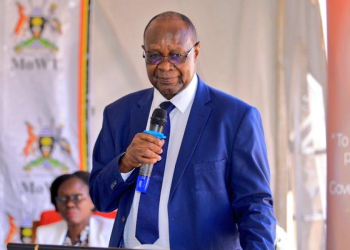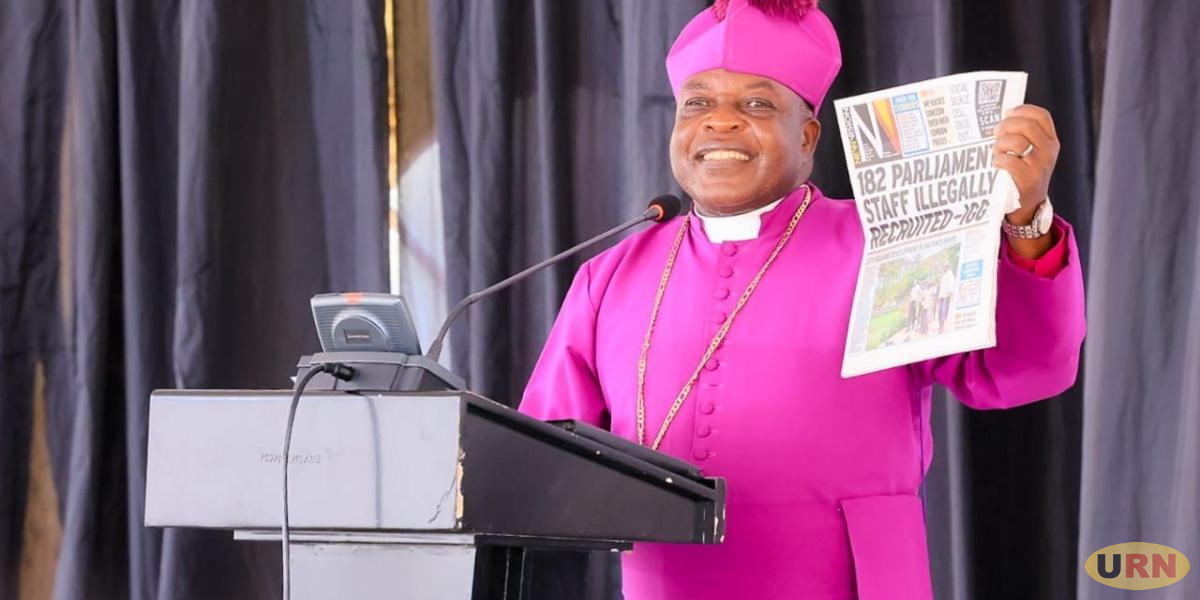
Bishop Samuel Egesa of Bukedi Diocese has challenged Parliament to confront corruption, questionable recruitment practices and failures in public accountability, warning that the institution risks losing public confidence if its conduct contradicts the laws it makes.
Preaching during an inter-religious thanksgiving service at Parliament on Friday, Egesa questioned how 182 parliamentary staff could reportedly have been recruited illegally, referring to media reports attributed to the Inspectorate of Government (IGG).
Parliament began validating its staff on Monday, October 19, 2026, in an exercise expected to run for two weeks and cover more than 800 employees.

The exercise follows an IGG report that reportedly uncovered recruitment irregularities during the previous Parliament. The validation exercise is intended to establish the status of parliamentary employees amid questions about the recruitment process.
However, the reported figure of 182 staff and the precise findings against them require clarification from the IGG and Parliament. Egesa was preaching under the theme, “Stand, look for the Good Way, and Walk in It,” drawn from Jeremiah 6:16.
He used the biblical text to urge legislators to reflect on the country’s past, assess its present challenges, and choose a better path for the future.
He argued that thanksgiving should not be limited to celebrating achievements but should also provide an opportunity for honest national reflection, particularly on corruption, injustice, integrity and the exercise of public authority.
The bishop cautioned that corruption should not be treated merely as a political problem, saying its effects are felt by ordinary Ugandans through poor public services, compromised infrastructure and unequal access to opportunities.
He cited Karamoja as an example of a region where the diversion of resources intended for development could have devastating consequences for communities already facing significant challenges.“A poorly constructed road affects a trader and a farmer. A compromised recruitment process affects qualified younger people who deserve a fair opportunity,” he said.
Egesa also questioned the consequences of anti-corruption enforcement on public service delivery, recalling that some districts had failed to pay September salaries after chief administrative officers, finance officers and other officials were arrested or interdicted.
He urged leaders to consider how accountability measures could be pursued without disrupting essential government services, arguing that public institutions must remain functional even as officials suspected of wrongdoing are investigated.
The bishop also challenged legislators to reject political hostility and violence, recalling incidents in which Members of Parliament fought and used chairs against colleagues in the House.
He said the new Parliament had an opportunity to change the country’s political culture by promoting peaceful dialogue, responsible debate and cooperation across party lines.
“A new beginning is not created by changing the calendar, by inaugurating a new parliament or making new promises,” Egesa said. “A new beginning comes when we have the courage to stop, examine our ways, seek what is right, and walk in it.”
He urged MPs to demonstrate integrity through their actions rather than speeches, saying leadership positions carry a responsibility to serve the public and protect the common good.
Responding to the sermon, Deputy Speaker Thomas Tayebwa said Parliament had started its new term on a promising note, pointing to Speaker Jacob Marksons Oboth-Oboth’s commitment to anchoring the institution in faith.
However, Tayebwa argued that corruption should not be portrayed as a problem confined to politicians, saying the vice had permeated different sections of society, including families, religious institutions and community groups.
Speaker Oboth-Oboth described public office as a responsibility entrusted to leaders by the people and urged MPs to exercise their mandate faithfully.
He said Parliament must demonstrate its commitment to public service through the laws it enacts, its oversight of public resources and the way legislators represent their constituencies.
The thanksgiving service brought together parliamentary leaders and religious representatives from different faith traditions, with calls for the 12th Parliament to strengthen accountability, unity and ethical leadership.
Egesa challenged the new Parliament to do more than distinguish itself from its predecessor, urging legislators to demonstrate the courage to abandon practices that undermine public trust and consistently act in the interests of Ugandans-URN. Give us feedback on this story through our email: kamwokyatimes@gmail.com