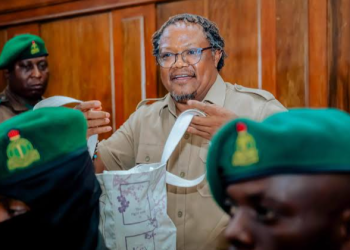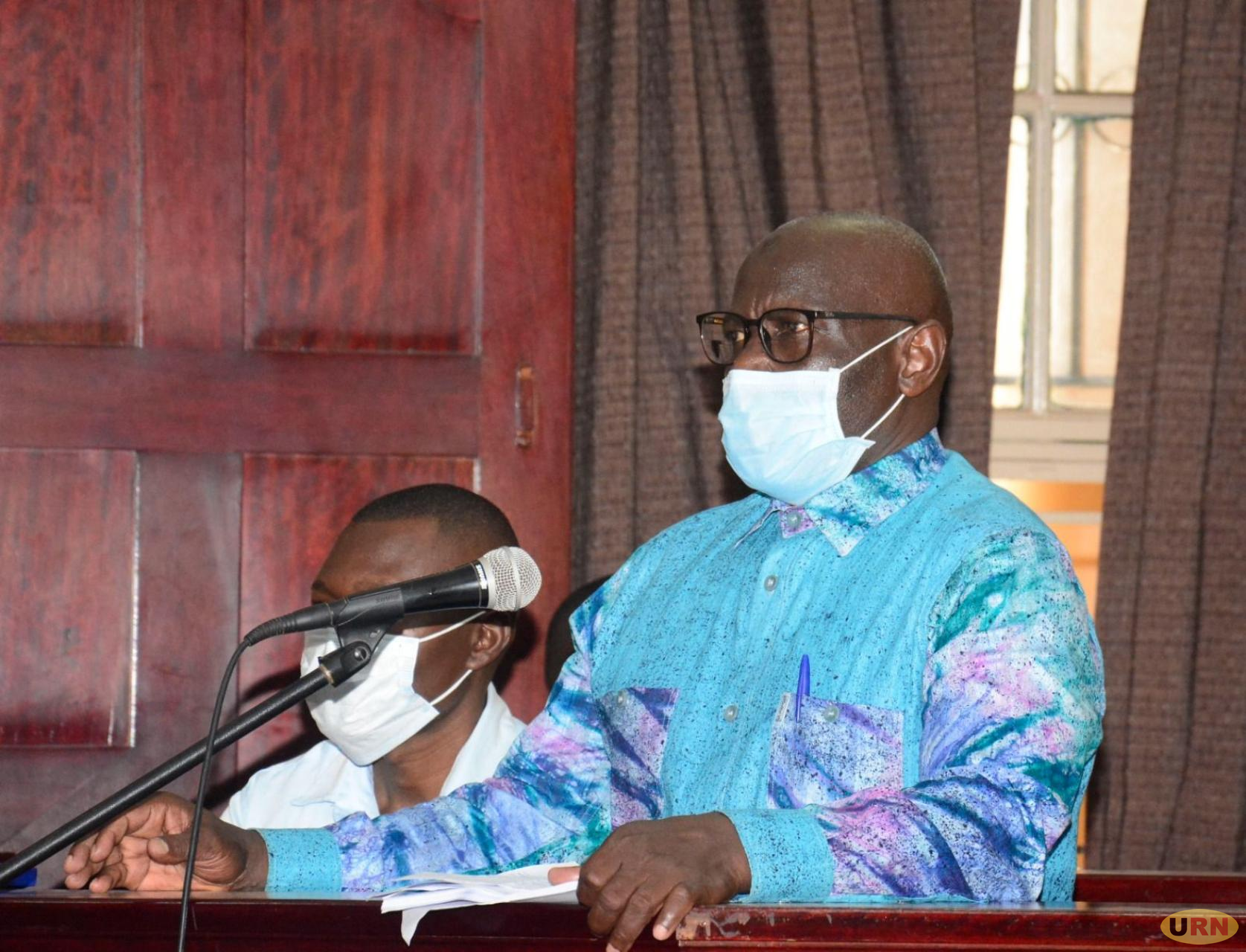
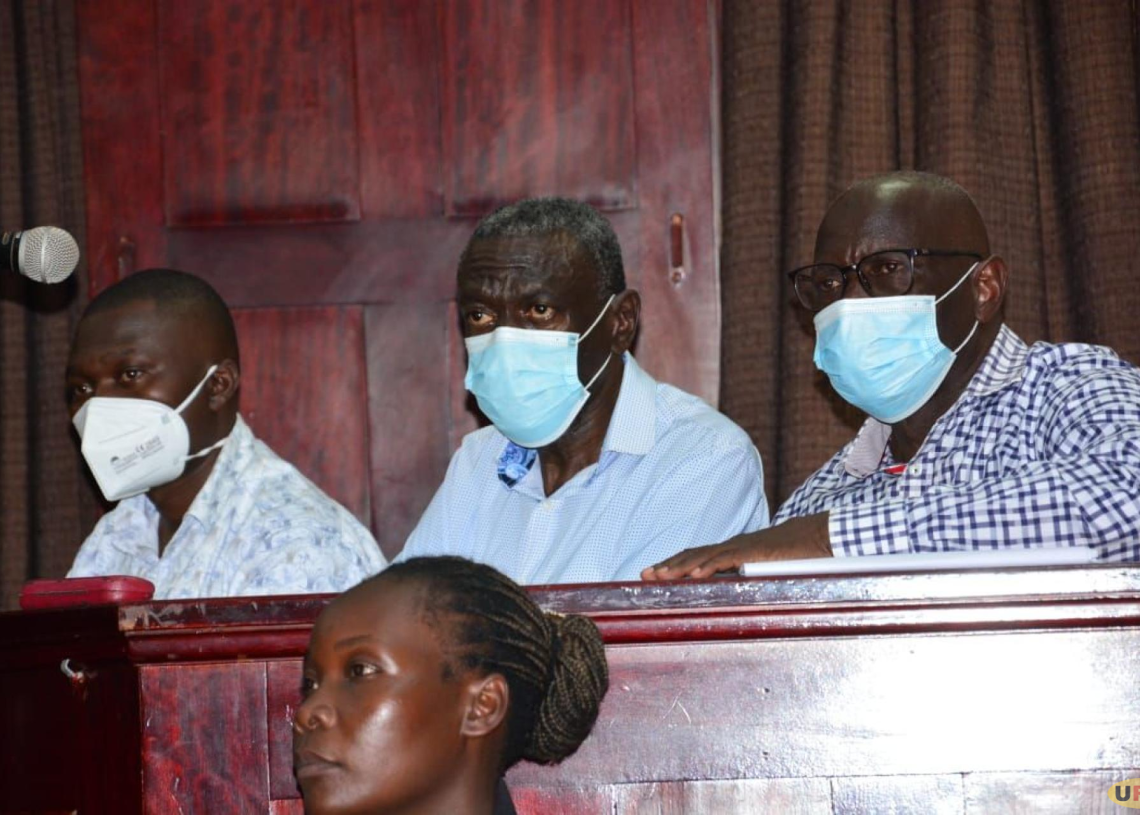
A police detective investigating the treason case against jailed opposition politician Dr Kizza Besigye and his co-accused has told the High Court that he paid Makerere University close to sixty million shillings (Ugx59.32 million) to transcribe audio recordings collected during the investigation.
Detective Inspector Benedict Odyek, 56, testified on Thursday before the High Court Criminal Division in Kampala that the recordings, extracted from electronic gadgets submitted for forensic examination, ran for 24 hours, 43 minutes and 15 seconds.
He said the university charged forty thousand shillings per minute for the transcription.

Odyek, who is attached to the Criminal Investigations Directorate (CID) headquarters and has 32 years of investigative experience, is one of three detectives working on the case under the supervision of Commissioner of Police Lydia Kantono.
The others are Detective Inspectors Nelson Natumanya and Wilbern Tworekirwe.
He told trial judge Emmanuel Baguma that he took the audio materials to Makerere University’s Centre of Languages for transcription in September 2025.
He first visited the centre on September 3, obtained a quotation and invoice, and returned on September 5 with a formal request letter before making the payment.
The quotation presented in court was signed by Mary Katungi, the centre’s client relations officer.Odyek said the recordings had been extracted from gadgets he received from Andrew Wilson, also known as Orlando, and Wilson’s friend Moses Barasa.
The exhibits included three mobile phones, a hard drive with a concealed camera, a power bank with a concealed camera, a wall socket with a concealed camera, a magnetic listening device, a watch described in court as an “attitude chronometer”, and a USB cable.
According to Odyek, Wilson told him that the devices had been used to record Besigye, Joel Wakayima and Frank Kihehere during meetings in Geneva, Switzerland; Athens, Greece; and Nairobi, Kenya. Wilson allegedly told investigators that the meetings concerned plans to overthrow the Ugandan government.
Odyek also said Wilson claimed that Besigye’s co-accused, Obeid Lutale, attended the Nairobi meeting with a Kurdish associate.
These were accounts attributed to Wilson by the investigating officer. The allegations have not been established by the evidence described in Odyek’s testimony.
Odyek told the court that he received most of the exhibits on March 21 and March 27, 2025, while others were handed to him on September 9 that year. He said he labelled the exhibits with his initials before submitting them for forensic examination.
On March 25, 2025, he obtained a court order signed by Grade One Magistrate Opio Charles Kangira authorising the police forensic unit to examine the exhibits.
The order directed the Head of the Cyber Crimes Department in the Directorate of Forensics to image, analyse and extract information from the devices and prepare a report.
Odyek also swore an affidavit on March 25 in support of the application for the extraction of information.
He said he collected the forensic report and a 64-gigabyte flash drive containing extracted audio and video files from the Cyber Crimes Department in Naguru on September 2, 2025.
The report was prepared by Superintendent of Police Kenneth Angulu, the head of the forensic department, identified in the proceedings as Examiner No. 9.
Odyek said the recordings included audio in which Besigye could be heard introducing himself and Lutale.
He later copied selected material onto a 16-gigabyte flash drive for transcription, saying some of the information on the larger drive was irrelevant to the treason investigation.
The testimony also brought a dispute over disclosure of evidence to the defence. Defence lawyer Farouk Kizito Kamulegeya objected to the admission of the court order authorising access to information on the devices, saying the defence had not been served with a copy and needed to verify its authenticity. He also objected to the quotation and invoice from Makerere University, saying the documents had not been disclosed to the defence.
Kamulegeya asked the court to direct the prosecution, represented by Chief State Attorney Richard Birivumbuka, to provide all outstanding documents. Lawyers representing Captain Denis Oola, led by Sylvia Namawejje Ebitu, supported the application, saying they had been taken by surprise by documents they were seeing for the first time.
Judge Baguma directed the prosecution to disclose the remaining documents to the defence.
He admitted the contested court order, subject to it being shown to be inauthentic. The case will resume on November 2 for cross-examination of Odyek.
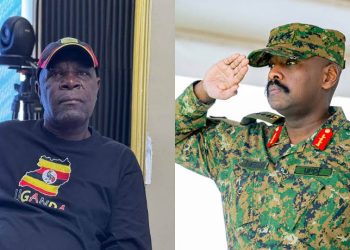
Besigye, Lutale and Oola are accused of treason over alleged meetings in Uganda, Kenya, Greece and Switzerland to solicit funding, obtain weapons and organise paramilitary activities. Besigye is being tried in absentia while on remand at Luzira Prison, while Lutale and Oola attend court in person.
The prosecution alleges that Besigye met Wilson, whom it describes as a Kurdish intelligence operative, and received US$5,000 to facilitate the transportation of 36 Ugandans to Kisumu, Kenya, for military training. Prosecutors say the group was intercepted and deported before the training began.
The State further alleges that the accused planned to obtain surface-to-air missiles, ricin poison and counterfeit currency, and use drones to assassinate President Yoweri Museveni. The prosecution has indicated that it will rely on witness testimony, audio and video recordings, social media communications, immigration records and telephone data in support of its case.The allegations remain before the court-URN. Give us feedback on this story through our email: kamwokyatimes@gmail.com