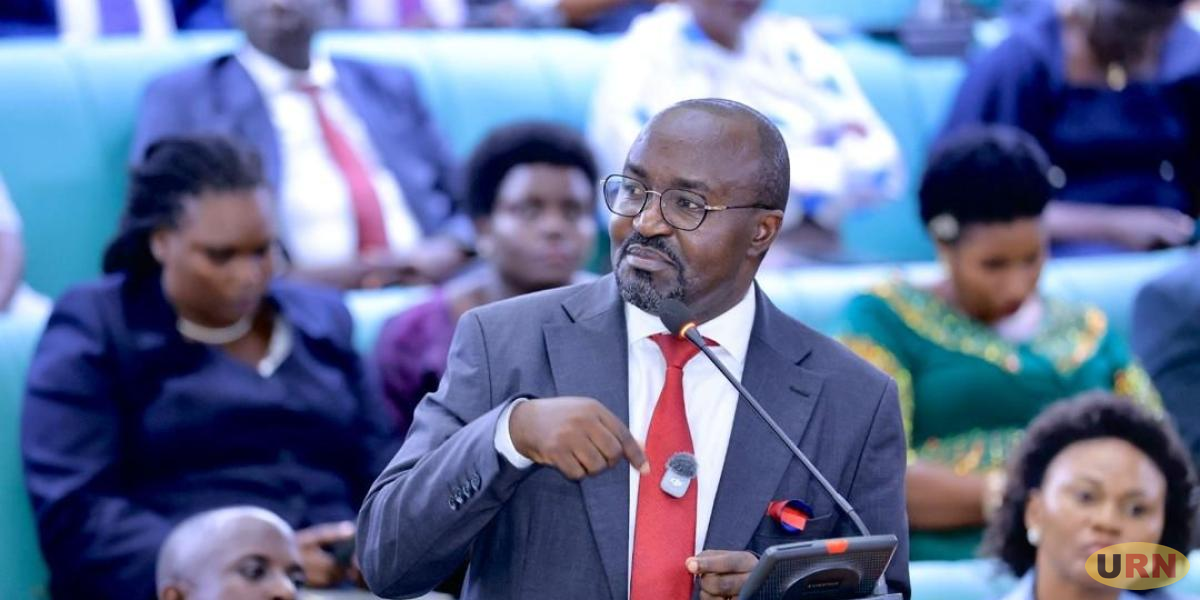
The Public Accounts Committee (Central Government) has flagged Shs283.74 billion in unauthorised expenditure by the Ministry of Defence and Veteran Affairs, Uganda Police Force and Uganda Prisons Service, recommending that responsible accounting officers be held personally liable.
The findings are contained in a report based on the Auditor General’s audit for the year ended December 2025. The committee, chaired by Patrick Oshabe Nsamba, examined expenditure by four government institutions: the Ministry of Defence and Veteran Affairs, Uganda Police Force, Uganda Prisons Service and Ministry of Internal Affairs.
The report documents fund reallocations without the required authorisation, procurement irregularities, stalled infrastructure projects and mounting domestic arrears. The Ministry of Defence and Veteran Affairs diverted Shs210.14 billion, Uganda Prisons Service Shs39.6 billion and Uganda Police Force Shs34 billion to unbudgeted needs, according to the committee.

Section 21 of the Public Finance Management Act requires accounting officers to obtain the necessary approval before reallocating funds. Oshabe told Parliament that military and police officials attributed the diversions to urgent outstanding debts, while prisons authorities cited the need to feed a growing inmate population. The committee rejected the explanations, arguing that predictable obligations should be provided for in approved budgets.
“Food for prisoners is a recurrent and predictable obligation of the UPS, which ought to be provided for in the budget rather than met by diverting funds appropriated for other activities,” the report states. The committee recommended that the Permanent Secretary and Secretary to the Treasury in the Ministry of Finance, Planning and Economic Development hold the responsible accounting officers personally liable under sections 76 and 77 of the Public Finance Management Act.
The report also questions the implementation of a July 2021 presidential directive requiring government ministries, departments and agencies to award civil construction works directly to the UPDF Engineering Brigade, bypassing competitive procurement procedures. The brigade has undertaken 394 infrastructure projects across the country, but 178, or 45.2 per cent, remain incomplete or stalled, delaying the delivery of health facilities and local government offices.
In one case, the brigade undertook transformer and oxygen-plant installations worth Shs8 billion at 15 medical facilities without formal funding agreements with the Ministry of Health. The committee also identified a Shs24 billion discrepancy in the Ministry of Defence’s internal holding account for the 2024/25 financial year. According to Oshabe, the ministry’s official books recorded Shs4 billion, while the accounting officer verbally acknowledged Shs28 billion.
The committee recommended a comprehensive review of the presidential directive and called for the Engineering Brigade to compete for contracts under the Public Procurement and Disposal of Public Assets Act. It also said the brigade should only take on projects within its demonstrated capacity. The construction of the UPDF National Referral Hospital in Lower Mbuya was cited as an example of delays and weaknesses in project implementation.
A Shs106.3 billion contract signed in October 2017 remained unfinished at the time of an audit inspection on November 7, 2025, eight years later. The inspection found that 241 medical equipment items had not been delivered, while 308 supplied items had been rejected for failing to meet hospital standards. Laundry and kitchen equipment worth Shs1.96 billion, ordered in 2020, had become obsolete before being put to use.
The report further noted that the hospital’s helicopter pad had been abandoned, while critical clinical areas, including the nursery, outpatient department and recovery suites, lacked medical gas plumbing. The site also experienced seasonal flooding attributed to inadequate drainage. Procurement practices at the Ministry of Defence also came under scrutiny. The committee found that standard bid-security requirements had been omitted from 57 contracts worth Shs152 billion, raising concerns about safeguards in the award of contracts for items including army rations and ranger boots.
The report separately identified single-bidder awards for high-value contracts at the Ministry of Defence and the Ministry of Internal Affairs. At Uganda Prisons Service, the committee highlighted growing congestion as the inmate population continued to outpace the expansion of prison facilities. The prison population increased by 28.5 per cent over five years to 79,153 by the end of the 2024/25 financial year, while the system’s design capacity grew by only 12 per cent to 22,419 inmates.
This translated into congestion of 253 per cent, according to the report. Lawmakers attributed much of the pressure to delays in police investigations and prolonged periods on remand. The committee also raised concerns about the productivity of state-run prison farms. Cotton yields averaged 291 kilogrammes per acre, compared with a national standard of 800 kilogrammes, which the report attributed to outdated farming methods, inadequate irrigation and a lack of modern machinery.
To address the financial management weaknesses, the committee recommended amending the Public Finance Management Act to classify domestic arrears that remain unpaid beyond one financial year as formal domestic debt, subject to a binding repayment schedule. It also called for audits by the Public Procurement and Disposal of Public Assets Authority of irregular contracts and investigations by the Inspectorate of Government where necessary.
The report, which also covers the Ministry of Internal Affairs, was presented to Parliament for consideration on Wednesday. Deputy Speaker Thomas Tayebwa deferred further consideration to another day, leaving the findings and recommendations awaiting debate by the House-URN. Give us feedback on this story through our email: kamwokyatimes@gmail.com