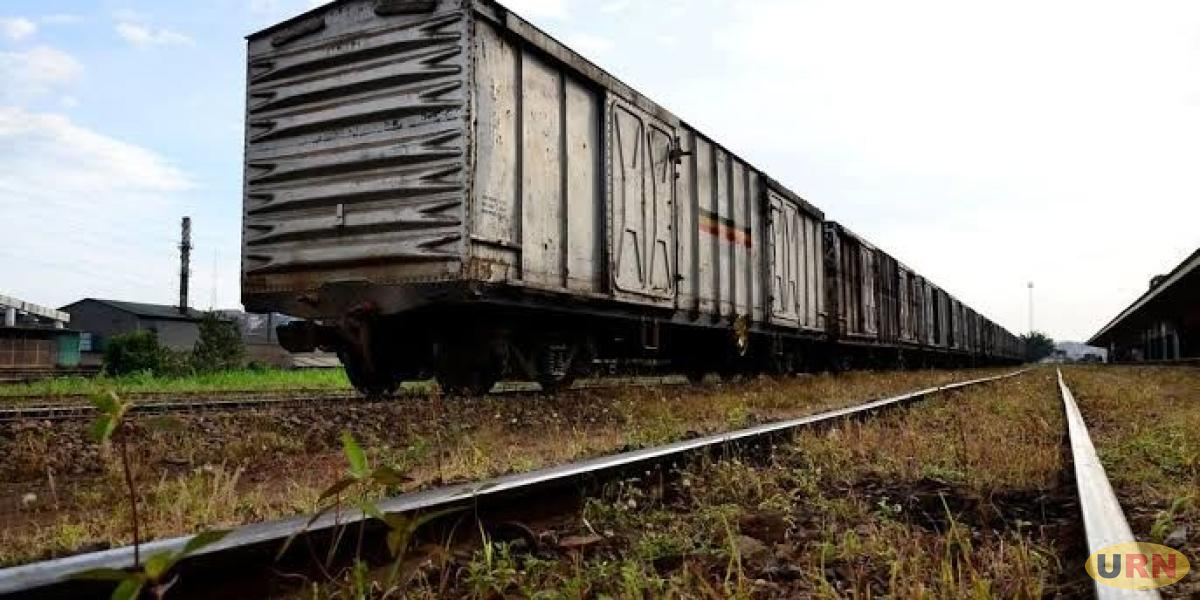
Uganda once had railway warehouses busy enough to handle hundreds of thousands of tonnes of cargo a year. URC also had one of the best parcel systems, handling heavy commercial logistics and large-scale cargo across Uganda and Kenya.
The goods sheds stored imported merchandise, handled exports, generated rental income and absorbed cargo when other railway stations ran out of space.
In 2006, Rift Valley Railways took over a railway system that included 16 goods sheds in Uganda, alongside stations, workshops, depots and other public assets.

Twenty years later, some of those cargo facilities are struggling to perform the function for which they were built.
The Auditor General has found Kampala’s Goods Shed Inland Container Depot non-functional, dilapidated and underutilised, with the government losing potential revenue from cargo handling and storage.
What happened to the public goods-shed network that once formed a critical link between Uganda’s railway and its economy?
Documents produced before the concession, during the concession, and after the railway returned to government control provide part of the answer.
At Jinja, hundreds of thousands of tonnes of goods were reportedly passing through the goods shed every year.
At Kampala, the railway freight depot handled commodities including sugar, salt, coffee, tallow and electrical equipment, with cranes and storage areas for containerised cargo. And when Kampala ran out of space, cargo could be stored at Jinja.
The records show that these were not simply old railway warehouses. They were important links between Uganda’s railway and its trading economy. The question now is what happened to them.
A 2004 environmental audit of Uganda Railways Corporation provides one of the clearest snapshots of the goods-shed system before the railway was handed to a private concessionaire.
The report, “Uganda Railways Corporation Ltd, Major Facilities Environmental Audit Report”, was prepared by SMEC International for the Government under the Privatisation and Utility Sector Reform Project.
The report guided the government when it was preparing the railway for concession. The government needed to understand the condition of the facilities that would form part of the transaction.
At Jinja, the auditors found a busy freight facility. “A Goods Shed is situated in the southern section of the site,” the report says. It was used for storage of goods unloaded from trains, while Uganda Railways Corporation staff told the auditors that “hundreds of thousands of tonnes of goods pass through the goods shed each year.”
The report says the shed handled mainly imports, although exports were also handled. Oil products were stored there before customs clearance and subsequent delivery to oil companies. It also provided overflow storage for Kampala.
“Goods are stored in the Goods Shed at Jinja for Kampala Station, if the latter runs out of space,” the auditors recorded.
The corporation was also renting out storage space inside the shed to generate additional income.
From that report, the goods shed was not merely an expense on the railway’s books. It was also a commercial facility capable of generating revenue.
In Tororo, railway lines had been purposed to pick up cement from Tororo Cement Industry (TCI). Another line delivered goods to what was then commonly known as “Store Bag” based in Agururu village.
A World Bank financial assessment of Uganda Railways Corporation, produced as part of the analysis of the railway’s finances and rehabilitation requirements, shows that goods traffic was the corporation’s dominant source of revenue.
Goods-traffic revenue rose from 1.918 billion shillings in 1988 to 4.282 billion shillings in 1991. Passenger traffic revenue in 1991 was 613 million shillings.
These and other figures show how heavily the railway depended on freight rather than passengers.
The World Bank’s assessment also noted a contradiction that would follow the railway for years: URC could generate enough revenue to cover recurrent costs, but maintenance was constrained by the money available, leaving a backlog and forcing the corporation to depend on outside financing for major capital investment.
The railway could therefore make money from moving goods while simultaneously struggling to maintain the infrastructure required to move them.
The International Monetary Fund’s transport statistics provide another measure of the railway’s freight activity. Its “Uganda: Transport and Communications, 1990–95” report recorded railway goods traffic at 102.9 million tonne-kilometres in 1990, rising to 194.7 million tonne-kilometres by 1994.
These are tonne-kilometres rather than tonnes, meaning they measure the amount of freight moved over distance rather than the physical quantity passing through a particular goods shed.
They confirm that railway freight was operating at substantial scale. For a landlocked country dependent on the Mombasa corridor, that freight system had a direct economic significance.
Goods arrived by sea at Mombasa, moved by rail through Kenya and into Uganda, and eventually reached railway terminals and goods sheds where they entered the domestic market. Coffee and cotton were among the commodities whose movement depended on this wider transport chain.
The importance of railway-linked cargo facilities remained evident long after the railway’s golden years. In 2021, the Central Corridor Transport Facilitation Agency brought together the Uganda Coffee Federation, Uganda Shippers Council and Uganda Railways Corporation to discuss alternative transport arrangements for coffee exporters facing shipping delays and shortages of containers.
The meeting considered road, rail and inland-water transport and discussed the resumption of services from Mwanza through Port Bell to the Kampala Goods Shed.
The reference to the Kampala Goods Shed decades after its construction shows that its intended function had not disappeared: it was still conceived as a point where export cargo could enter the railway-linked logistics system.
By the time the government decided to concession the railway, however, the system was already struggling with ageing infrastructure and inadequate investment. This is important because the condition of the goods sheds cannot simply be attributed to the private concession that followed.
The 2004 SMEC audit was produced before Rift Valley Railways took over and documented the state of railway facilities at that point.
The government and its development partners were seeking a private operator partly because the railway needed investment and improved management.
The Governments of Uganda and Kenya agreed in 2004 to concession their railways together. Rift Valley Railways signed the concession agreements in 2006. The African Development Bank later financed the concession and published an Environmental and Social Impact Assessment summary explaining the project and its expected obligations.
That “Kenya-Uganda Rift Valley Railways Project, ESIA Summary” says the governments were conceding the assets to the private sector “so as to improve the management, operation and financial performance” of the two railways.
RVR was expected to rehabilitate, operate and maintain the railway networks as one system. The assets handed over under that concession were extensive. The AfDB’s facility inventory records 16 goods sheds in Uganda, alongside five locomotive sheds, four diesel depots, two workshops and 19 station buildings.
The 16 goods sheds therefore formed part of a much larger public railway estate placed under private management. But there is an important gap in the publicly accessible record.
The AfDB summary gives the number 16 but does not identify all 16 goods sheds individually in the facility table. URN has it on record that some of the most prominent Good Sheds were those in Kampala, Jinja, Mbale, Soroti, Kasese, Lira, and Mukono ICD, among others.
The 2004 environmental audit describes the Kampala railway area as a major freight facility, with storage, loading and unloading areas and container-handling infrastructure. The facility operated around the clock. Its cargo included sugar, salt, coffee, tallow and electrical equipment.
The goods shed was therefore directly connected to the commercial life of Kampala. During the RVR concession, the Kampala Goods Shed remained valuable enough to become the subject of a dispute over its future.
In 2013, when an investor sought the property for redevelopment, RVR resisted surrendering the facility. The company argued that the goods shed was a conceded railway asset used for loading and unloading imports and exports and for warehousing. RVR instead proposed upgrading it into a modern railway terminal at $30 million. No documented evidence shows that the facility was repaired or upgraded.
The episode illustrated an important point: even after decades of railway decline, the land and infrastructure occupied by the goods shed retained commercial value because of its position within the freight system.
The usefulness of the goods sheds ultimately depended on what happened before and after cargo reached them. A warehouse can only support a railway if wagons arrive, cargo is handled efficiently, and the wagons return to service.
The Ministry of Works and Transport, using Uganda Railways Corporation performance data, recorded wagon turnaround times of 45 days in 2018/19, 42 days in 2019/20, 47 days in 2020/21, 28.8 days in 2021/22 and 32.44 days in 2022/23. The ministry’s statistical abstract describes wagon transit and turnaround time as indicators of railway operational performance.
A slow turnaround means a wagon spends more time waiting and less time carrying cargo. This helps explain why the history of the goods sheds cannot be separated from the broader decline in railway efficiency. The problem was not necessarily that Uganda lacked storage buildings. It was that the entire chain- track, locomotive, wagon, terminal, customs, and road connection had to work together.
RVR’s concession eventually collapsed, and the railway returned to government control. But the public record does not provide a simple asset-by-asset account showing what happened to every goods shed between 2006 and the handback.
There is evidence of deterioration and underinvestment both before and after the concession. There is also evidence of RVR investment and plans to modernise parts of the railway. The available records therefore do not support a simple conclusion that every deterioration was caused by RVR.
Instead, they raise a public-asset question. What exactly did Uganda hand over? What was each facility worth? What condition was each goods shed in when RVR took control? What did RVR invest in it? What condition was it in when the concession ended? And what is it doing today?
The current condition of Kampala’s Goods Shed shows why those questions matter. The Auditor General’s report for financial year 2024/25 found that the Goods Shed Inland Container Depot was still non-functional as of June 30, 2025. The Auditor General found the facility “dilapidated, underutilized” and incapable of supporting container-handling and bonded-warehouse operations.
The audit also found that the prolonged closure had resulted in lost revenue opportunities from container handling, storage and related logistics services.
URC told the Auditor General that rehabilitation funding had been deferred and that the facility had been incorporated into the African Development Bank-financed East Africa Railway Rehabilitation Support Project.
Management also said it was working with the Uganda Revenue Authority on licensing and expected the facility to become operational in financial year 2026/27. More than two decades after the government commissioned an environmental audit to establish the condition of the railway assets before concession, one of the railway’s major cargo facilities is again the subject of a government audit because it is not functioning.
The history of the goods sheds offers a different way of understanding Uganda’s railway problem. The railway was not made useful by tracks and locomotives alone. It needed places where cargo could be transferred between rail, warehouses, customs, and road transport.
The 2004 audit shows Jinja handling hundreds of thousands of tonnes of cargo and providing overflow storage for Kampala. The financial records show that freight was the railway’s principal commercial source of revenue.
The concession documents show that the government handed RVR a railway system containing 16 goods sheds in Uganda as part of a much larger operational asset base. And the current Auditor General’s report shows that at least one major goods-shed facility remains underutilised and unable to perform the function for which it was intended.
The goods sheds therefore provide a physical record of Uganda’s railway story. They began as essential cargo gateways, and they became commercial assets.
And today, the government is again spending money to rehabilitate railway cargo infrastructure and develop newer logistics facilities. The issue is whether the country can restore the complete chain that made the old goods sheds useful in the first place.
Because a railway goods shed is only valuable when there is cargo to handle, wagons to bring it in, locomotives to move those wagons, customs systems to clear the goods, and roads or other transport links to take the cargo to its final destination. The old sheds were therefore never just warehouses. They were the point at which Uganda’s railway met Uganda’s economy. And their history offers perhaps one of the clearest ways of asking what happened to that connection-URN. Give us feedback on this story through our email: kamwokyatimes@gmail.com