Professionals from across fields, have urged students to look beyond classroom subject combinations, for career goal determination. Traditionally, for Ugandan students, the subjects chosen at A-Level, are a strict path follow, and now professionals have something new.
Majority of Ugandan secondary students, tend to focus on the familiar handful of professions, doctor, lawyer, engineer, accountant.
Few mention forensic science, insurance, architecture, agribusiness or editing. That narrow list of dreams was the target at today’s Fidelis Leadership Institute (FLI) Career expo at Viva College, under the theme “What you study is not the same as what you must become.”

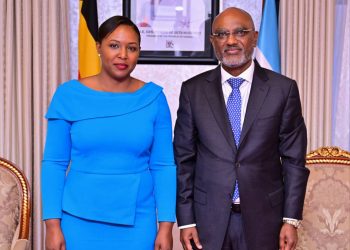
“If I study Physics, Chemistry, and Biology, it doesn’t mean I can only become a doctor. I could also become a chemist, a forensic psychologist, or a criminal forensics expert,” said Pheona Wall, former Uganda Law Society president, and the FLI Executive Director.
The point speaks to a deeply rooted habit in Uganda’s education. Students are often asked to settle on a subject combination at A-Level, sometimes based on what their school offers, what friends are choosing, or what parents consider safe and respectable.
Once chosen, the combination this must be religiously followed up to the end. Conference is designed to show that the track has many branches.
More than 20 organizations from banking, engineering, medicine, law, media, insurance, architecture, advertising, construction, agriculture and vocational work, were represented.
“This was intended such that a student interested in numbers could meet a banker, but also an insurer,” Wall revealed “A student drawn to science could talk to a dentist, an engineer or an agricultural specialist.”
Among the organizations present were the Uganda Editors Guild, and the Uganda Society of Architects, Corporation brought something students could actually touch, Kira motors came with Kayoola electric bus, a locally developed vehicle that turned abstract talk about engineering into a machine parked in front of them.
Students asked questions like How did you get into this job? What does a normal day look like? Which qualifications do I need? What skills will actually help me succeed? questions that textbooks rarely answer, and that many school career talks only address in general terms.
According to the organizers, hearing the answers from people who have lived them, students said, made careers feel real rather than distant.
Learners who attended said the conversations is eye-opening, saying they now saw possibilities they had never considered, and that their view of how a subject connects to a job had widened.
Wall “The turnout is impressive, and the questions are insightful. We believe these young individuals will make better career choices in the future.”
Early exposure, Wall argued, is part of the remedy. “We believe leadership development and career readiness should begin early, by giving young people the right exposure, guidance and opportunities to learn from those already working in different fields,” she said.
Employers often add that academic results alone are not enough. Communication, teamwork, problem-solving and a sense of workplace expectations tend to be learned through contact with people already in the profession, which is exactly the kind of contact the careers day tried to create.
The event is part of FLI’s ASPIRE Program, which prepares young people for their careers and develops them into future leaders. The program’s thinking is that choosing a career and leading in it are linked skills, and that both are best started young-URN. Give us feedback on this story through our email: kamwokyatimes@gmail.com