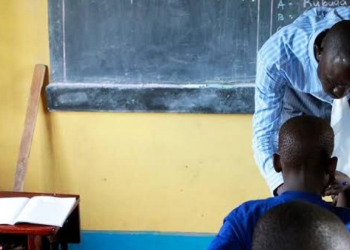
Godlive Baguma, a private primary school teacher in Nansana, has a monthly ritual. When his salary lands, he opens an exercise book and does the same sums.
“Rent for a single room takes 100,000 shillings. Food takes another 120,000 shillings, if prices allow. Then come transport, school fees, airtime, and the little I send to my mother in the village,” he says.
By the 12th, most of the roughly 400,000 Shillings he earns is gone. There is little rest in the job. Even at night, Baguma marks more than 200 exercise books.

Baguma is one of thousands of teachers who spend their best years waiting for a place on the government payroll, hoping it will improve their lives. Yet even those already on the payroll have their own complaints.
As Uganda joins the rest of the world to mark World Teachers’ Day, teachers are being praised for their role in shaping the country’s future. Even as government introduces reforms, questions remain about teachers’ motivation, welfare, pay, workload and professional status.
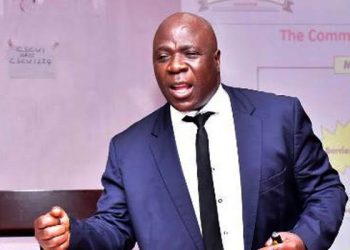
Suzan Alum, national chairperson of the Private Teachers’ Union, describes a mixed picture. “On one hand, we have seen some progress in recognising the importance of teachers and improving some aspects of the profession. But on the other hand, many teachers are still struggling with low pay, heavy workloads and poor working conditions. So, the status of the teacher in Uganda is a mixed bag,” she says.
Muzeeyi Ssebowa, a parent, offers a simple test. “If you want to know the status of the teaching profession today, ask children whether they want to become teachers. In the past, teaching was one of the most respected professions. It attracted some of the best and brightest students because it was highly recognised in society. That has faded,” he says.
He sees hope in recent salary improvements and efforts to raise entry standards. “There could be a better future for the profession if these changes are sustained. But for now, I would not say today is the best time for the teaching profession.”
According to the Ministry of Education and Sports’ 2025 Education Statistical Abstract, Uganda has 226,771 primary teachers: 149,182 in government schools and 77,589 in private ones. Of the 45,164 primary schools recorded, 32,620 are private and 12,544 government. The pupil-teacher ratio in government primary schools remains 61:1, compared with 35:1 in private schools.
At secondary level, the abstract records 64,975 teachers. Of these, 40,629 (62.5 percent) work in public schools and 24,346 (37.5 percent) in private ones. The student-teacher ratio is 31:1 in government secondary schools and 32:1 in private ones.
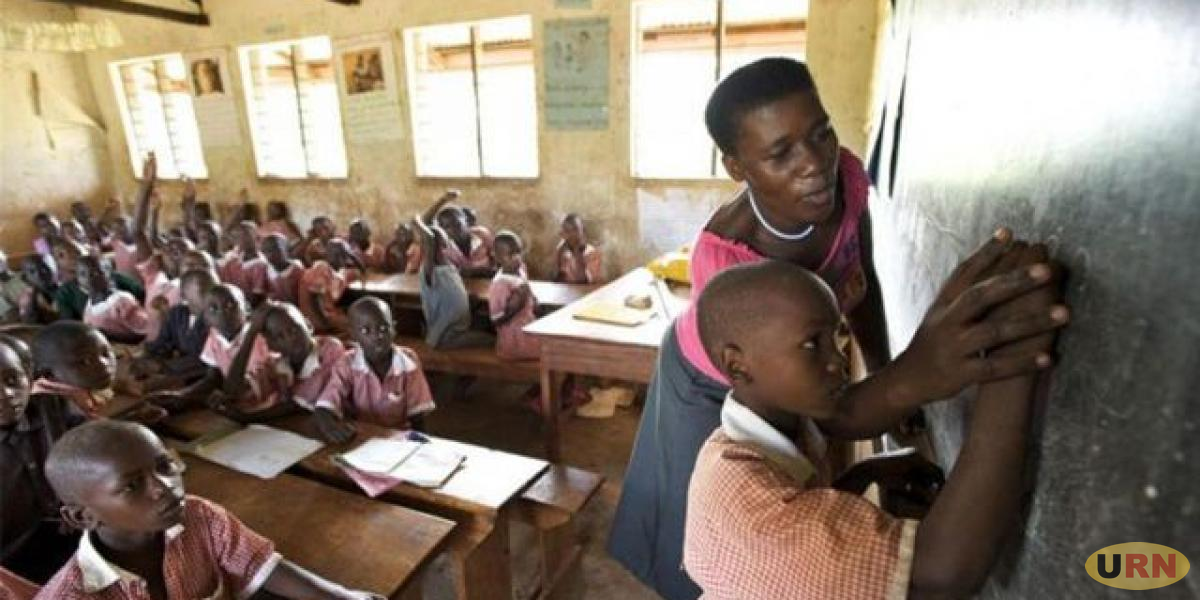
For a teacher handling large classes, the job goes far beyond delivering a lesson. It means preparing work, marking books, assessing learners, managing discipline, responding to individual needs, completing records and adapting to new curriculum and assessment requirements.
Damon Wamara, an education and child rights advocate, argues that welfare must be treated as part of education quality rather than a separate employment issue.
“For teachers to shape our futures better, they need fair and timely remuneration and better working conditions,” he says. “Overwhelming numbers of pupils to teacher ratio makes it hard for teachers to effectively engage all learners and shape them better.”
The private-sector squeeze
The pressure is sharpest in the private sector, which employs a substantial share of the workforce. Alum says some private-school teachers are paid strictly by the lessons or periods they teach, especially in smaller or financially strained schools. Pay then depends on classes conducted, with nothing during holidays, examination periods without teaching loads, or when enrolment drops.
Combined with the absence of formal contracts, delayed payments and no NSSF contributions in some schools, this leaves many private teachers in a precarious position: trained professionals whose income fluctuates with the timetable.
Many private schools are also reluctant to invest in professional development, leaving teachers struggling to keep pace with the new curriculum and its assessment. “The new curriculum is retooling the teacher,” Alum says, arguing that professional development should not fall solely on individual teachers.
A warning that still holds
The most comprehensive national assessment of the teaching workforce remains the 2014 UNESCO-supported Teacher Issues in Uganda: A Shared Vision for an Effective Teachers Policy, known as the TISSA report. Its findings were troubling.
“A general feeling of dissatisfaction is present among Ugandan primary teachers. In a survey, 47 percent indicated that they were dissatisfied with their job and about 78 percent believe that their colleagues are dissatisfied with theirs. Most teachers (84 percent) would like to leave the profession within two years. Half of the respondents mentioned salary as the main cause of job dissatisfaction,” the report stated.
It also found that about 12 percent of primary teachers were untrained at the time, and that recruitment was largely tied to budget availability rather than actual school needs.
Reforms on paper, gaps in the classroom
Uganda has since responded with a National Teacher Policy, a Teacher Management Information System, a competence-based curriculum and the Uganda National Institute for Teacher Education (UNITE). Teacher records have been digitised and training is being reorganised. Parliament has passed the National Teachers Bill, which awaits presidential assent.
Among these is the Teacher Incentive Framework, developed in 2018 in response to concerns about motivation, absenteeism and performance. It identifies professional rewards, financial incentives, accountability pressures and clear expectations as key elements, and recognises that teachers who struggle to meet basic livelihood needs are unlikely to focus on professional development or feel valued.
UNICEF-supported work continues on operationalising it, alongside a rewards and sanctions framework. Yet it has received far less public attention than the National Teacher Policy or the proposed National Teachers Council. That is the paradox: the problem is not whether Uganda has policies, but whether they reach the classroom.
Filbert Baguma, UNATU General Secretary, has repeatedly argued that teachers should be supported as professionals rather than treated mainly as a problem to be controlled. While backing accountability, he questions approaches that stress enforcement without fixing working conditions.
“Teachers are overworked, underpaid and undervalued, facing high living costs, salary disparities between science and arts teachers, delayed promotions, inadequate materials and overcrowded classrooms,” he says.
Filbert Baguma calls for fair salary enhancement without discrimination, support for professional development and greater investment in teaching and learning resources.
Where it hurts
The TISSA warning on motivation remains relevant because the conditions around the teacher shape what happens inside the classroom. A teacher who attends a workshop on the new curriculum but returns to more than 60 learners faces the same workload.
A teacher who upgrades qualifications but sees no real career or salary progression faces another kind of frustration. A private-school teacher paid by the lesson, with no formal contract or predictable income, faces yet another.
Parents and learners feel the consequences. Ssebowa whose children attend a government primary school says: “I see the teachers trying, but with so many children in one class, how can they give each child attention? When teachers are stressed about money or housing, it shows. We need them motivated so our children can learn properly.”
He added that some teachers are good and care, but others seem tired. “When the class is too big, learners just sit and hope to understand. I wish they had smaller numbers and better materials so they can teach well.”
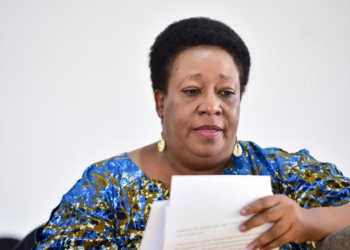
Former Permanent Secretary Dr Rose Nassali Lukwago, writing in the TISSA policy framework, stressed that teacher training coupled with practice is critical to developing “an all-round, empowered, passionate and motivated teacher who can confidently stand before the learners and deliver quality education.” She urged greater resource mobilisation.
Acting Education Minister Dr John Chrysostom Muyingo has acknowledged the link. Speaking at the inaugural International Teacher Education Conference last week, he said the quality of the country’s education system depends largely on the quality of its teachers, and that investment in preparation, professional development and welfare is critical.
“These are not isolated decisions. They are part of a broader and deliberate commitment to ensuring that Uganda’s teachers are well prepared, professionally supported, and equipped to meet the changing demands of education throughout the teacher’s career.”
Muyingo, however, said policies alone would not improve education unless they translate into changes in classrooms. He urged education authorities to focus on implementation and ensure reforms deliver practical results for teachers and learners.
“Our commitment is therefore not only to develop sound policies, but also to implement them with the seriousness, consistency and determination they deserve,” he said. He identified teacher preparation, teachers’ wellbeing, the use of technology in education and the sustainability of reforms as key areas requiring attention.
“How do we prepare the teacher effectively? How do we support their well-being? How do we use technology wisely in education? And how do we ensure that reforms are sustained over time? These are the right questions, and it is the right time to be asking them,” Muyingo said-URN. Give us feedback on this story through our email: kamwokyatimes@gmail.com