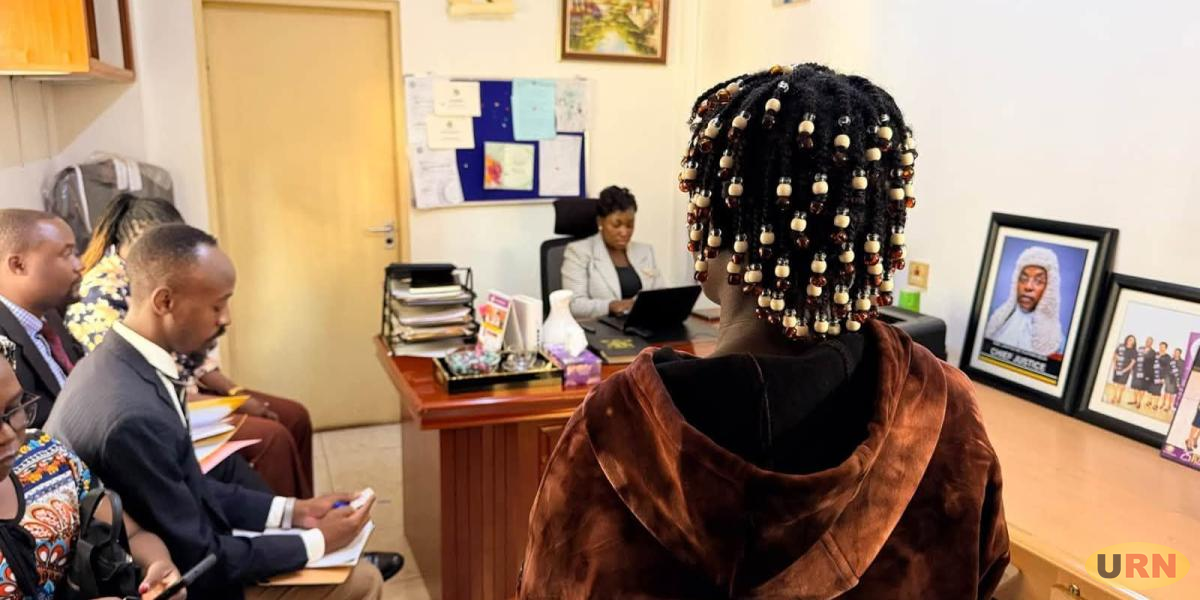
Uganda Law Society President Isaac Kimaze Ssemakadde has questioned the circumstances surrounding the arrest of activist Praise Aloikin Opoloje, arguing that the case illustrates what he describes as the failure by state agencies to respect legal safeguards protecting citizens from arbitrary detention. Ssemakadde, who is living in exile, said a lawful arrest must be based on reasonable and objectively verifiable suspicion of an offence and must protect the rights of the person being detained.
He cited Opoloje’s case, saying police initially asked her to report to a station to assist with an investigation rather than informing her that she was under arrest. “Reasonable suspicion is not just any suspicion, it is clear, objectively verifiable suspicion. In other words, the police can’t just jump on you. Madame Aloikin, perhaps, is the best example,” Ssemakadde said.
He said a person who is initially called to a police station as a person of interest should be informed of the purpose of the inquiry and their rights, including the right to remain silent and access to a lawyer. Ssemakadde said an arrest should not become a substitute for a judicial determination of guilt. “The adjudication will be done in the courtroom. You are still free; you have presumption of innocence,” he said.

His comments followed the uproar over Opoloje’s detention after she was reportedly taken away from Namungoona Police Station by security personnel on September 26. The Uganda Law Society demanded her immediate release and called for an investigation into the circumstances of her reported disappearance.
Opoloje has since been produced before the Buganda Road Chief Magistrate’s Court and remanded to Luzira Prison until October 14 after denying a charge of unlawfully using a SIM card registered in another person’s name.
Ssemakadde, however, said the subsequent production of a suspect in court does not remove the obligation of security agencies to respect a person’s rights from the moment they are taken into custody. He distinguished what he considers a lawful arrest and an abduction, saying the latter occurs when a person is deprived of the protection of the law.
“An abduction is any act of the state or a state actor, or even a private person, to deprive you of protection of the law, to deprive you of all these rights that are in Article 23,” he said. He said those protections include the right to know the circumstances of an accusation, the basis for the suspicion, access to a lawyer and the opportunity to challenge the allegations through the established legal process.
Ssemakadde also questioned prolonged detention, saying a suspect should not be held simply because the law permits detention for a specified period. He argued that authorities should establish the person’s status, inform them of their rights, and take them before a court within the legally prescribed period where prosecution is intended.
Ssemakadde also used the discussion to defend the legal protection of speech that may offend or insult public officials. He referred to principles developed under African human rights law, saying public officials should tolerate a greater degree of criticism and that states should not criminalise speech merely because it lacks civility or offends or disturbs.
“States shall not prohibit speech that merely lacks civility or which offends or disturbs,” he said, referring to the African Commission principles he cited during the discussion. He argued that Uganda’s constitutional protection of freedom of expression should be understood to cover even speech that is offensive to those in power.
Ssemakadde said criticism, including insults, can serve as a means through which citizens hold powerful officials accountable. “The insult has a way of checking power, even when you own a gun, or you own a gavel like a judge,” he said. He also cited previous Ugandan court decisions concerning sedition and publication of false news, arguing that courts had already struck down some of the laws used to prosecute speech.
Ssemakadde said the continued prosecution of people over speech amounts to a failure to respect those legal developments.
Police rejected claims that Aloikin Praise Opoloje was abducted, saying she was lawfully arrested over alleged misuse of her digital account and was taken before court. Rusoke Kituuma, the Uganda Police Force spokesperson, said Opoloje was in lawful police detention. Opoloje is accused of knowingly misusing her digital handle and account in a manner that violated the law.
“She was apprehended, she’s in police hands, and at an appropriate time she will be placed in front of the temples of justice to answer for those allegations,” Rusoke said before Aloikin was arraigned before court on Monday evening.
Rusoke was responding to claims that Opoloje had been abducted, which generated public concern over the weekend after reports that she had been taken into custody. He dismissed the abduction claims as part of what he described as a pattern in which some groups seek to portray arrests by security agencies as unlawful.
“There are a particular group of fellows who particularly always want to bastardize some of these actions of arrest,” Rusoke said. He insisted that being an activist or public figure does not place anyone above the law. “She must have known that she’s not beyond and above the law. She’s among those people who can be apprehended and held to account and that is precisely what was done,” he said.
Meanwhile, Ssemakadde also linked his position on Opoloje and freedom of expression to his own decision to remain outside Uganda. He said exile had become necessary because he believed Ugandans seeking to exercise their rights could not always rely on the country’s institutions to protect them.
“One of the things I gave: why are we in exile? Why is it that several Ugandans, leaders, the best and brightest, are choosing exile to continue the struggle for restoration of justice and constitutionality? Well, it’s because in Uganda, they can’t get a lawful arrest,” Ssemakadde said. He said his decision to remain in exile did not mean that he had abandoned his work as president of the Uganda Law Society or his wider campaign for protection of civil liberties.
Ssemakadde has previously said his exile is linked to legal proceedings against him in Uganda. In 2025, he challenged the enforcement of a two-year prison sentence issued against him for contempt of court and described the prolonged proceedings as forcing him into exile. He said his experience had reinforced his determination to defend the rights of people who come into conflict with state institutions.
The ULS president’s remarks come amid renewed debate over the treatment of activists and the protection of freedom of expression in Uganda, following Opoloje’s arrest and subsequent prosecution. Other lawyers and political actors have also raised concerns about constitutionalism and the independence of state institutions-URN. Give us feedback on this story through our email: kamwokyatimes@gmail.com