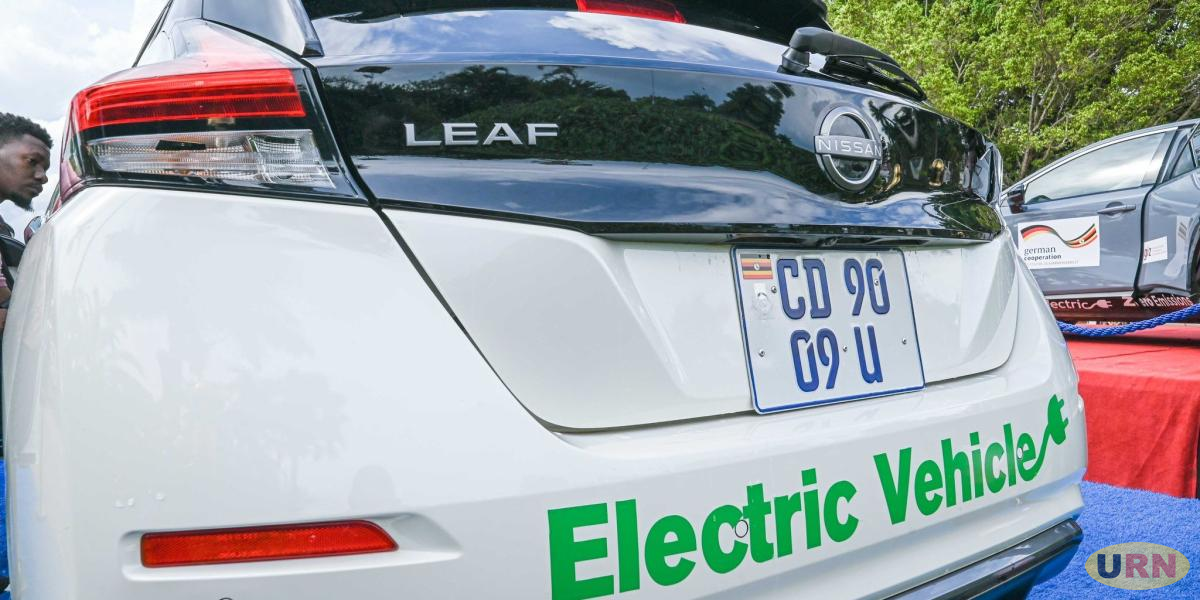
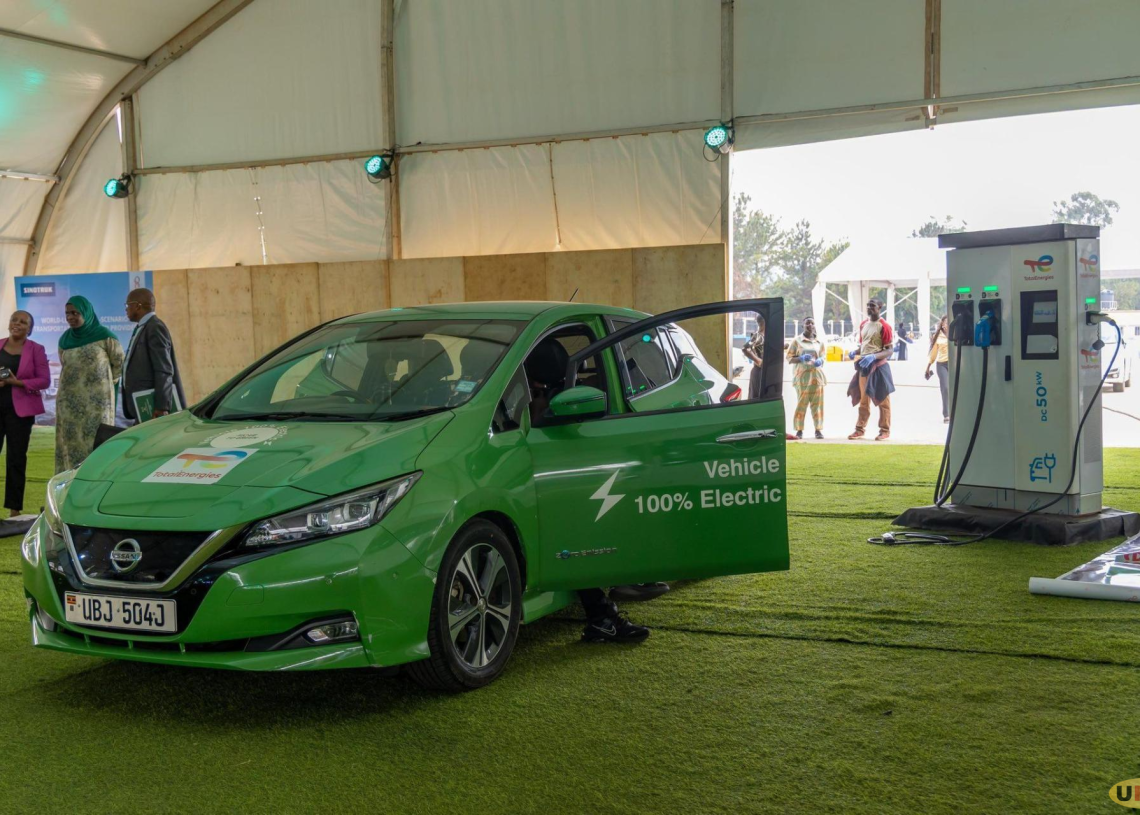
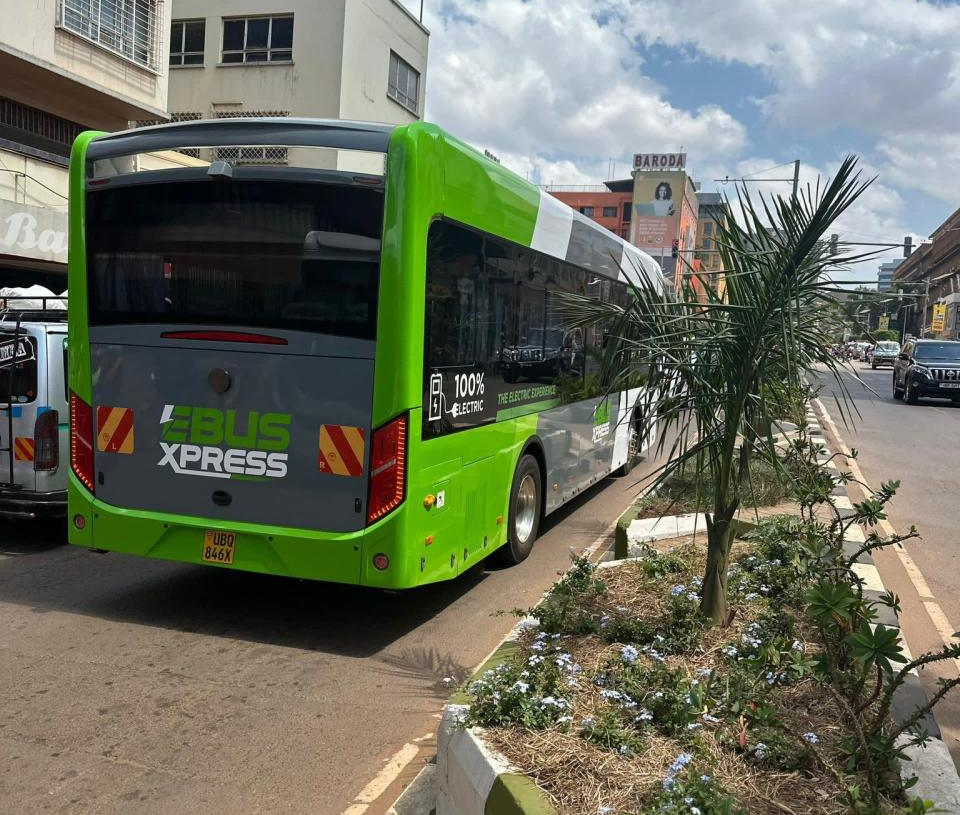
Uganda’s ambition to shift its transport system from petrol and diesel to electricity is facing a test that goes beyond getting electric vehicles onto the roads. A World Bank diagnostic of Uganda’s electric transportation ambition shows that the government has not yet put in place the systems needed to support e-mobility.
The Diagnostic Study on E-Mobility Market Development in Uganda, conducted between 2024 and 2026, finds that progress is being hindered by regulatory uncertainty, insufficient charging infrastructure, inconsistent tax incentives, limited technical expertise and weaknesses in electricity distribution planning.
The government has adopted a National E-Mobility Strategy with ambitious targets for electric vehicle production, public transport electrification and charging infrastructure. But the study suggests that the biggest challenge may be ensuring that the systems behind the vehicles develop at the same pace as the market.

Electric motorcycles are already entering Uganda’s transport market, with battery-swapping businesses providing an alternative to conventional fuel-powered motorcycles.
The study estimates that Uganda had about 3,000 electric motorcycles in 2024, against a national motorcycle fleet of about 987,000. Motorcycles account for more than 60 percent of registered vehicles, making them the main entry point for electrification.
The World Bank estimates that Uganda’s total electric vehicle fleet could reach about 769,000 vehicles by 2040 under business as usual, 1.31 million under moderate growth, and nearly four million under accelerated growth.
Electric motorcycles account for the overwhelming majority of vehicles in all three scenarios.
Under the accelerated scenario, the electric motorcycle fleet would rise from about 33,000 vehicles in 2025 to more than 720,000 by 2030 and about 3.58 million by 2040.
Total electric vehicles under this scenario would approach four million by 2040. The growth would create new demand on Uganda’s electricity system.
In the Greater Kampala Metropolitan Area, the study estimates that electricity demand from electric mobility in 2030 could range from 290 gigawatt-hours under the business-as-usual scenario to 583 gigawatt-hours under moderate growth and 1,103 gigawatt-hours under accelerated growth.
The accelerated scenario would require roughly three percent of total projected electricity demand in the metropolitan area.
By 2040, the study projects e-mobility electricity demand could reach 5,827 gigawatt-hours under the accelerated scenario.
But the World Bank cautions that the issue is not simply the amount of electricity required. It is where and when that electricity will be consumed.
The researchers observe that if large numbers of electric motorcycles, cars, minibuses and buses charge at the same time, the additional demand could put pressure on already constrained distribution networks.
The study’s modelling identified overloaded lines and transformers, abnormal voltages and increased energy losses under higher electric vehicle uptake scenarios.
Under accelerated electric vehicle growth with low levels of smart charging, the study projects Kampala, Mukono and Wakiso could face an additional 196 megawatts of peak electricity demand in 2030, equivalent to a 3.96 percent increase over the projected system peak.
But the modelling offers an important qualification. With high smart charging, the additional peak demand under the accelerated scenario falls to 93 megawatts, or 1.88 percent.
The study says smart charging could reduce peak demand by 103 megawatts compared with the low-smart-charging scenario.
The study proposes that charging should increasingly be shifted away from periods of high electricity demand through time-of-use tariffs and smart charging systems.
It estimates that smart-charging measures would require substantially less upfront investment than extensive grid reinforcement and could reduce network congestion and technical losses.
For 2030, the World Bank estimates annual energy-loss costs associated with electric vehicle charging could range from about 9.3 million dollars under business-as-usual with low smart charging to 38.5 million dollars under accelerated growth.
Estimated network reinforcement costs under the same low-smart-charging scenarios range from about 4.3 million to 21.2 million dollars.
With high smart charging, the estimated annual energy-loss costs fall to between 3.8 million and 19.8 million dollars, while reinforcement costs fall to between 1.4 million and 10 million dollars.
The message is therefore not that electric vehicles will overwhelm Uganda’s electricity system.
Rather, the cost of the transition will depend partly on whether planning takes place before demand arrives.
The World Bank study makes the point explicitly: “The findings of this study indicate that implementation of priority actions should be grounded in the realities of Uganda’s transport system and urban mobility context, particularly in the GKMA where early adoption and system-level impacts are expected to be most concentrated.”
The study also warns that e-mobility cannot be treated as an electricity-sector intervention alone.
“Effective implementation requires integration into existing transport systems and alignment with urban planning processes. The World Bank’s ongoing and planned urban mobility operations,” it says.
This is particularly important in Kampala, where transport demand is concentrated and the existing public transport system is dominated by boda bodas and minibuses.
The diagnostic finds that Uganda has established an institutional structure for e-mobility, with the Science, Technology and Innovation Secretariat responsible for coordination and an inter-ministerial task force chaired by the Ministry of Energy and Mineral Development and co-chaired by the Ministry of Works and Transport.
But the study identifies unclear responsibilities, limited institutional capacity and weak mechanisms for engaging private operators.
Even the approval of charging infrastructure between KCCA and the Ministry of Works and Transport remains unclear, while responsibilities relating to charging and battery-swapping standards have not been fully operationalised.“For example, roles for approving charging infrastructure installations between KCCA and MoWT remain unclear,” partly says the report.
“Similarly, standards for charging and swapping infrastructure intersect with ERA or UNBS mandates but have not yet been operationalized. In addition, the responsibility for initiating or adopting relevant Harmonized System (HS) codes at the East African Community (EAC) level (e.g., for completely knocked down (CKD) electric motorcycles ) is unclear.”
The regulatory uncertainty is matched by difficulties in accessing tax incentives. The government introduced tax exemptions intended to support electric mobility, including VAT exemptions for locally manufactured electric vehicles, charging equipment and charging services.
Yet the World Bank study found that the incentives are difficult for companies to access. The study says no electric two-wheeler or electric-car company was benefiting from the local-manufacturing VAT exemption at the time of the assessment.
It also found that import-duty treatment for electric motorcycle assemblers was inconsistent, with two of three leading companies benefiting from the 10 percent rate for motorcycle parts while another was charged 25 percent because it had not been recognised as an assembler.
This creates a peculiar situation: Uganda has incentives on paper, but some of the businesses expected to drive the transition cannot reliably use them.
The National E-Mobility Strategy targets production of 500,000 electric vehicles by 2030.Yet the World Bank diagnostic says that even under its most optimistic scenario, projected demand would be about 326,000 vehicles sold in 2030.
The report therefore calls for a feasibility assessment of whether local EV manufacturing at the targeted scale is commercially viable.
The World Bank says large-scale electrification of buses is unlikely without reforms to the public transport system, route planning and financing arrangements.
Its proposed response is therefore not simply to buy electric buses. It recommends a minibus electrification plan linked to paratransit reform and a separate bus and Bus Rapid Transit electrification roadmap.
The latter would initially identify three to five high-density corridors and support an electric-bus pilot along a BRT corridor in Kampala.
The study observes that changing the vehicle without changing the transport system may not produce the intended mobility gains.
Charging infrastructure must similarly be planned alongside transport routes, land use and bus depots.
New buildings may also need to be designed with the electrical capacity and conduits required for future charging points.
Grid investment, meanwhile, should be mapped against urban growth so that reinforcement occurs where future demand is expected.
The diagnostic finds that Uganda’s existing e-mobility skills initiatives remain fragmented and that informal mechanics are largely excluded from formal training and certification.
It proposes a national skilling programme covering technicians, drivers and policymakers, including pathways for informal-sector workers to obtain certification.
This matters because the country’s transport transition will not happen only in factories, government offices or electricity substations.
It will happen on the streets, in garages, at boda-boda stages, at battery-swapping stations and in the informal economy.
The World Bank therefore puts the immediate priority on implementation rather than creating another policy framework.
Its roadmap contains 18 actions covering coordination and governance, EV market development and power-system readiness. Among the proposed measures are a national distribution master plan incorporating EV demand, smart charging, time-of-use electricity tariffs, charging standards, targeted grid reinforcement, a boda-boda charging programme, minibus electrification linked to paratransit reform, and planning for electric buses and BRT.
For Uganda, the emerging electric transport story is therefore bigger than the question of whether motorists will switch from petrol to batteries.
It is a test of whether transport planning, electricity planning, taxation, urban development and industrial policy can move together.
The diagnostic study suggests the harder task now is making sure the roads, power network, charging systems, regulations, skills and public transport institutions are ready when those targets begin to translate into hundreds of thousands, and potentially millions, of electric vehicles.