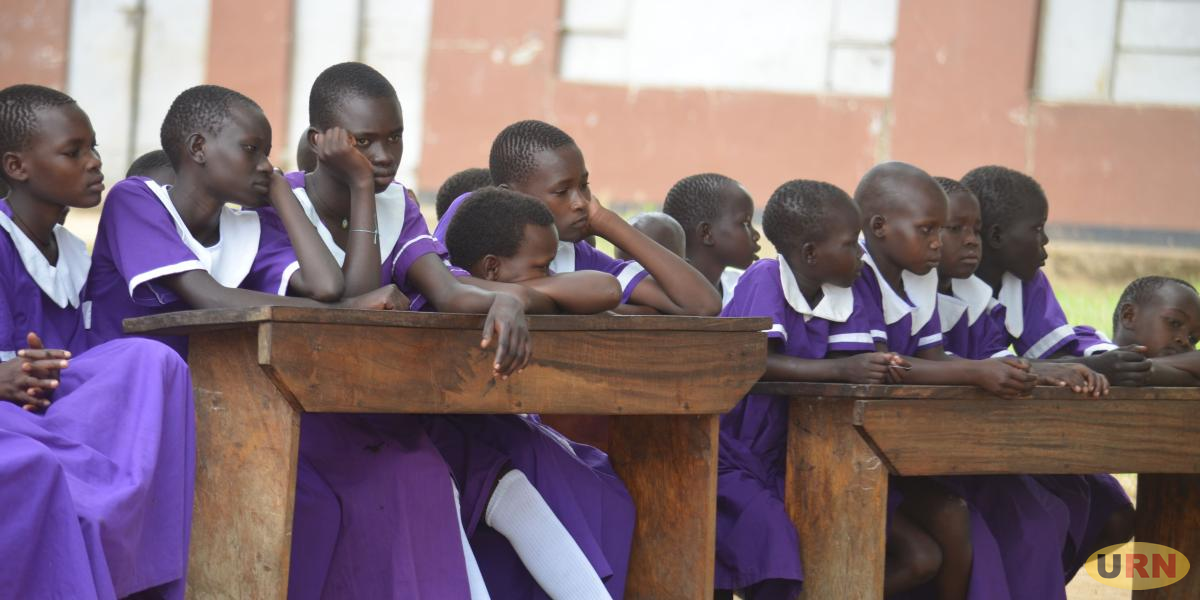
Authorities in Nakapiripirit District have decried lack of funding and teaching staff which is frustrating education service delivery in the district. Primary schools are struggling to operate with challenges ranging from inadequate furniture, classroom blocks, and acute shortage of teachers.
Currently, the district has a total enrolment of 30,000 primary school pupils against only 270 teachers, creating huge gaps. In Nakapiripirit Primary School alone, there are 1,500 pupils enrolled with only 17 teachers.
Deborah Lokure, a community mobilizer, said they have been monitoring schools through the Women’s Amplified Voices for Accountability (WAVA) project implemented by Forum for Women in Democracy (FOWODE), with funding from the Royal Danish Embassy, Sweden, and Ireland.

Lokure explained that schools mainly lack desks and teachers, while others face infrastructural problems such as lack of dormitories, toilets, and inadequate classroom blocks.
”In Moruita Primary School, pupils from lower classes are learning from the floor without desks, and those in the upper classes share a desk meant for four pupils between six and eight pupils,” Lokure noted.
She said the school had only 9 teachers to cover an enrollment of about 1,000 pupils, with most teachers concentrating on the candidate class.
She also observed that the school had no clean water facility, with pupils drinking dirty water from a borehole. Lokure said all challenges found were presented to local government leaders for action. In Loreng Sub-county, leaders have called for immediate fencing of primary schools to prevent early child marriages and defilement.
Erina Longole, the District Female Councilor representing Loreng Sub-county, said all schools are not fenced, which has enabled parents to withdraw children for marriage.
”Our girls rarely complete primary education because when they reach P5, P6 and P7, that’s the age parents start pulling them out of school for marriage. Sometimes these girls escape for marriage on their own,” Longole stressed. She noted that schools have high enrollment of girls in lower classes, but numbers decline in P6 and P7 as many are taken for marriage.
John Paul Chapi, the Nakapiripirit District Senior Education Officer, acknowledged that financial gaps are frustrating the education system.
“We are currently grappling with staffing gaps, furniture, and infrastructure such as classroom blocks amidst increasing enrolment,” Chapi said. He said the community is embracing education, and learners are increasing because of co-curricular activities and the school feeding program, but the burden has returned to management.
Chapi said classes that should accommodate 53 learners are now accommodating up to 200 pupils. He noted that they have allocated a three-classroom block construction to Nakapiripirit Primary School in this new financial year to address overcrowding. On school fencing, Chapi said most schools lack fences and it would be better for parents to contribute instead of waiting for government intervention.
He said most schools have 10 to 15 teachers managing over 1,000 pupils. ”We wrote to the ministry requesting permission to recruit, they gave us a go-ahead to recruit at least 200 teachers, we are still waiting for the postcodes to be opened,” he said.
Chapi added that the gaps have affected performance. Last year, the district was ranked sixth in the entire region, with 10 first grades, over 200 in second grade, and 110 failures out of 500 candidates registered. He said some parents with money have decided to take their children to schools outside the district for better performance-URN. Give us feedback on this story through our email: kamwokyatimes@gmail.com