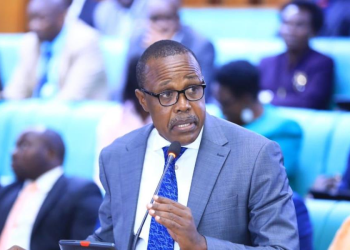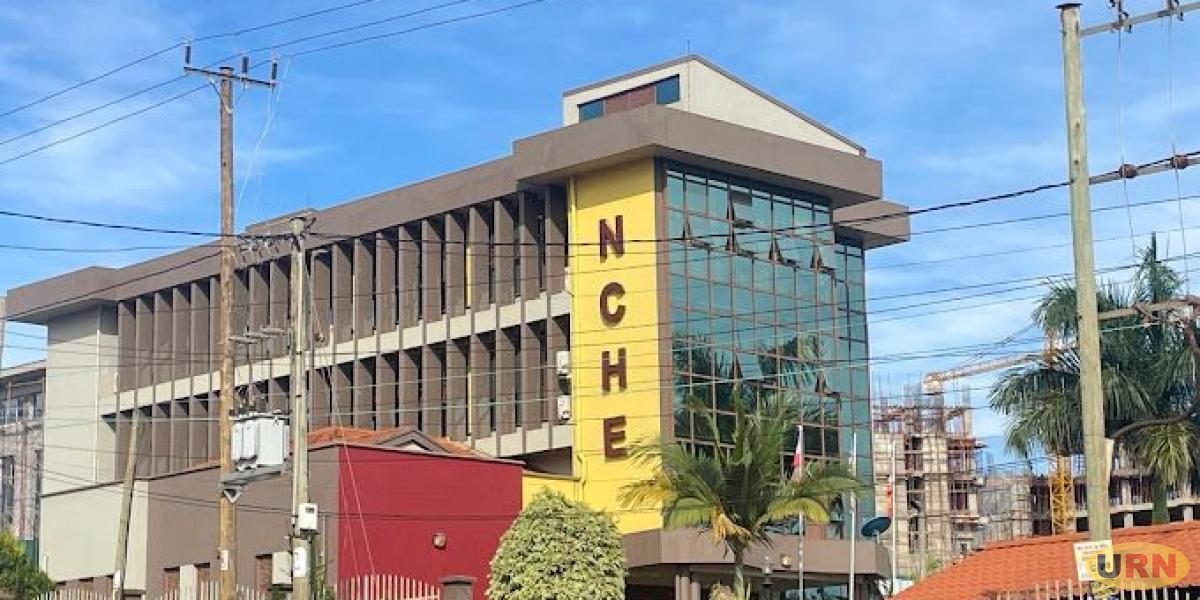
Universities across the country have so far submitted seven hundred competence-based programmes for accreditation by the National Council for Higher Education. Once approved, the programmes will usher in significant reforms in Uganda’s higher education system. Dr Alex Mugisha Kagume, the Deputy executive director National Council for Higher Education (NCHE), said the council has begun receiving redesigned programmes for review in line with the minimum standards for universities.
He revealed that the council has pooled a team of assessors who will first undergo their own orientation on the process before the actual review of submitted programmes begins. Kagume added that the assessors are being taken through the minimum standards that universities ought to have designed their programmes on, as well as the checklist of what they will be looking at in the process of reviewing the programmes.
The assessors are drawn from experienced lecturers and professors at different universities. They will be trained for three days this week before embarking on the review exercise.

Dr David Musiimaami, the Head of Standards, Recognition and Equating of Qualifications at the council, said the assessors will scrutinise the teaching methodology for the proposed programmes. Reforms are designed to end the current lecture method at the universities where the lecturer acts as “the alpha and omega” of the lecture room.
“Methods should be learner-centred, [so] that the lecturer will just be there to facilitate learners, guide and the like,” he said. He revealed the National Council for Higher Education is changing the terminology used to describe teaching staff, from “lecturer” to “facilitator,” to reflect the shift.
Dr Musiimaami said the method of assessing students will also change, with courses expected to lean more heavily on projects and continuous assessment rather than end-of-semester exams alone.
Dr Vincent Ssembatya, the Director of Quality Assurance and Accreditation, said assessors will not only look at curriculum content but will also verify a university’s staffing levels against its admissible student numbers, along with the availability of other learning facilities.
“The aim is to ensure that universities can only admit as many learners as they are actually able to teach. It is a check meant to guard against institutions expanding intake without the lecturers, equipment or infrastructure to deliver a genuinely competence-based education,” Dr Ssembatya said.
The Council currently has around 4,000 accredited programmes across universities and other tertiary institutions in the country. About half of these are undergraduate programmes.
The review process will primarily target undergraduate programmes, as these are the immediate priority ahead of the 2027/2028 deadline.
The Ministry of Education last year directed universities to align their programmes with the new Competence-Based Education and Training (CBET) system.
They were Institutions were required to redevelop their curricula and submit them for accreditation before admitting learners under the 2027/2028 academic year intake.
Under the directive, every affected programme must be redeveloped by the offering university and re-evaluated by the council before learners can be admitted.
Programmes that are not resubmitted, or that fail to meet the minimum standards, risk losing the accreditation they need to legally enrol students.
The country is moving from a knowledge-based model, focused on theoretical assessment, to one that evaluates practical, job-ready skills. The transition began at lower levels of education and has now reached universities and other tertiary institutions.
With just over a year left before the new intake window, the Council and university administrators alike are under pressure to clear the backlog of submissions without compromising on the rigour of the review. It is a balancing act that will determine how smoothly Uganda’s newest generation of graduates moves from the classroom into the workplace-URN. Give us feedback on this story through our email: kamwokyatimes@gmail.com