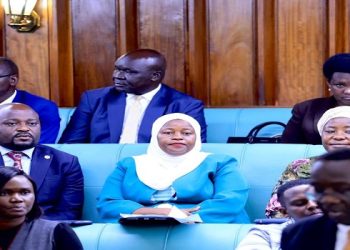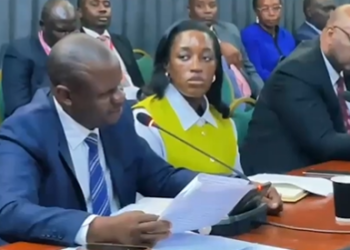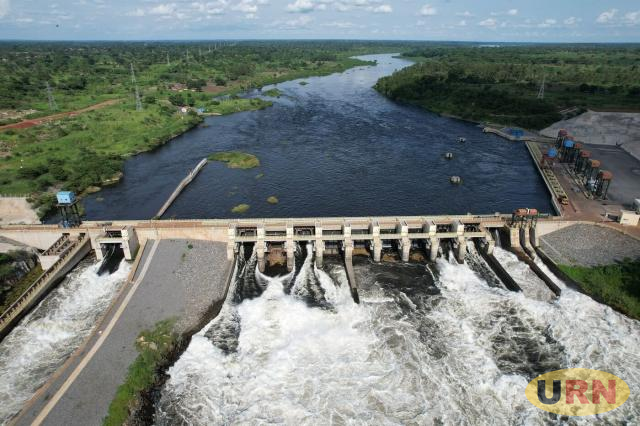
Parliament has renewed pressure on the government to compensate people displaced by the Karuma Hydropower Project, as MPs also questioned the slow expansion of electricity to communities that remain off the national grid. The concerns were raised on Tuesday, August 18, 2026, during a plenary session chaired by Deputy Speaker Thomas Tayebwa.
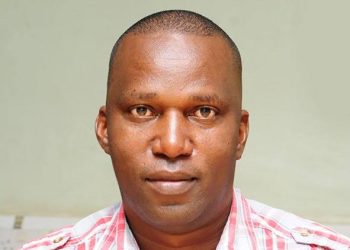
Kibanda North County MP Linos Ngompek said the government should address the outstanding compensation claims involving people who surrendered their land for the 600-megawatt Karuma project.
“We cannot talk about rural electrification while ignoring the people who gave up their land for these projects,” Ngompek told Parliament.

Construction of the Karuma Hydropower Project began in 2013 and displaced thousands of people. The project affected 3,735 people, including landowners and tenants, according to government resettlement records.
Ngompek said some project-affected persons have waited for years for compensation, with elderly claimants dying before receiving the money they were promised.
“Some project-affected persons have waited for years for compensation, with elderly claimants dying before receiving what they were promised. We need action rather than public relations,” he said.
One of the outstanding disputes concerns vulnerable project-affected persons whom the government plans to physically resettle at Lapono in Nwoya District instead of paying them cash.
Ngompek said the affected families would prefer cash compensation, which would allow them to choose where to acquire land and rebuild their homes.
However, State Minister for Energy Sidronius Okaasai said the resettlement process had progressed, and the government was already preparing to relocate the affected families.
“The money has been released, and we are taking the project-affected persons to see the land where their houses are going to be constructed,” Okaasai said.
A Ministry of Finance performance report for the 2020/21 financial year indicated that compensation under the Karuma Resettlement Action Plan had reached 98 percent, while vulnerable project-affected persons were being resettled at Lapono.
However, outstanding compensation claims have continued to feature in parliamentary discussions. At one point, 73 cases relating to the project were before the courts.
In 2024, Parliament was also informed that 119 people were proposed for resettlement at an estimated cost of Shs28 billion, including Shs4.2 billion for compensation.
President Yoweri Museveni said in October 2025 that the government had paid 11 billion shillings out of a 48-billion-shilling allocation for the remaining Karuma project-affected persons.
The dispute overcompensation came up as the Energy Ministry outlined plans to expand electricity access across the country.
Okaasai said seven government-funded rural electrification lots worth about 145 billion shillings are currently being implemented, alongside programmes to extend electricity to small and medium enterprises and communities that remain underserved.
The ministry is also implementing the second phase of the Grid Densification Programme, supported by the German government through KfW.
The programme is intended to connect households, businesses and public institutions in areas where electricity lines already exist, but transformers and other infrastructure are missing.
The government is also proposing the Uganda Rural Electrification Access Project Phase II, which would cover 49 districts and extend medium-voltage lines to schools, health centres and small-scale enterprises.
Another proposed Last Mile Electrification Support Project, estimated at Shs9.5 billion, would cover 34 districts and target schools, health facilities and small and medium enterprises.
However, Deputy Speaker Tayebwa questioned whether all the proposed projects had secured funding.“We do not want members to be told that projects are coming, only for them to discover later that there is no money,” Tayebwa warned.
The minister acknowledged that some of the proposed projects were still at the preparatory stage and would require approval and financing.
MPs from different parts of the country used the debate to highlight communities that remain without electricity despite years of government promises.
Bunyaruguru County MP Benjamin Buturo said more than 11,000 households in his constituency remain off the national grid, affecting an estimated 61,000 people.
Ayagalachi Jamali, MP for Bukooli County North, said 39 parishes in his constituency had remained without electricity since 1997, despite their proximity to the River Nile and major hydropower infrastructure.
Wakiso District MP Betty Ethel Naluyima also raised concerns about island communities without electricity, including health centres, and electricity poles that she said had been delivered several years ago but remained unused.
MPs said the continued lack of reliable electricity was undermining education, health services, small businesses and local economic development. They called on the Energy Ministry to provide clear timelines for the completion of ongoing projects and to prioritise communities that have remained without electricity for years-URN. Give us feedback on this story through our email: kamwokyatimes@gmail.com